What should you check before buying?
For batch cooking, start with the portions you plan to make, then compare the covering liquid and how you’ll use the contents after opening.
| What to consider |
What to check |
Who this matters to |
| Amount of fruit |
The drained weight and the number of portions you’re preparing. For fruit packed in liquid, the DGCCRF states that the drained weight must be shown. |
When I’m making several desserts from the same tin, I want to know how much fruit I’ll be able to portion out. Around 36% of consumers say this usable quantity is their top concern. |
| Covering liquid |
The exact description, ingredients list and ‘sugars’ line in the nutritional information per 100 g. |
If I want to limit added sugar, ‘light syrup’ isn’t enough information to make my choice: I check the product’s ingredients. This is the main concern for around 36% of consumers. |
| Portions and leftovers |
The quantity in each small container or, for a larger size, the storage instructions after opening. |
When preparing desserts separately, I’d rather know the size of each portion than have to manage an opened tin. Portion size would be the priority for around 28% of consumers. |
Fruit in syrup for your recipes
These tins and multipack of small containers could work well for desserts or toppings prepared in advance. When working out quantities for a recipe, compare the drained weight shown on the packaging rather than looking at the total weight alone.
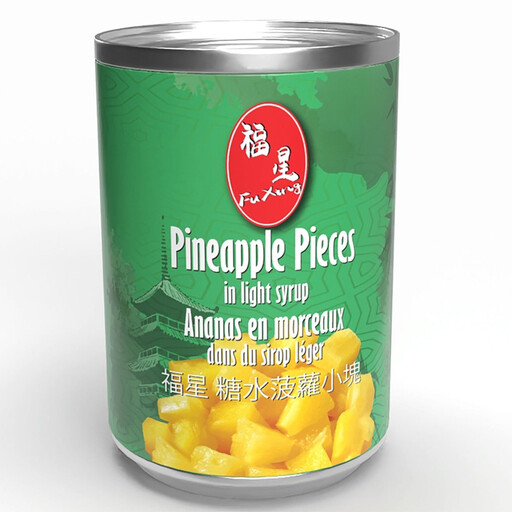 Image unavailable
FU XING, pineapple pieces in light syrup, 565 g
If you’re dividing pineapple between several desserts, the drained weight of 260 g gives you a separate figure to work with from the 565 g total weight.
Check the storage instructions on the packaging before planning how to use any leftovers.
View on Joybuy
 Image unavailable
ST MAMET, fruit cocktail in syrup, 3 × 125 g
The pack of three containers lets you open them separately for different recipes.
The 125 g is the weight shown for each container: check the drained weight before working out how much fruit you’ll have for each dessert.
View on Joybuy
 Image unavailable
AROY-D, mango slices in syrup, 425 g
These mango slices could be used in several desserts or as a topping prepared in a batch.
The 425 g figure alone doesn’t tell you how much drained mango you’ll get: check the packaging for this information.
View on Joybuy
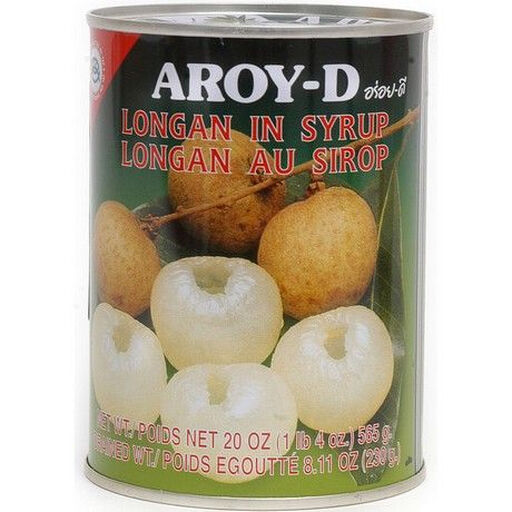 Image unavailable
Aroy-D, longans in syrup, 565 g
Longans in syrup can be used in desserts or fruit salads prepared in advance.
To plan portions from the 565 g container, check its drained weight and the instructions for storage after opening.
View on Joybuy
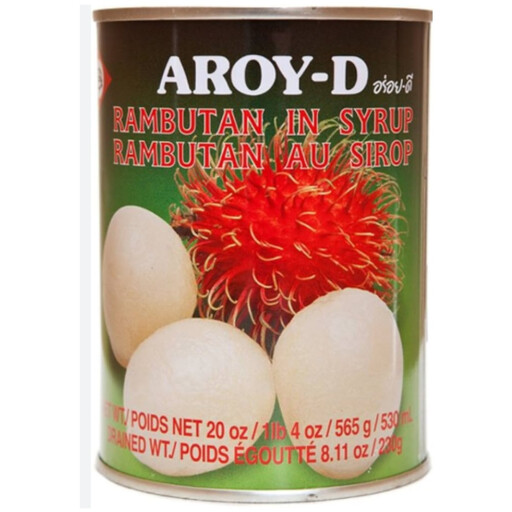 Image unavailable
AROY-D, rambutans in syrup, 565 g
This pack of rambutans could be used to make several desserts or fruit salads.
Check the drained weight of the 565 g container to work out your portions, along with the ingredients and storage instructions shown on the packaging.
View on Joybuy
Frequently asked questions
Does ‘light syrup’ mean ‘no added sugar’?
No, these terms don’t mean the same thing. To choose between a product in light syrup, in juice or labelled ‘no added sugar’, read the ingredients and check the ‘sugars’ line in the nutritional information per 100 g.
Which weight should I use to work out my fruit portions?
Use the drained weight if the fruit is packed in syrup or juice: this tells you how much fruit there is, separate from the covering liquid. The DGCCRF states that this weight must be shown for products packed in liquid.
How long can I keep fruit after opening?
Follow the storage conditions and time limit given by the manufacturer for the product you’ve bought. As the DGCCRF points out, the date printed for an unopened product doesn’t replace the instructions for storing it after opening.
Can you use a tin after its best-before date?
Going past the best-before date doesn’t, by itself, mean that a product is unsafe to eat, but the condition of the tin still matters. The DGCCRF identifies dents, rust and bulging as possible signs of damage; Anses recommends not eating the contents of a dented or bulging tin.
What should I check on the label of a tin of fruit?
Check the ingredients, net quantity, date shown, storage instructions and relevant nutritional information. For fruit packed in liquid, the DGCCRF states that the drained weight must also appear on the packaging.


