For a tart or charlotte, start by choosing fruit in a shape and drained weight that suit your recipe. If salt is a key factor in your choice, compare the ‘salt’ value for the exact product on the same per-100 g basis: ‘light syrup’ does not mean ‘reduced salt’. Check the sugars listed too, as ‘no added sugars’ does not mean ‘sugar-free’.
Who are these criteria useful for?
For arranging fruit on a dessert
For a tart, charlotte or layered dessert, halved fruit or slices can make it easier to create a neat, even topping. The shape, drained weight and firmness of the pieces after draining matter more than the total weight of the tin.
For limiting added sugars in your recipe
If your pastry, cream or icing is already sweet, compare the preserving liquid and the ‘of which sugars’ value in the nutrition information. ‘No added sugars’ does not mean the fruit contains no sugars.
For checking the salt content carefully
If salt content is your top priority, check the value per 100 g for the product you’re considering and see what it applies to. The term ‘light syrup’ alone tells you nothing about whether the salt has been reduced.
What should you check before buying?
Start with the shape your bake needs and the quantity of drained fruit, then compare the sugar and salt content on the labels of products that suit your recipe.
| Criteria |
What to check |
Who is it important to? |
| Fruit shape and quantity |
Compare halved fruit, slices or pieces, then check the drained weight your recipe requires. |
For topping a tart or assembling a charlotte, I want enough evenly sized pieces after draining. Nearly 42% of consumers would prioritise the shape and quantity of the fruit. |
| Sugars in the recipe |
Read the ingredients, check for any ‘no added sugars’ claim and look at the ‘of which sugars’ value per 100 g. |
If my cream is already sweet, I want to make an informed choice about the preserving liquid. Around 33% of consumers would put added sugars first. |
| Salt in the exact product |
Compare the ‘salt’ value per 100 g and check the basis shown on the packaging. |
I want to know the salt content of the fruit I’ll be using, rather than guessing from the name of the syrup. Around 25% of consumers would make this their top priority. |
Common misconceptions to avoid
-
Assuming ‘no added sugars’ means ‘sugar-free’
These claims don’t mean the same thing. Auchan describes its St Mamet peach, pear and pineapple fruit salad as having no added sugars, yet it contains 12 g of sugars per 100 g.
Check the ‘of which sugars’ value before adjusting the other sweet ingredients in your recipe.
-
Assuming ‘light syrup’ means ‘reduced salt’
The name of the syrup is no substitute for the product’s nutrition information. Auchan and Douceur du Verger light-syrup peach halves have different salt values on their respective product pages.
Compare the ‘salt’ value per 100 g for the specific products you’re considering; don’t assume that ‘light syrup’ means less salt.
-
Working out how much you need from the total tin weight
The total weight includes the liquid, while the quantity you can use in a bake depends on the fruit once it has been drained.
Base recipe quantities on the drained net weight, or weigh the fruit after draining. If your bake needs a crisp pastry base, drain the fruit thoroughly.
-
Choosing small pots for a large recipe without checking the yield
A small pot makes portioning easy, but you may need several to top a tart or make a charlotte.
Compare the drained net weight of the pots and a tin with the quantity required by your recipe.
Using several pots also means opening and handling more packaging while you prepare your recipe.
Brands to compare for different recipes
Auchan
Its light-syrup peach halves are worth considering for a tart, layered dessert or compote.
- Auchan’s product page for the peach halves gives a drained fruit weight of 0,475 kg and 0,03 g of salt per 100 g.
- The same product contains 13 g of sugars per 100 g, so ‘light syrup’ is no reason to skip the nutrition information.
Carrefour Classic'
The range includes light-syrup peach halves and fruit cocktails labelled ‘no added sugars’.
- Carrefour’s product page for the peach halves lists peaches, water, sugar and citric acid, making it easy to distinguish this recipe from a no-added-sugars fruit cocktail.
- If salt is a deciding factor, check the value on the packaging of the product you choose rather than relying on the syrup description.
Douceur du Verger (Marque Repère / E.Leclerc)
The range includes halved fruit and small pots, two formats to compare depending on the size of your dessert.
- E.Leclerc’s product page for the light-syrup peach halves gives a drained net weight of 465 g, 0,0 g of salt and 13,2 g of sugars per 100 g of drained product.
- For a larger bake, check how much fruit the small pots contain before using them instead of a tin.
St Mamet
Its fruit mixes may suit toppings where a variety of shapes and sizes is fine.
- Auchan’s product page for St Mamet peach, pear and pineapple fruit salad describes it as packed in juice with no added sugars; it contains less than 0,01 g of salt per 100 g.
- This chopped fruit product also contains 12 g of sugars per 100 g, and won’t replace halved fruit when your dessert needs a particular presentation.
Fruit in syrup available on Joybuy
These products suit a range of baking uses: peach halves to arrange on a dessert, a fruit cocktail for a topping, and lychees and cherries in syrup. Choose the shape your recipe calls for and check the nutrition information on each pack that’s relevant to your bake.
 Image unavailable
St Mamet peach halves in light syrup, 230 g drained
A format to consider when your recipe calls for halved fruit to arrange on a tart or dessert. The 230 g refers to the drained fruit; check how well the pieces hold their shape after draining if you want a neat finish.
View on Joybuy
 Image unavailable
St Mamet fruit cocktail in syrup, 425 g
This mix suits a topping that can include a variety of fruit pieces, rather than a decoration made from evenly sized halves. The 425 g is the format given in the product name; check the drained net weight to work out how much to use.
View on Joybuy
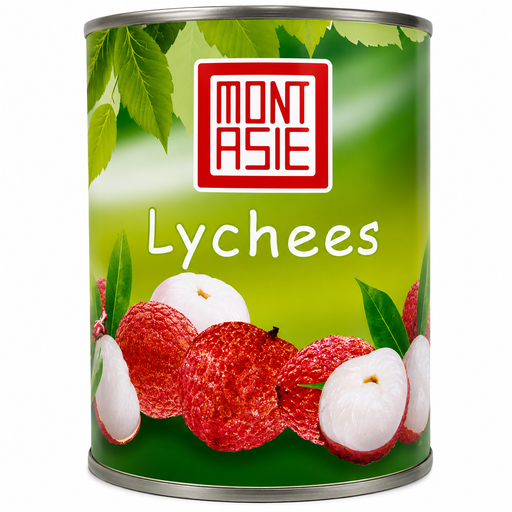 Image unavailable
MONT ASIE lychees in syrup, 567 g
Consider these lychees if your dessert calls for this fruit rather than peaches or a fruit cocktail. To work out how many lychees to add, check the drained net weight of the 567 g pack.
View on Joybuy
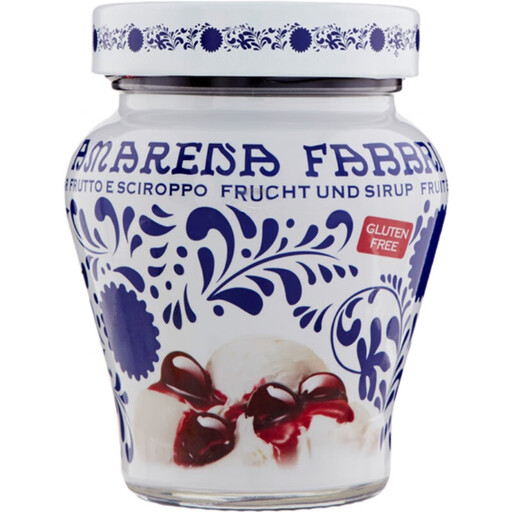 Image unavailable
FABBRI Amarena Morello cherries in syrup, 230 g jar
These cherries may suit a dessert recipe that calls for Morello cherries in syrup. The jar weighs 230 g; check the quantity of drained fruit and the sugars listed before adding them to your mixture.
View on Joybuy
Frequently asked questions
Does ‘light syrup’ mean ‘reduced salt’?
No. ‘Light syrup’ doesn’t mean the salt content has been reduced. If salt is important to your choice, check the value per 100 g for each product and confirm the basis used for the calculation.
Does fruit labelled ‘no added sugars’ still contain sugars?
Yes. Auchan describes its St Mamet peach, pear and pineapple fruit salad as having no added sugars, yet it contains 12 g of sugars per 100 g. To adapt your recipe, check the ‘of which sugars’ value rather than relying on the claim on the front of the pack.
Which weight should I use when a recipe calls for drained fruit?
Use the drained net weight shown on the packaging, or weigh the fruit after draining. Don’t use the total weight, which includes the liquid. It’s the quantity of fruit that you need to compare with what your recipe calls for.
How should you store fruit in syrup after opening?
Follow the instructions for the product you’ve opened. For example, Auchan’s product page for Martin's International fruit cocktail says to keep it in a sealed food container in the fridge and eat it within three days. Don’t automatically apply this guidance to other products.


