
Livraison le jour même ou le lendemain

Qualité garantie

Débloquez vos offres de bienvenue: Livraison GRATUITE | Jusqu'à -80 % | 30 jours d'essai gratuits à JoyPlus
Téléchargez l'application
Buying fruit drinks in multipacks can make snacks, meals, days out or event planning much simpler. But a colourful package or the word "tropical" isn't enough to tell you whether the product really meets your needs. From small cartons for children, cans to share and large packs for the office, the differences in ingredients and price can be significant.
A fruit juice is not the same as a nectar or a flavoured drink. To make sense of it all, check the fruit content in the ingredients list. Some products featured here contain around 7.5 to 13% juice, while others have a higher proportion or combine juice and fruit purées.
Terms like "exotic", "natural" or "tropical" mainly describe the flavour profile. They don't guarantee a high fruit content or a low sugar level.
A drink may show a moderate energy value per 100ml, yet still add up to a significant amount when consumed in full. A 330ml can with 41kcal per 100ml provides around 135kcal. To compare products properly, always look at:
A pack of 24 cans works well for a party, an office or regular consumption, but it needs more storage space. On the other hand, four 125ml cartons are ideal for small portions and lunchboxes, even if the price per litre may be less attractive.
Before ordering, estimate your consumption over a week and check the best-before date on the packaging.
Ingredients are listed in descending order by quantity. If water comes first, the drink is mostly water-based. The percentage of juice or purée remains the best way to tell the difference between fruit nectars, fruit drinks and more heavily flavoured preparations.
To find a specific taste, also check which fruits are actually used. A blend described as tropical may contain mainly apple or orange, with only a small amount of mango, guava or passion fruit.
Start by comparing the values per 100ml, then scale them up to the size you're buying. In this selection, the stated values range from 20kcal and 4.4g of sugars per 100ml for PAW Patrol Tropical to 47kcal and 11.5g of sugars per 100ml for Bundaberg Blood Orange.
Claims like "no added sugars" or "with vitamins" should be read alongside the full label. They don't turn a fruit drink into a substitute for water or a meal. The vitamins listed for some products describe the composition, without guaranteeing any health effect.
For children, 125 to 200ml cartons are easy to carry and fit neatly into a lunchbox. 500ml bottles are better for longer trips. 330ml cans are handy for group meals, picnics or parties.
Most products should be stored in a cool, dry place before opening. Once opened, drinks usually need to be kept in the fridge and consumed quickly. Always follow the manufacturer's instructions on the packaging.
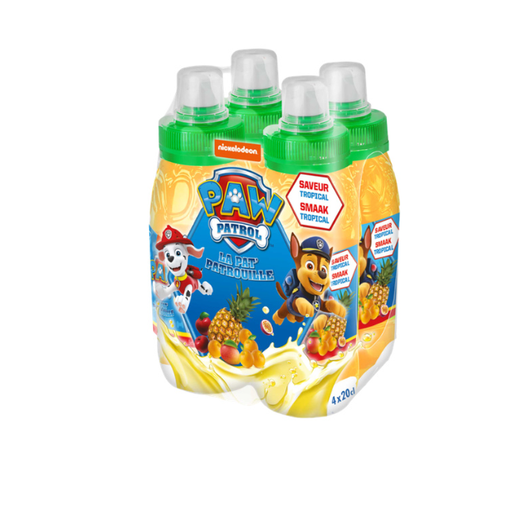
Why this product might suit you: its four 20cl cartons are ideal for occasional treats and families who want to try a fruit drink without buying a large volume.
The product page states 10% fruit juice and 4.4g of sugars per 100ml: the ingredients are clear and don't rely solely on the character on the packaging.
20kcal per 100ml, compact 4 × 20cl format and a red berry or tropical recipe depending on the variant chosen.
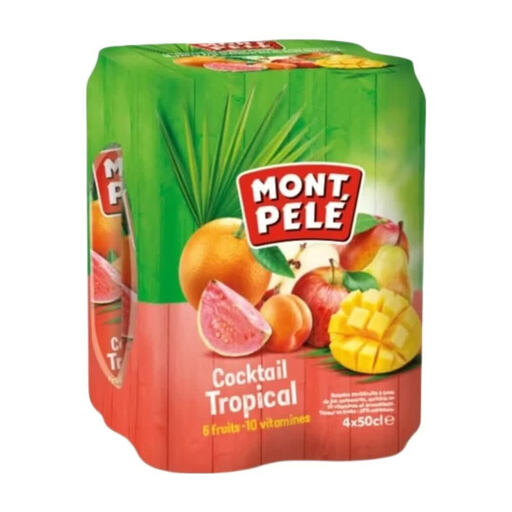
Why this product might suit you: this nectar, sold in 50cl bottles, blends apple, orange, mango, pear, apricot and guava. It's aimed at those looking for a tropical drink for breakfast or a snack.
The product is labelled as a nectar: the page details the fruits used, the sugar content and the 7.4g of sugars per 100ml, allowing for a direct comparison.
Pack of 4 × 50cl bottles, blend of exotic fruits and vitamins C, B1, B2, B3, B5, B6, B8, B9 and E as stated.
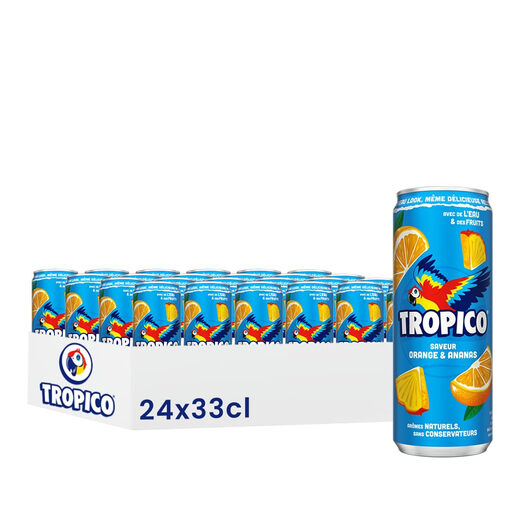
Why this product might suit you: the pack of 24 × 33cl cans is designed for shared meals, picnics, clubs and parties where several people are helping themselves.
The page states 7.5% juice, including 7% orange and 0.5% pineapple, plus 10g of sugars per 100ml: this profile will only suit consumers who are happy with that.
24 × 330ml cans, non-alcoholic drink and can be stored at room temperature before opening.
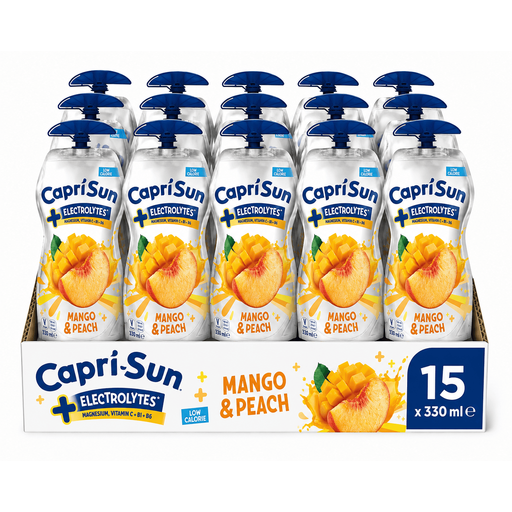
Why this product might suit you: the resealable 33cl pouches are easy to carry on a family day out, a journey or an outdoor activity.
The recipe contains 10% juice, 4.9g of sugars per 100ml and sweeteners: check these details if you're looking for a less sweet drink.
Pack of 15 × 330ml, mango-peach flavour, with magnesium and vitamins listed in the ingredients.
We've put together an updated selection of products that meet these criteria and the regulatory information applicable in France.
Cartons of 125 to 200ml are easy to store and handle. Models with a sports cap, like Fruit Shoot Tropical in 6 × 200ml, can be handy on the go. However, always check the sugar content and ingredients: a "children's" size alone isn't enough to judge the product.
Often the price per litre drops with bigger packs, but it depends on the product, the packaging and the delivery costs. Divide the total price by the volume in litres to get a reliable comparison. Also consider the storage space you have at home and the date on the packaging.
Keep unopened packs away from heat, moisture and direct sunlight. Once opened, put the drink in the fridge and consume it within the time stated by the manufacturer. For cans, it's usually best to drink the contents straight after opening.