
Livraison le jour même ou le lendemain

Qualité garantie

Débloquez vos offres de bienvenue: Livraison GRATUITE | Jusqu'à -80 % | 30 jours d'essai gratuits à JoyPlus
Téléchargez l'application
Fruit-based products meet a wide range of needs: breakfast, afternoon snacks, alcohol-free cocktails, dessert toppings or baby purée. However, an appealing image of fruit on the packaging is not enough to assess a product. The actual fruit content, sugar levels and storage requirements can make a significant difference to the suitability of a particular product.
Before comparing fruit drinks, juices, nectars, syrups, purées, jams and snacks, there are three common pitfalls to watch out for.
Juice may be made from pressed fruit or reconstituted from concentrate. Nectar generally contains pulp or purée, along with water and sometimes sugar. A fruit drink, meanwhile, can contain a highly variable proportion of juice, supplemented with water, flavourings or texture agents.
The phrase ‘fruit flavour’ therefore does not, by itself, tell you the actual fruit content. Check the ingredients list and, where the information is provided, the percentage of juice or pulp.
A juice with no added sugars may naturally contain a significant amount of sugar from the fruit. Conversely, some lightly flavoured drinks list sugar among their first ingredients. To compare products effectively, check the ‘of which sugars’ line per 100 ml or 100 g, rather than relying solely on the product name.
A family-sized bottle does not keep in the same way as a bottle of syrup or a refrigerated purée. After opening, some juices must be refrigerated and consumed within a few days. Frozen products, such as certain chocolate-coated raspberries, must be stored at –18 °C and must never be refrozen after thawing.
For fruit juices, look for a clearly detailed composition. Tropicana Pure Pressed Apple Juice from France, for example, contains apple juice and ascorbic acid, used as an antioxidant. Tropicana Clementine juice lists ‘Clementine juice’ among its ingredients.
Fruit nectars often contain pulp and water. Alain Milliat Bergeron apricot nectar specifies 46% apricot pulp, as well as water, sugar, citric acid and ascorbic acid. This useful detail distinguishes it from a pure juice.
When it comes to fruit syrups, the sugar concentration is generally high. MONIN Passion Fruit syrup contains 83.1 g of sugar per 100 ml and is diluted with water, sparkling water, milk or a plant-based drink.
Always compare nutritional values on the same basis:
These figures do not make a product ‘good’ or ‘bad’. They are mainly useful for choosing a product suited to its intended use, how often it will be consumed and the portion used.
For a baby, check the recommended age, certification and instructions to follow after opening. The Good Goût strawberry-banana pouch is suitable for babies from 4 months. It is certified organic under FR-BIO-01, contains no added sugars and must be refrigerated after opening, then consumed within 48 hours.
For a dessert, assess a fruit jam or fruit in syrup according to its texture and how well it pairs with yoghurt, a tart or ice cream. For fruit snacks, check the fruit content, individual packaging and any potential allergens.
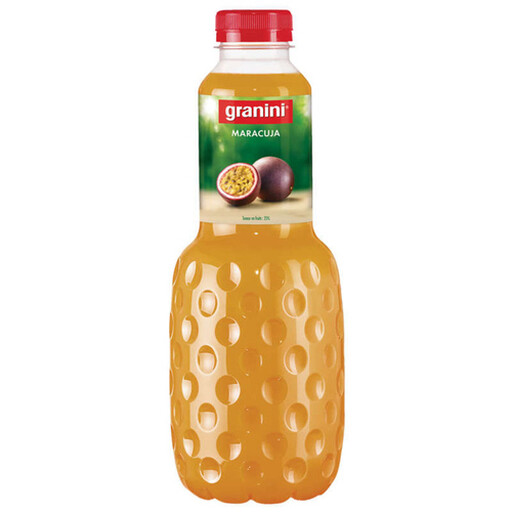
Why this product suits this profile : A ready-to-serve drink for discovering an exotic flavour without buying lots of different products. Its one-litre format is ideal for occasional family consumption.
The ingredients list specifies passion fruit juice from concentrate, sugar and a natural flavouring. This makes it clear that it is a fruit drink, rather than a pure juice.
1-litre format, passion fruit and maracuja flavour, 52 kcal and 12 g of sugars per 100 ml according to the information provided.
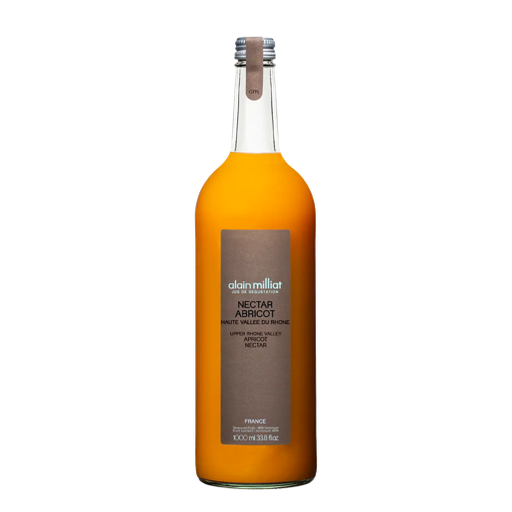
Why this product suits this profile : This nectar is aimed at those looking for a fruit-based product that highlights a particular apricot variety and offers a texture provided by the pulp.
The Bergeron apricot pulp content is clearly stated: 46%. There is no risk of confusing it with a simple flavoured drink.
46% apricot pulp, one-litre format, can be stored at room temperature before opening and contains 58 kcal per 100 ml.
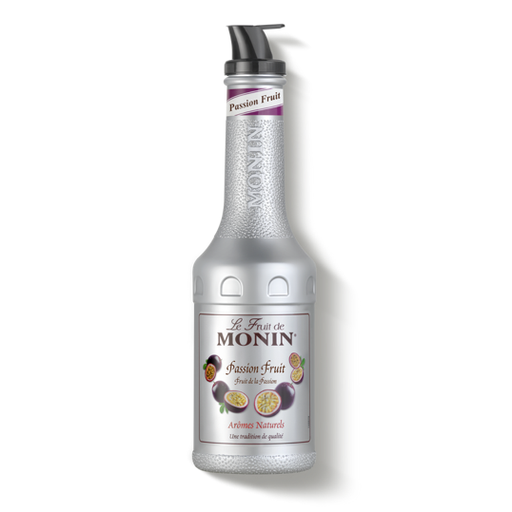
Why this product suits this profile : A practical solution for alcohol-free cocktails, smoothies, desserts, yoghurts and recipes prepared regularly at home or in a professional setting.
The product information states that it contains the equivalent of 50% passion fruit purée. Its ready-to-use format makes it easy to control the amount added to each recipe.
1-litre format, equivalent to 50% purée, suitable for drinks and desserts, and must be refrigerated after opening.
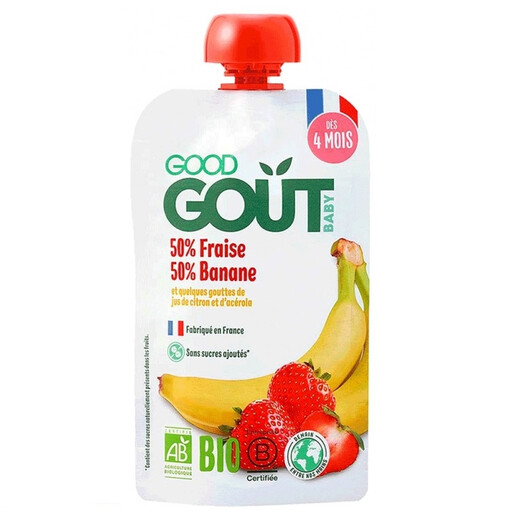
Why this product suits this profile : An individually packed pouch that is easy to slip into a bag for a snack or dessert, with a short ingredients list based on strawberry, banana and concentrated lemon juice.
The recommended age — from 4 months —, organic certification FR-BIO-01 and absence of added sugars are clearly stated. However, the sugars naturally present in the fruit should still be taken into account.
120 g, 50% organic strawberries and 50% organic bananas, made in France, and keeps for 48 hours in the refrigerator after opening.
We have put together a complete, real-time updated list of products that meet these strict selection criteria and European safety regulations.
Juice is made from fruit juice, which may be produced from concentrate. A fruit drink may contain water, sugar, flavourings and a variable proportion of juice. To tell the difference, compare the ingredients list and the percentage of fruit.
First, follow the instructions on the label. MONIN syrups and purées must be refrigerated after opening and consumed within the recommended period. For refrigerated juice, the shelf life may be limited to a few days. Good Goût baby purée must also be refrigerated and consumed within 48 hours of opening.
Guava jam is an easy addition to toast, pastries or a dessert topping. Amarena cherries in syrup pair beautifully with ice cream, yoghurt or cake. For a recipe that is easier to customise, passion fruit or raspberry purée lets you measure the exact amount added to a coulis, drink or sweet preparation.