Retirees who prefer to season vegetables themselves
You want vegetables that are easy to portion and prefer to choose how much oil, butter or salt to add when cooking.


If you want to decide how much fat to add yourself, start with plain frozen vegetables and check the ingredients list. Prepared recipes can make cooking easier, but compare their fat and salt per 100 g: some already contain oil, butter or cream.
You want vegetables that are easy to portion and prefer to choose how much oil, butter or salt to add when cooking.
You prefer individual portions or vegetables that need little preparation, while distinguishing plain options from recipes that are already prepared.
You check the ingredients, declared allergens and nutritional values, particularly when a recipe’s composition matters to your choice.
When choosing frozen vegetables for your regular shop, first distinguish plain products from prepared recipes. Then compare the nutritional information per 100 g for products intended for the same use, and choose a pack size that suits the quantities you prepare.
| Criteria | What to check | Who is it for? |
|---|---|---|
| Added fat | Check the ingredients for oil, butter or cream, then compare the fat content per 100 g. | I want to control how much fat I use when cooking, rather than buying a recipe that is already seasoned. Around 33% of shoppers put this control first. |
| Ease of preparation | Check whether the vegetables are already chopped or partially cooked, and follow the preparation instructions provided. | For a quick side dish, I want to cut down on the steps without automatically choosing something in a sauce. Around 20% of shoppers prioritise convenience. |
| Pack size | Compare the weight and stated number of portions with the quantities you use. | I prefer a pack I can use at my own pace, without having to plan around unsuitable portion sizes. Around 20% of shoppers prioritise pack size. |
| Salt and ingredients | Check the salt content per 100 g, the ingredients and any declared allergens. | If I need to avoid an ingredient or compare the salt content of several recipes, the label determines my choice. Around 27% of shoppers put checking the ingredients first. |
According to its product page, Carrefour Extra’s Mediterranean vegetable recipe contains vegetable oils and has 7.4 g of fat per 100 g. The product name alone does not tell you what is in it.
To control what you add, start by comparing the ingredients lists for single vegetables and mixes without sauce with those for prepared vegetable dishes.
According to its product page, Auchan’s four-green-vegetable mash contains unsalted butter, crème fraîche and salt. It serves a different purpose from a pack of plain vegetables that you season yourself.
If you choose a mash or vegetable pan-fry to save time, check its ingredients and nutritional values per 100 g before comparing it with a plain product.
Two portions of different sizes do not give you a common basis for comparing their composition. The DGCCRF states that nutrition information is given per 100 g or 100 ml to make comparisons easier.
Compare the fat and salt per 100 g of products intended for the same use, then check which pack size suits your meals.
Frozen food needs to be kept at low temperatures. Anses advises against refreezing food once it has thawed.
Pick up frozen foods at the end of your shop, use an insulated bag for the journey home and put them in the freezer as soon as you can.
These examples can help you identify different types of frozen vegetables. Check the ingredients for each individual product.
Bonduelle offers frozen vegetables. Its product information for one spinach product describes it as being frozen after preparation, but this does not apply to the whole range.
Carrefour distinguishes plain vegetables from prepared dishes in its frozen food range.
The Notre Jardin range includes plain frozen vegetables and mixed vegetables.
Auchan’s range includes single vegetables, mixes, vegetable pan-fry dishes and mashes.
Aldi offers frozen fruit and vegetables, including green beans and peas.
This selection includes chopped vegetables and frozen mixes to prepare as you need. If you’re choosing based on fat content, check the ingredients and nutritional values per 100 g on each product’s packaging.
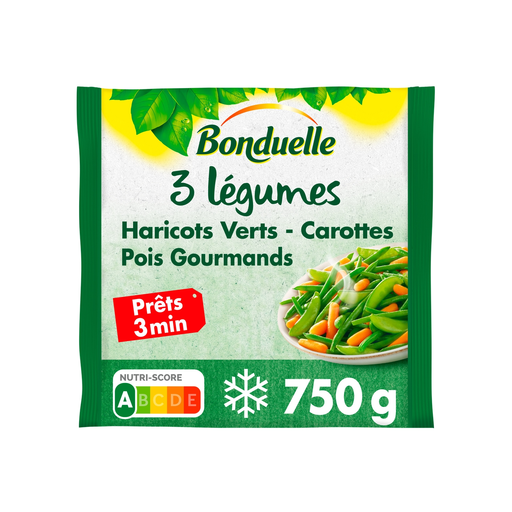 Image unavailable
If you’re looking for a mix to season yourself as a side dish, check the ingredients list before deciding what to add when cooking.
Pack size: 750 g.
 Image unavailable
If you’d rather prepare a single vegetable and choose your own seasoning, check the ingredients and cooking instructions on the packaging.
Pack size: 750 g.
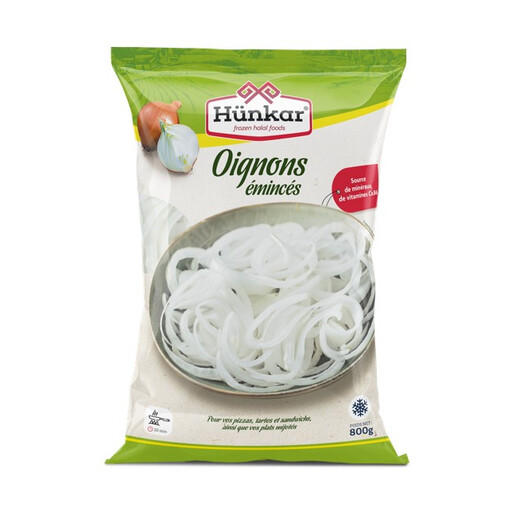 Image unavailable
Pre-sliced onions save you the chopping. You can then choose how to cook and season them.
Pack size: 800 g.
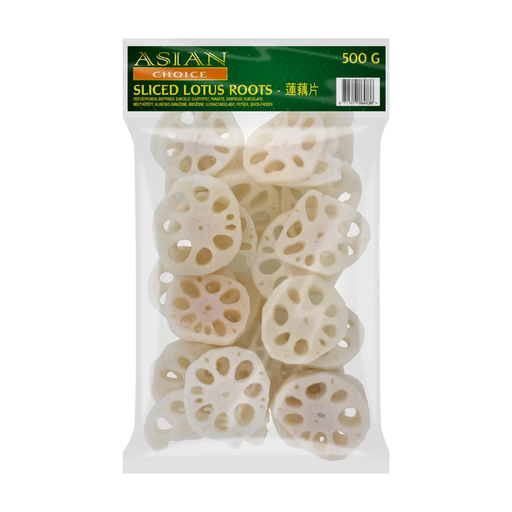 Image unavailable
The slices are a good option if you’d rather not cut the lotus root yourself. Check the preparation instructions before cooking.
Pack size: 500 g.
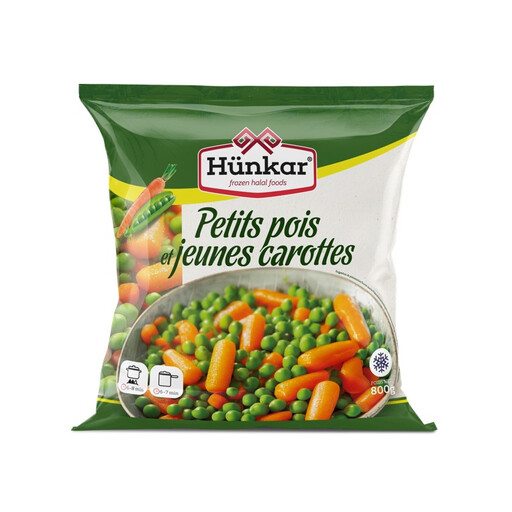 Image unavailable
This mix lets you prepare two vegetables together. If you want to avoid a mix that is already seasoned, check the ingredients list.
Pack size: 800 g. It’s not the same choice as a pack containing just one vegetable.
Compare the ‘fat’ figure per 100 g for products intended for the same use, then check their ingredients for any additions. The DGCCRF states that nutrition information per 100 g makes it easier to compare pre-packed foods.
No. A vegetable pan-fry can be a quick option, while plain vegetables let you choose how to season them. Compare each recipe before deciding: according to its product page, Carrefour Extra’s Mediterranean vegetables contain vegetable oils and have 7.4 g of fat per 100 g.
Compare the salt per 100 g, particularly between plain vegetables and recipes that are already seasoned. The ingredients list can also help you tell these products apart, rather than relying on the product name alone to judge their salt content.
Transport them without breaking the cold chain and put them in the freezer as soon as possible. If you need to defrost them, Anses advises using the fridge, the microwave’s defrost setting or cooking them quickly. It recommends not refreezing food once it has thawed.