Families with different appetites
If you’re planning a lunch to share, compare the total weight of a large pizza or multipack with the number of portions shown on each box. A higher weight doesn’t automatically mean a specific number of portions.


For a school-holiday lunch, choose a large pizza if everyone is happy with the same recipe, a multipack if you need several pizzas, or mini pizzas if you want to share out individual portions. Whichever you choose, check the total weight, the allergens for each product and whether you have enough oven space. The word ‘family’ on the pack alone won’t tell you how many people it will serve.
If you’re planning a lunch to share, compare the total weight of a large pizza or multipack with the number of portions shown on each box. A higher weight doesn’t automatically mean a specific number of portions.
If children and adults want different toppings, a selection of recipes or mini pizzas makes it easier to offer everyone a choice. Also check the total weight you’re planning to serve, not just the number of pizzas.
If the ingredients matter to someone at the table, check the ingredients and allergens for the exact product. To compare the nutritional values of pizzas in different sizes, use the per 100 g information described by the DGCCRF.
Start by thinking about how much you need to serve and which recipes your guests will enjoy. Then check the labels and make sure you can cook the pizzas in your oven in time for lunch.
Choose this: if everyone wants the same recipe and the pizza fits on your baking tray.
Bear in mind: one topping gives you less flexibility when tastes differ. Check the number of portions rather than relying on the weight alone.
Choose this: if you need several pizzas for lunch or want to offer a choice of recipes.
Bear in mind: you’ll need freezer space and, depending on the size of your oven, may need to cook them in batches.
Choose these: if you’d rather hand out individual pizzas than cut up one to share.
Bear in mind: add up their total weight before deciding how many packs to serve.
| What to consider | What to check | Who is this relevant to? |
|---|---|---|
| Quantity to serve | The total weight, number of pizzas and portions shown on the box. | If I’m getting several people together, I want to make sure there’s enough pizza without assuming that ‘family size’ means enough for everyone; around 36% of consumers put quantity at the top of their list of concerns. |
| Choice of recipes | The toppings and the number of pieces or pizzas in each pack. | When people have different tastes, I’d rather be able to offer a choice of recipes or individual pizzas; variety would be the top priority for around 29% of consumers. |
| Ingredients and allergens | The ingredients list, allergens and nutritional values per 100 g for each product. | If someone at the table needs to avoid an ingredient, I need to check exactly which pizza they’ll be served; around 21% of consumers would make reading the label their main concern. |
| Cooking and storage | The space needed in the oven, cooking instructions and storage guidance. | If I’m short on time or have just one baking tray, I want to know how many batches I’ll need to cook; ease of preparation would be the top concern for around 14% of consumers. |
A large pizza and a multipack may use similar wording on the packaging, even though they contain different quantities. The weight on the box won’t tell you how much each person will want to eat, either.
Check the total weight and the number of portions stated, then consider what else you’re serving before deciding how much to buy.
Some pizza and mini pizza recipes listed by Carrefour and Auchan include wheat and milk; allergen information can vary from one product to another.
Read the ingredients, highlighted allergens and any ‘may contain’ statements on every box you buy.
The journey home and the time before you put your shopping away both affect how you store frozen food. Anses recommends picking up frozen food at the end of your shop and using an insulated bag to carry it home.
Put the pizzas away promptly, following the storage instructions on the packaging, and don’t refreeze food that has thawed.
Products mentioned include Piccolinis mini pizzas and the 570 g La Grandiosa 4 formaggi pizza featured by Carrefour.
The Ristorante range includes a classic 340 g 4 Cheese pizza and a Grandissima version described as family-sized.
Carrefour includes large Carrefour Sensation pizzas in its frozen range.
The E.Leclerc catalogue includes a Turini multipack of three cheese pizzas, each weighing 350 g.
Auchan offers, among other products, a 270 g pack of nine three-cheese mini pizzas and a thin-crust four-cheese pizza.
Lidl has featured a Trattoria Alfredo multipack of three maxi soft-crust four-cheese pizzas, each weighing 390 g.
These products give you the chance to compare a pizza to share, mini pizzas to hand out individually and other pizzas by weight. Before planning lunch, check how much you’ll need for your guests against the product you choose.
 Image unavailable
If you’re planning to share it, compare its 480 g weight with the amount you’ll need for your guests rather than assuming the format tells you how many portions it will serve. If allergens are a factor in your choice, check the information on the box.
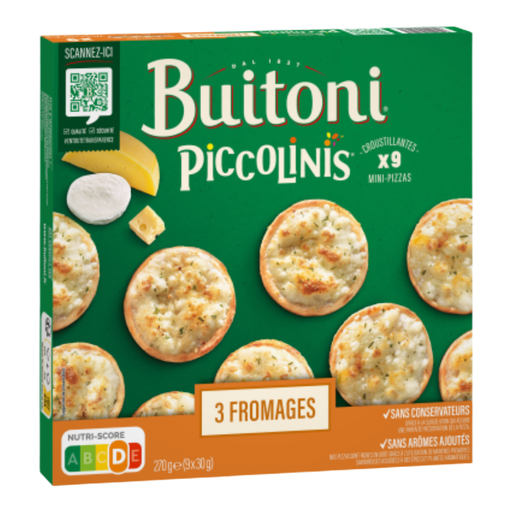 Image unavailable
The nine mini pizzas can be handed out individually. The pack weighs 270 g in total, so compare this amount with the number of people you’re serving and check the allergen information for this recipe on the packaging.
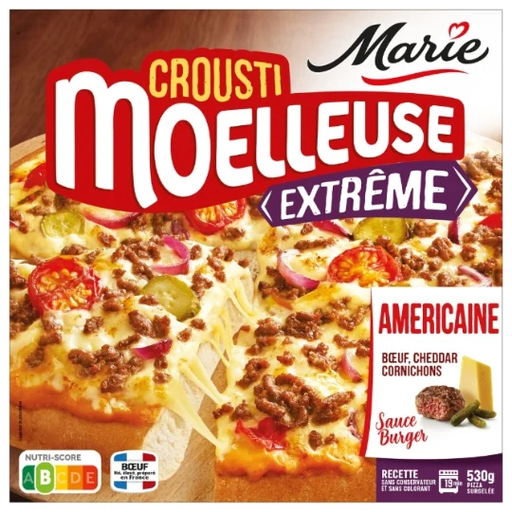 Image unavailable
If you’re sharing this pizza, use its 530 g weight as a guide and adjust the amount to suit the number of people at the table. Check the packaging for allergen information and cooking instructions for the product you’ve bought.
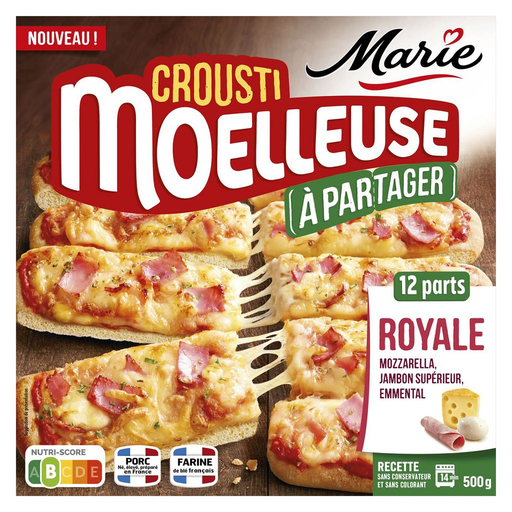 Image unavailable
This pizza is described as suitable for sharing and weighs 500 g. Check how many portions you plan to serve, along with the allergen information and cooking instructions on the box.
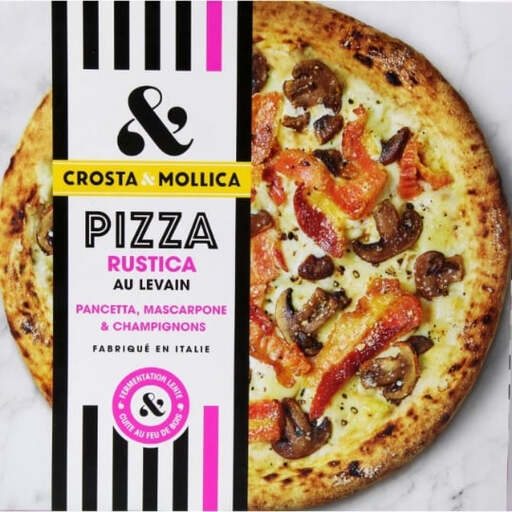 Image unavailable
If you’re considering this pizza for a lunch to share, compare its 444 g weight with the amount you need: its weight won’t tell you how many portions it will make. Follow the cooking instructions and check the allergen information on the packaging.
Compare their total weight and the number of portions stated, especially if one is sold in a multipack. To compare their ingredients when the pizzas are different sizes, use the nutritional values per 100 g shown on the labels, as described by the DGCCRF.
The family-size format won’t tell you: check the exact recipe. The DGCCRF says allergens must be highlighted in the ingredients list; also check the packaging for any ‘may contain’ statements.
Don’t refreeze food that has thawed. To minimise the time it spends out of the freezer, Anses recommends picking up frozen food at the end of your shop and using an insulated bag to carry it home.
Follow the cooking instructions for the pizza you’ve bought. Auchan strongly advises against microwaving its thin-crust four-cheese pizza; don’t assume the same advice applies to other products without checking.