
Livraison le jour même ou le lendemain

Qualité garantie

Débloquez vos offres de bienvenue: Livraison GRATUITE | Jusqu'à -80 % | 30 jours d'essai gratuits à JoyPlus
Téléchargez l'application
Frozen chicken makes everyday meals easier, but not all products are equal or suited to the same needs. Between breaded preparations, plain cuts, halal recipes and Japanese specialities, the label can quickly become difficult to decipher. A portion presented as generous may contain a significant amount of breadcrumbs, while a larger pack may not necessarily fit the size of your freezer.
Here are the criteria to consider when choosing frozen poultry meat that is practical, suited to your habits and compatible with your budget.
The terms “pre-fried”, “cooked” and “ready to heat” do not refer to the same type of preparation as a raw fillet or thigh. Already-cooked products, such as some karaage chicken, can generally be reheated by following the manufacturer’s instructions. By contrast, frozen chicken breast and thighs must be cooked all the way through.
Always check the preparation method, recommended temperature and whether the product needs to be defrosted.
A bag of tenders or wings may contain a considerable amount of breadcrumbs, sauce or other added ingredients. To compare two products, check the ingredients list as well as the percentage of meat. For example, HÜNKAR Tenders Special Crusty Halal contain 73% chicken meat, compared with 62% for HÜNKAR breaded wings before coating.
This information helps distinguish a relatively simple poultry cut from a more elaborate chicken preparation that is ready to cook.
Breadcrumb coatings often contain wheat or gluten. Asian recipes may also contain soya, sesame or egg. Take the time to read the allergen declaration, including the statement “may contain traces of”.
To preserve product quality and safety, keep your freezer at −18°C or below, observe the date shown on the packaging and never refreeze food that has been defrosted.
The cut you choose has a direct impact on texture and cooking method:
If you eat halal, check the certification or statement shown on the product page and packaging. Products sold as frozen halal chicken do not all contain the same cut and are not necessarily prepared in the same way.
Nutritional values should be compared per 100 g, not just per portion. A breaded product may contain more fat or salt than a plain cut. This is not necessarily a deal-breaker: it all depends on how you plan to use it, whether for a quick meal, an appetiser, a family meal or professional food preparation.
Recipes such as frozen breaded chicken, cordon bleu and tenders are generally quick to prepare. However, they deserve careful attention when checking the ingredients, particularly in the event of an allergy to milk, soya, mustard or gluten.
A 240 to 500 g bag is enough for an occasional meal or a small quantity. Packs from 700 g to 1 kg are better suited to families. In a restaurant, catering business or commercial kitchen, a 1.5 kg pack can reduce the need for restocking, provided there is enough storage space.
The cooking method — oven, frying pan, deep-fat fryer or air fryer — can also affect the final result. Follow the manufacturer’s instructions rather than relying solely on the product’s appearance.
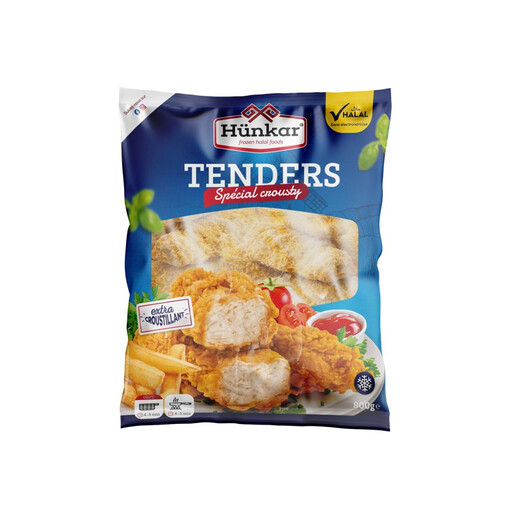
Why this product suits this profile: At 800 g, this bag is well suited to family meals. Its breaded preparation is easy to cook in the oven, frying pan or deep-fat fryer.
The product page states that it contains 73 % chicken meat, useful information for accurately assessing the proportion of meat in the total weight.
An 800 g frozen halal product providing 21 g of protein and 0.6 g of salt per 100 g, according to the information provided.
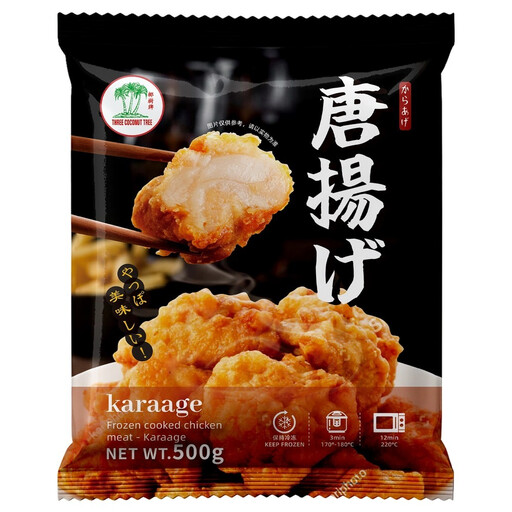
Why this product suits this profile: This pre-cooked Japanese recipe offers a more refined experience than a classic breaded product, with a marinade of soya, sake, ginger, garlic and sesame oil.
The product page specifies that the chicken is cooked and then frozen, and details its composition, which contains 60 % thigh meat.
A 500 g pack, a texture described as crispy and a clearly displayed allergen list: gluten, soya, egg and sesame.
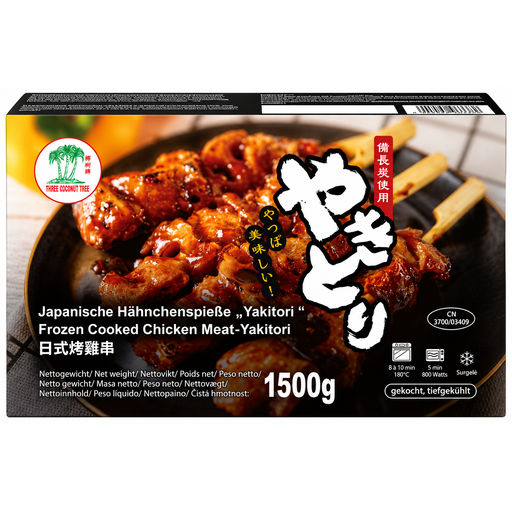
Why this product suits this profile: Its 1.5 kg pack has been designed for restaurants, caterers, buffets and high-volume food preparation.
The net weight and 75 % meat proportion are stated, making it easier to calculate the number of portions and cost per serving.
Pre-cooked skewers coated in teriyaki sauce, with 170 kcal and 19.2 g of protein per 100 g, according to the product page.
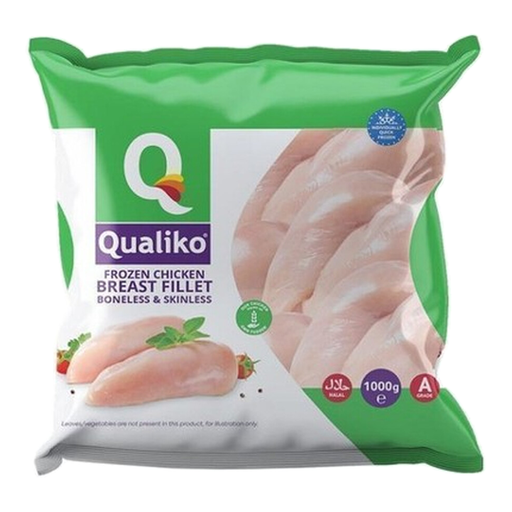
Why this product suits this profile: This plain fillet is suitable for all kinds of recipes: grilled, sliced, in curries, on skewers or slow-cooked.
This is a frozen chicken fillet sold without any listed breadcrumbs or sauce, leaving you in control of the ingredients added at home.
A 1 kg pack, halal certification and 24.7 g of protein per 100 g, according to the nutritional information provided.
We have brought together a complete, real-time updated selection of products that meet these demanding criteria and European food safety rules.
It depends on the product. Some breaded or pre-cooked preparations are designed to be reheated directly from frozen. For a raw piece, always follow the instructions on the packaging to ensure it is cooked all the way through. Do not rely on weight alone to estimate the cooking time.
Keep it at −18°C or below, until the date stated by the manufacturer. Once defrosted, the product must not be refrozen. If you have opened the packaging, wrap the pieces carefully to help prevent drying out and freezer burn.
For family use, 700 g to 1 kg bags offer a good balance between quantity and ease of storage. Packs of 1.5 kg or more are better suited to restaurants, caterers and kitchens that regularly serve skewers, tenders or other poultry preparations. Remember to compare the price per kilo, the cooked yield and the amount of space available in your freezer.