Shoppers who prefer plain fillets
You want to build a meal around minimally processed fish, comparing the protein per 100 g and then per portion you plan to serve.


To choose fish with protein in mind, compare the nutritional information per 100 g and per portion. A plain fillet and a breaded product shouldn’t be judged by their names alone. Salmon gives you the option to include an oily fish in your meals, but you should still check the label. If you prefer a fresh fillet to cook on the day you buy it, plan how you’ll transport it and keep it chilled.
You want to build a meal around minimally processed fish, comparing the protein per 100 g and then per portion you plan to serve.
You’re looking for portions to suit your meals and checking whether your chosen product can be cooked without defrosting first. Findus says this is possible for some of its cod fillets, but instructions vary by product.
You want to alternate between white fish and oily fish such as salmon, rather than choosing the same type for every meal.
First, decide whether you want to cook a fresh fillet on the day you buy it or keep frozen portions on hand. Then compare products by their ingredients and nutritional information, without treating a plain fillet and a breaded product as the same thing.
| What to compare | What to check | Who is it for? |
|---|---|---|
| Ingredients and protein | Protein per 100 g and per portion, followed by the ingredients list and the fish content, if stated. | I want to tell the difference between a plain fillet and a breaded product before planning my meal. Around 33% of shoppers would put this comparison at the top of their list of priorities. |
| Variety of fish | The species and type of product, so you can alternate between lean and oily fish. | If I often choose white fish, I also want to plan a meal with oily fish. Around 20% of shoppers would make this a priority. |
| Cooking and portions | The number and weight of portions, plus the cooking instructions, including whether the fish can be cooked from frozen. | I want to take out only the amount I need for one meal and know how to prepare it. For around 27% of shoppers, portion size and preparation would come before other criteria. |
| Pack size and availability | The net weight, number of pieces and the product available at your chosen shop or collection point. | I need a pack size to suit the number of meals I’m planning, without assuming that a particular product will be available everywhere. Around 20% of shoppers would prioritise this. |
Carrefour Extra states that one of its breaded products contains 65% cod and 35% breadcrumbs. So the name of the fish alone isn’t enough to compare it with a plain fillet.
Check the fish content, ingredients, allergens and nutritional information per 100 g for each product.
Manger Bouger recommends eating two portions of fish a week, including one portion of oily fish, and alternating between oily and lean fish.
If you usually cook white fish fillets, consider another type too, including oily fish, depending on the meals you have planned.
The Ministry of Agriculture warns that refreezing a defrosted product can encourage bacteria to multiply.
Follow the storage and defrosting instructions on the packaging, and don’t refreeze fish once it has defrosted.
A retailer may stock several types of fish without carrying the specific product you’re looking for at your chosen shop or collection point.
Select your shop, then check the exact product, its net weight and the number of portions.
Findus offers frozen plain cod fillets, including a pack containing six portions.
Carrefour Extra offers both plain cod fillets and frozen breaded fillets.
Auchan’s range includes plain frozen fish, salmon portions and prepared recipes.
ALDI offers plain and breaded frozen fish under the Golden Seafood brand, including cod and pollock products.
E.Leclerc DRIVE offers a selection of frozen fish, which varies depending on the collection point you choose.
This selection includes white fish fillets, salmon portions and a breaded product. Choose according to the recipe you’re looking for, the pack size and the information on the packaging. A breaded product isn’t a like-for-like substitute for a plain fillet.
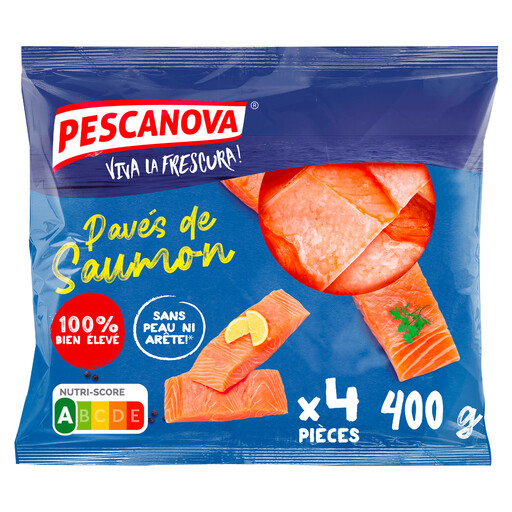 Image unavailable
An oily fish option in frozen portions, giving you a way to vary the types of fish you eat.
Compare the protein per 100 g on the packaging and follow the cooking and defrosting instructions.
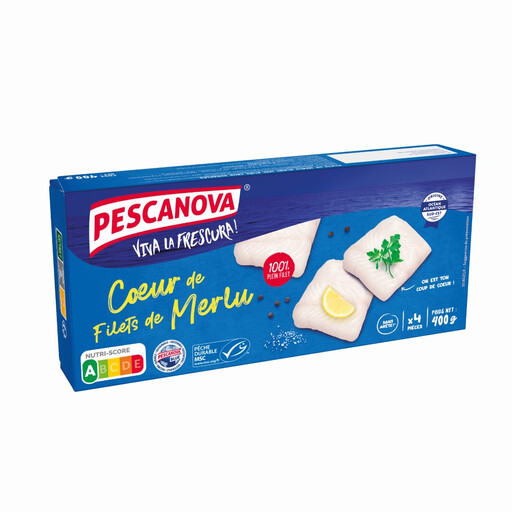 Image unavailable
A white fish fillet to consider if you’re looking for a plain option rather than a breaded recipe.
Check the cooking instructions and look out for any small bones before serving.
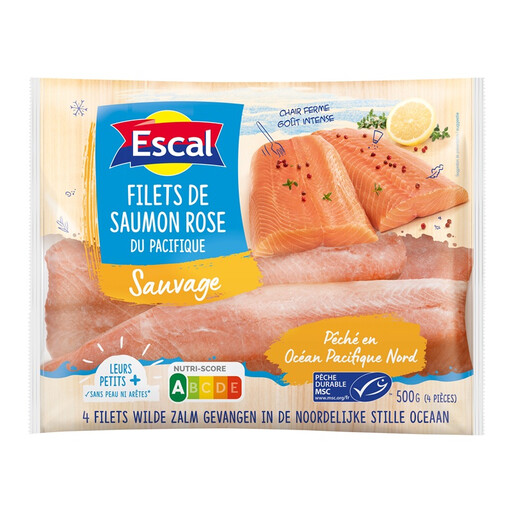 Image unavailable
Another frozen salmon option to compare by portion size and the product’s nutritional information.
Defrost in the fridge before cooking, as instructed for this product.
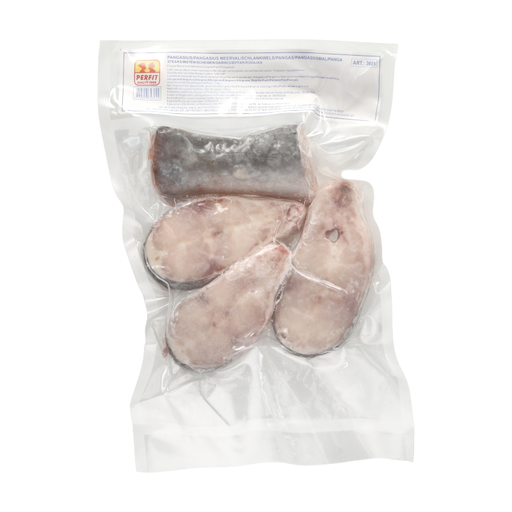 Image unavailable
This pack could suit several meals if you’re looking for frozen white fish.
To compare its protein content, check the value on the packaging of the exact product. Also check whether it contains skin or bones.
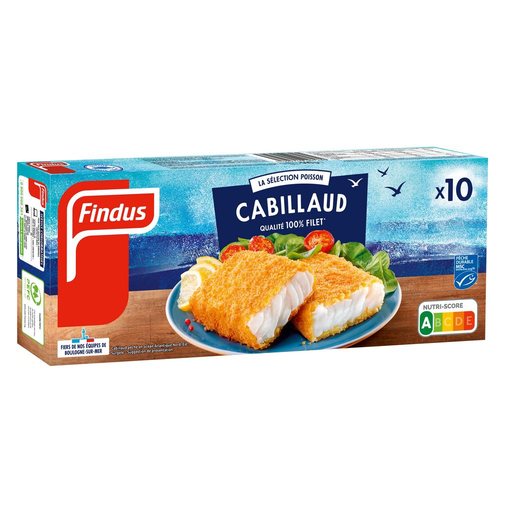 Image unavailable
This breaded recipe is a different choice from a plain fillet, even though both products contain cod.
Before choosing, compare the fish content, nutritional information and allergens listed on the packaging.
Compare the protein listed per 100 g and per portion, rather than relying on the name of the fish alone. If you’re looking for a minimally processed option, check the ingredients list for a plain fillet before comparing it with other products.
No, these products don’t necessarily have the same ingredients. Carrefour Extra states that one of its breaded fillet products contains 65% cod and 35% breadcrumbs. Compare the fish content, protein, fat and allergens for the specific product you’re interested in.
No. You can alternate salmon with other types of fish to suit your meals. Manger Bouger recommends eating two portions of fish a week, including one portion of oily fish, and suggests varying the types of oily and lean fish you eat.
Don’t refreeze a defrosted fillet: the Ministry of Agriculture says this can encourage bacteria to multiply. Also follow the defrosting and cooking instructions for the specific product.
Plan to keep it chilled while you transport it and cook it on the day you buy it, rather than choosing it as something to store in the freezer. To compare its protein content with a frozen fillet, look at the species, portion size and nutritional information for the products in question. Don’t assume fresh fish contains more protein.