To offer a small amount to a child who refuses certain vegetables, a bag of plain vegetables lets you choose the vegetable, how it’s cooked and how it’s served. A purée or vegetable mix may suit the meal better, as long as you check the ingredients and choose a texture your child can manage. Manger Bouger recommends offering a small amount without forcing your child to eat more.
Who are these options for?
Parents looking to reduce food waste
You’re looking for a bag that lets you take out the amount you need and use the rest for another meal. The ranges listed by Carrefour and E.Leclerc include plain vegetables in bags of around 1 kg. Check that this size suits the way you’ll use them.
Parents offering a refused vegetable again
You’d like to try a small amount or serve it in a different way without turning mealtimes into a negotiation. Manger Bouger recommends inviting children to try something without forcing them to eat more.
Parents of young children who need an age-appropriate texture
You’re choosing between a purée, mashed vegetables and pieces, depending on your child’s ability to chew. Assurance Maladie describes how textures progress for children under 3, so the format shown on the bag alone isn’t enough to determine how you should serve it.
What should you check before buying?
Plain vegetables
Consider this: if you want to offer a familiar vegetable on its own, in a small amount.
Bear in mind: you’ll still need to adapt the cooking and how you serve it to your child.
Purée or prepared portion
Consider this: if a smooth texture suits the meal and your child’s abilities.
Check: the recipe may contain several ingredients, and you’ll have less control over the seasoning.
Vegetable mix or pan-fry
Consider this: if you’d like to serve several vegetables your child already accepts.
Limitation: if your child refuses a mix, it can be hard to tell which vegetable or texture was the problem.
| Criteria |
What to check |
Who is this for? |
| How you’ll use the bag |
The net weight and how much you can take out and use for other meals. |
If I’m serving small amounts, I want to use the rest of the bag without ending up with several rejected portions. Around 36% of consumers prioritise making good use of the product. |
| Taste and presentation |
A familiar vegetable, served on its own or in a recipe, and a format you can adapt. |
When my child refuses a vegetable, I’d rather be able to offer it in a different way than insist on a whole mix. This comes first for around 29% of consumers. |
| Preparing a small portion |
The cooking instructions and whether you can prepare only the amount you need. |
When I need to get a meal ready quickly, I want to take out a small portion rather than cook the whole bag. Around 21% of consumers prioritise ease of preparation. |
| Texture and storage |
A texture that suits your child’s ability to chew, as well as the storage and cooking instructions. |
With a very young child, I need to be able to serve a texture they can manage and store the product properly. Around 14% of consumers prioritise this. |
Mistakes to avoid
-
Choosing a bag without a plan for using it
A large pack is only practical if you can take out suitable amounts and use the rest for other meals.
Check the net weight and the information on the pack, then choose a vegetable you can serve in different dishes.
-
Offering a mix when you want to try one vegetable
Vegetable mixes and pan-fry mixes contain several ingredients. If your child refuses the dish, you won’t know which vegetable they objected to.
To offer a particular vegetable again, serve a small amount on its own. Manger Bouger recommends not forcing your child to eat more.
-
Judging the texture before cooking
A purée, chopped vegetables and pieces aren’t all served in the same way to a young child. Assurance Maladie advises taking their development and ability to chew into account.
Adapt the preparation and texture to your child. If they have particular difficulty chewing or swallowing, ask a healthcare professional for advice.
-
Leaving frozen food out after shopping
Getting the product home and back into the freezer are both part of storing it properly. Anses recommends picking up frozen food at the end of your shop and carrying it in an insulated bag.
Keep the journey as short as possible, put the product back in the freezer promptly and follow the storage and cooking instructions on the pack.
Brands and retailers to consider
Carrefour Classic'
A supermarket range to explore for plain vegetables and prepared options.
- Carrefour lists frozen sliced carrots, courgettes and spinach, among other products.
- Check the weight, ingredients and product available at your store.
Notre Jardin (E.Leclerc)
A range to look at if you prefer to choose vegetables individually.
- E.Leclerc lists frozen sliced carrots, courgettes, spinach and green beans, among other products.
- The cut and pack size vary by product, so choose one that suits the meal you have in mind.
Auchan / Pouce
Ranges to browse when comparing individual vegetables, mixes and prepared dishes.
- Auchan lists plain vegetables, pan-fry mixes, purées, gratins and vegetable patties, including bags from 450 g to 1 kg.
- The portion information on a bag doesn’t replace working out how much you’ll serve your child.
ALL SEASONS® (ALDI)
A range where you can browse both individual vegetables and mixes.
- ALDI lists peas, green beans, cauliflower and pan-fry mixes, among other products.
- If you’re choosing a pan-fry mix, read the recipe before treating it as equivalent to a plain vegetable.
Bonduelle
A brand offering frozen vegetables and prepared recipes.
- Bonduelle lists pan-fry mixes combining vegetables with other ingredients, among other products.
- A varied recipe doesn’t mean your child will accept it, so check the ingredients and texture.
Lidl
A retailer worth checking if you usually do your shopping there.
- Lidl has a frozen food range.
- When choosing vegetables for a meal, check the products, pack sizes and labels in store.
Frozen vegetables available on Joybuy
These products show the three formats to choose between for mealtimes: individual vegetables, mixes and purée. First, choose a format you can serve to your child, then check the ingredients and instructions for the product you pick.
 Image unavailable
BONDUELLE Extra-fine green beans, 750 g
Worth considering if you’d like to offer green beans without mixing them with other vegetables.
After cooking, adapt the texture to your child’s abilities and follow the instructions on the pack.
View on Joybuy
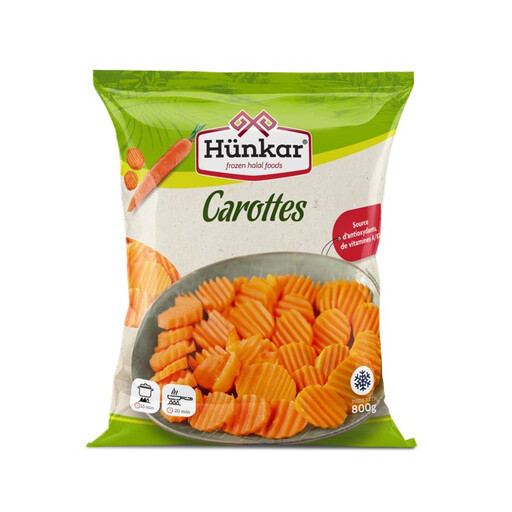 Image unavailable
HÜNKAR Carrots, 800 g
Worth considering if you want to offer carrots on their own again, taking out the amount you need from this 800 g bag.
Check how they’re cut and the cooking instructions before deciding how to serve them.
View on Joybuy
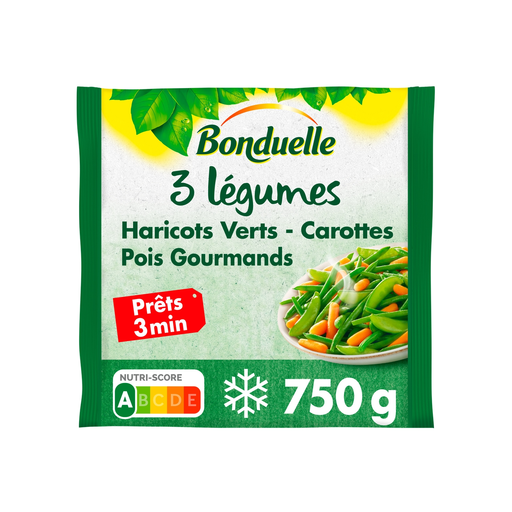 Image unavailable
BONDUELLE Green beans, carrots and mangetout, 750 g
This mix is better suited to a meal where you’d like to serve all three vegetables together than to trying just one.
Follow the cooking instructions and adapt the texture to your child.
View on Joybuy
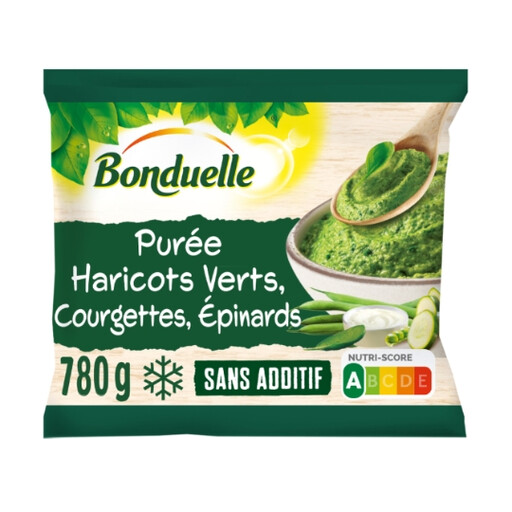 Image unavailable
BONDUELLE Green bean, courgette and spinach purée, 780 g
Worth considering if you’re looking for a purée combining several vegetables rather than a vegetable served on its own.
Check the label if you need to avoid cream, butter or celery, and read the preparation instructions before serving.
View on Joybuy
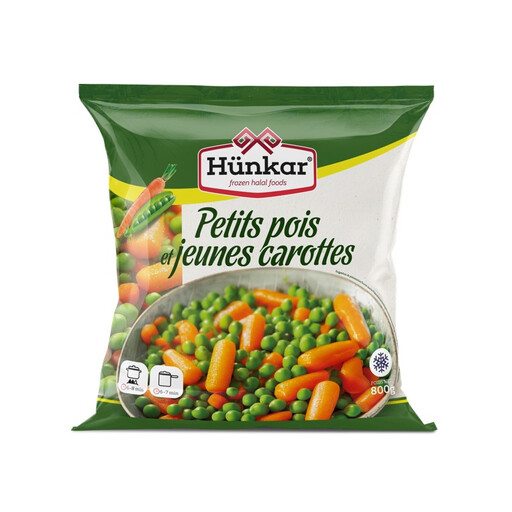 Image unavailable
HÜNKAR Peas and baby carrots, 800 g
Worth considering if your child already knows peas and carrots and you’d like to serve them together.
If you want to see how they respond to a single vegetable, choose a bag containing just that vegetable. Also check the cooking instructions for this mix.
View on Joybuy
Frequently asked questions
Can you give frozen vegetables to a child?
Yes. Frozen vegetables are one of the ways to include vegetables in a child’s diet, according to Assurance Maladie. Choose a preparation and texture that suit your child’s age and abilities.
What should I do if my child refuses the vegetable I’ve served?
Offer a small amount without forcing them to eat more. Manger Bouger recommends this approach when a child refuses food. You can try again at another meal rather than insisting they finish a whole portion.
Purée, mashed vegetables or pieces: how do I choose?
Choose a texture that suits your young child’s ability to chew and their progress with solid foods. For children under 3, Assurance Maladie describes introducing mashed foods between 8 and 10 months, followed by small pieces from 10 months when the child is ready. If they have particular difficulty chewing or swallowing, ask a healthcare professional for advice.
How should I carry frozen vegetables home after shopping?
Pick up frozen food at the end of your shop and carry it in an insulated bag, as Anses recommends. Keep the journey short, put the vegetables back in the freezer promptly and follow the storage instructions on the pack.


