Fans of quick vegetable medleys
You’re looking for a hot side dish that’s already seasoned and easy to cook, while comparing fat and salt content rather than relying on the word ‘vegetables’ alone.


To keep an eye on fat content in a comforting dinner, choose plain vegetables if you want to season them yourself, or a pre-seasoned vegetable medley if speed matters more. Compare the fat content per 100 g, salt and ingredients in each recipe. Mixes containing grains, pulses or sauce serve a different purpose and may contain cream, oils or allergens.
You’re looking for a hot side dish that’s already seasoned and easy to cook, while comparing fat and salt content rather than relying on the word ‘vegetables’ alone.
You want vegetables, grains or pulses in one dish. In that case, the possible presence of cream, oil and allergens will influence your choice of recipe.
You prefer a bag of plain vegetables or a simple mix so you can choose the portions and seasoning yourself, then add whatever else you fancy to dinner.
First decide between plain vegetables, a seasoned vegetable medley or a dish containing other ingredients. Then compare the labels of recipes that suit your needs. The DGCCRF states that the nutrition declaration for pre-packed foods is given per 100 g or 100 ml. Here, the per-100 g figure lets you compare bags of different sizes.
| What to compare | What to check | Who is it for? |
|---|---|---|
| Fat content | Compare the fat and saturated fat content per 100 g; check the ingredients for oils, cream or cheese. | If I want to serve a hot vegetable medley quickly, I want to know what’s in the seasoning before I choose. Around 42% of consumers put managing fat content at the heart of this decision. |
| What’s in the dish? | Check whether the recipe combines vegetables, grains or pulses, then read the allergen information on the specific bag. | If the vegetables are to form the basis of dinner rather than just a side dish, I look for a recipe that brings several ingredients together. Making this the priority would matter to around 33% of consumers. |
| Portions and seasoning | Check the bag size and cooking instructions to decide how much to prepare and whether to add any seasoning. | When portions vary from one meal to the next, I prefer to choose the amount of vegetables and seasoning myself. Flexibility in preparation would be the main consideration for around 25% of consumers. |
Carrefour Extra’s grilled vegetable medley includes sunflower and olive oils. Its product information lists 2.7 g of fat per 100 g, so the category name alone doesn’t tell you what’s in the recipe.
Compare the nutrition information per 100 g and read the ingredients before choosing a vegetable medley.
The Bonduelle mixes with grains and pulses mentioned here have different ingredients; one of the recipes contains cream. They’re therefore not quite the same as a bag of plain vegetables.
Decide whether you want a ready-made dinner base or vegetables to season yourself, then check the fat content and allergens in your chosen recipe.
Some vegetable medleys are already seasoned. For its country-style vegetable medley, Auchan says it can be cooked in a non-stick frying pan without adding fat.
Follow the instructions on your chosen bag before adding any fat.
A vegetable-based dish may also contain wheat, milk or soya, depending on the recipe. Storage and defrosting instructions can vary too.
Check the allergen information and follow the storage instructions on the packaging you buy.
The range includes vegetable medleys as well as mixes combining vegetables, grains and pulses.
The retailer distinguishes between plain frozen vegetables, cooked vegetables and vegetable medleys.
E.Leclerc’s range includes plain vegetables and a seasoned Asian-style vegetable medley.
Auchan’s country-style vegetable medley is a seasoned vegetable mix in a 750 g bag.
ALDI’s frozen food range includes simple vegetables and mixes ready to cook.
These products are mainly for preparing a side dish or adding vegetables to a homemade meal. Purée is another type of side dish: if fat content is guiding your choice, compare its ingredients with those of plain vegetables.
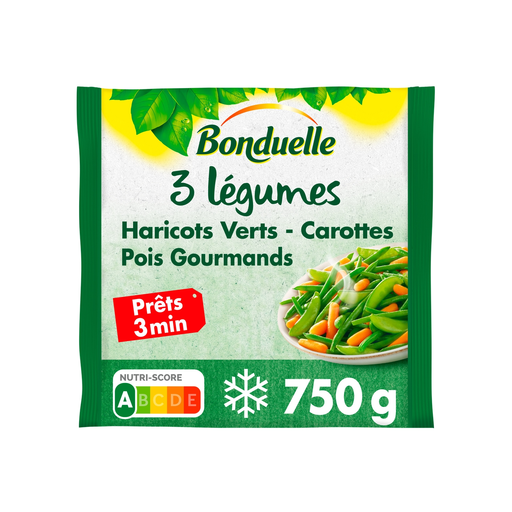 Image unavailable
A side dish combining three vegetables that you can season to your taste.
The bag contains 750 g; plan the other parts of your dinner separately.
 Image unavailable
Serve green beans as a side and choose the seasoning yourself.
The bag contains 750 g; add other ingredients to suit the dinner you want to prepare.
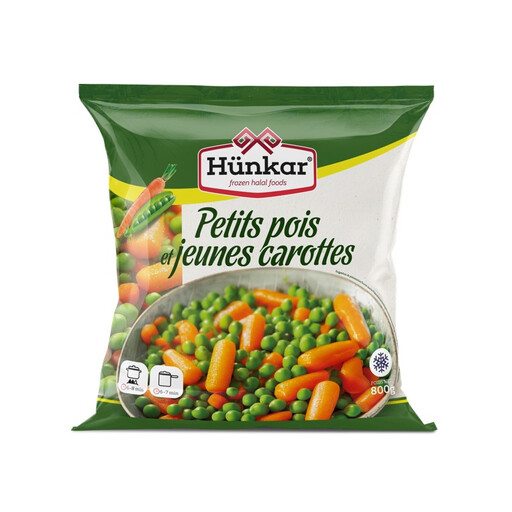 Image unavailable
Add a mix of two vegetables to a cooked dish or serve it as a side.
The bag contains 800 g; check the packaging to adapt the cooking instructions to your recipe.
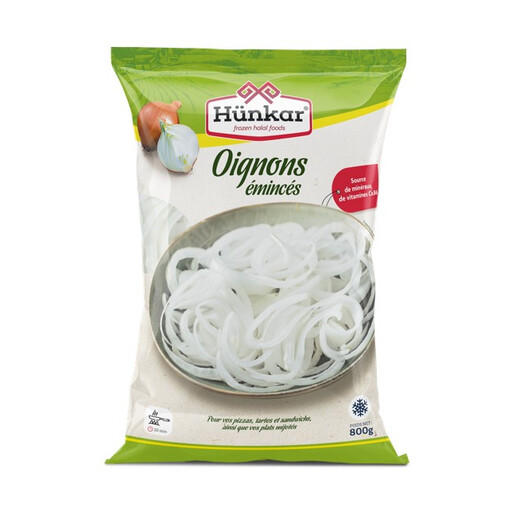 Image unavailable
Add onions to a homemade dish and choose the other ingredients yourself.
The bag contains 800 g. This is an ingredient to add to dinner, not a vegetable mix to serve on its own.
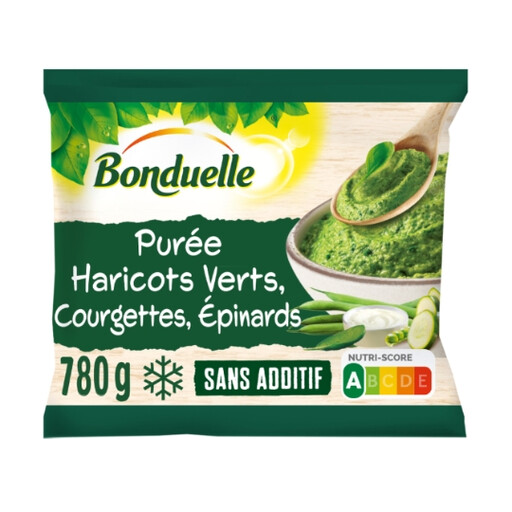 Image unavailable
Serve a hot vegetable purée instead of a mix of whole vegetables.
The pack contains 780 g. Before choosing it for its ingredients, compare its fat content per 100 g and check the ingredients and allergens on the packaging.
No. Compare the fat content per 100 g and check the saturated fat, salt and ingredients too. For pre-packed foods, the DGCCRF presents the nutrition declaration per 100 g or 100 ml as the basis for comparison. Searching for an English phrase doesn’t replace checking the product label.
Yes, if the product instructions say so. Auchan says its country-style vegetable medley can be cooked from frozen in a preheated non-stick frying pan without adding fat. Follow the instructions for the specific bag you’ve chosen.
Check the allergen information for the exact recipe. The Bonduelle grain mixes mentioned here contain gluten and milk, among other ingredients, and the one with edamame also contains soya. You can’t tell whether a product contains allergens from the word ‘vegetables’ alone.
Follow the storage instructions on the packaging. The product information for Auchan’s country-style vegetable medley says not to refreeze a defrosted product. Check the date shown on the bag too.
No. To compare the grams of fat and salt in two recipes, read their nutrition information on the same per-100 g basis. Nutri-Score can add to this information, but it doesn’t tell you everything about the ingredients that matter to your choice.