To get ready for your baby’s arrival, start with plain vegetables that you cook regularly, in pack sizes suited to the space you have and the quantities you use. A few simple mixes or prepared dishes can round out your stock for busy evenings. Just be sure to check their ingredients, allergens and storage instructions.
Who are these formats suitable for?
Parents preparing different types of meals
If you use the same vegetables for soups, stir-fries or side dishes, packs of plain vegetables let you take out just the amount you need. A large pack makes most sense if you have the space and use its contents regularly.
Parents with busy evenings
Pre-chopped vegetables or a ready-to-cook mix can cut down on preparation. For a prepared dish, check the ingredients and allergens too: it’s not the same as a pack of plain vegetables.
Households looking to avoid unused leftovers
Choose pack sizes to suit how often you cook and the freezer space you actually have. A small selection of vegetables you eat regularly may be easier to use than a freezer full of different products.
Which criteria should you prioritise?
When building up a stock before your baby arrives, first choose the vegetables and quantities you’ll genuinely use. Then add prepared dishes for the meals when time is short.
Plain vegetables
Choose these: if you cook regularly and want to decide for yourself which vegetables to combine and how to season them.
Bear in mind: a large pack takes up space, and you’ll still need to prepare the rest of the meal.
Simple mixes
Choose these: if you’d like several vegetables in one pack, without having to put a mix together for every meal.
Bear in mind: the vegetables and their proportions are set by the product, so check they’ll work for the recipes you have in mind.
Prepared dishes
Choose these: as a handy extra when a ready-made dish suits the meal you’re planning.
Bear in mind: ingredients and allergens vary by recipe, and prepared dishes are less versatile than plain vegetables.
| Criteria |
What to check |
Who is this for? |
| Versatility |
Choose plain vegetables you use in several recipes, and check the pack size. |
If I make my own soups and side dishes, I want to be able to take out a vegetable and decide what to serve with it. Around 36% of consumers put versatility first. |
| Quick preparation |
Check the cooking instructions and distinguish between a simple mix and an already seasoned dish. |
On evenings when every step counts, I’d rather have vegetables that are already chopped or combined in one pack. For around 29% of consumers, reducing preparation time comes before other criteria. |
| Pack size and space |
Compare the net weight with the quantities you use and the space available in your freezer. |
I want to stock up without filling the freezer with a vegetable I rarely cook. Managing quantities would be the top priority for around 21% of consumers. |
| Ingredients and allergens |
Read the ingredients and declared allergens, particularly for fritters and other prepared dishes. |
When a meal needs to meet the household’s dietary requirements, I need to know exactly what each dish contains. Around 14% of consumers make this their priority. |
Mistakes to avoid
-
Buying all your vegetables in large packs
Retailers offer pack sizes from 600 g to 1 kg. A bulky pack can take up valuable freezer space if you rarely use the vegetable inside.
Start with a few vegetables you cook often. Choose other sizes for variety or for specific recipes.
-
Confusing prepared dishes with plain vegetables
A fritter or stir-fry may contain ingredients that aren’t found in a pack of plain vegetables. The ingredients vary from recipe to recipe.
Keep versatile basics separate from prepared dishes, and check the ingredients, allergens and cooking instructions for each one.
-
Letting a pack defrost before putting it away
According to the DGCCRF, a rise in temperature speeds up microbial growth. Bonduelle advises only putting vegetables back in the freezer if they have not defrosted.
Keep transit time to a minimum, put frozen food away as soon as you can and follow the storage instructions on each pack. Do not refreeze a defrosted product.
Brands and retailers to know
Bonduelle
Bonduelle offers plain vegetables, mixes and prepared dishes. Each category has a different role in your freezer stock.
- Products listed by Bonduelle and retailers include spinach, green beans and a vegetable mix in 750 g packs.
- Don’t assume that a plain vegetable pack has the same ingredients as a fritter or stir-fry. Check each product individually.
Carrefour
Carrefour sells frozen vegetables under its own brand, including organic options, and also stocks Bonduelle products.
- The Carrefour Bio products listed include 600 g packs of green beans and 540 g packs of broccoli.
- Check which products your local store stocks and choose a pack size that suits your meals.
E.Leclerc
E.Leclerc’s Notre Jardin range includes several types of plain frozen vegetables for different dishes.
- E.Leclerc lists 1 kg packs of green beans and courgettes.
- Before buying several large packs, check how much freezer space you have and which vegetables you actually use.
Auchan
Auchan groups its frozen range into individual vegetables, mixes, stir-fries, purées and gratins.
- This makes it easier to choose basic vegetables separately from prepared dishes for a particular meal.
- Check the weight, ingredients and cooking instructions for the product you choose.
Lidl
If you’re thinking of stocking up at Lidl, check the range at the store where you plan to shop.
- What your local store stocks can help you decide which vegetables to keep in the freezer.
- Don’t plan your whole stock around a particular product until you’ve checked its size and details in store.
Aldi
ALDI France sells plain frozen vegetables under the ALL SEASONS® brand, as well as other types of prepared dishes.
- Products listed include 1 kg packs of peas, green beans and broccoli.
- A stir-fry or gratin calls for different ingredient checks from a pack of plain vegetables.
Products to build your stock
These Joybuy products illustrate three ways to use your freezer: a plain vegetable to pair with different meals, a vegetable mix, and prepared dishes to keep for specific meals. Choose according to the quantities you use, the cooking method and the ingredients in each product.
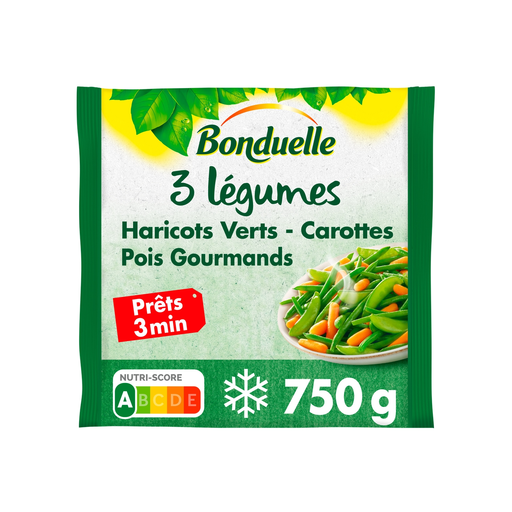 Image unavailable
Bonduelle green bean, carrot and mangetout mix 750 g
A handy way to combine three vegetables in one pack when you’re making a side dish. The Joybuy product listing gives a cooking time of 3 minutes for the method shown. Check the pack instructions for your equipment.
View on Joybuy
 Image unavailable
Bonduelle extra-fine green beans 750 g
Keep a plain vegetable on hand to pair with the meals you make. The Joybuy product listing says to store at −18 °C and not to refreeze after defrosting.
View on Joybuy
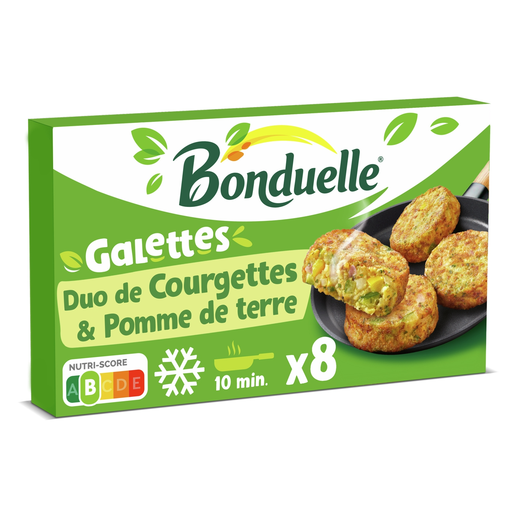 Image unavailable
Bonduelle courgette and potato duo fritters, 8 pieces
For a meal where fritters are the right accompaniment, rather than as a substitute for plain vegetables you can use in different recipes. The Joybuy product listing recommends cooking in a frying pan. Check the ingredients and allergen traces on the pack.
View on Joybuy
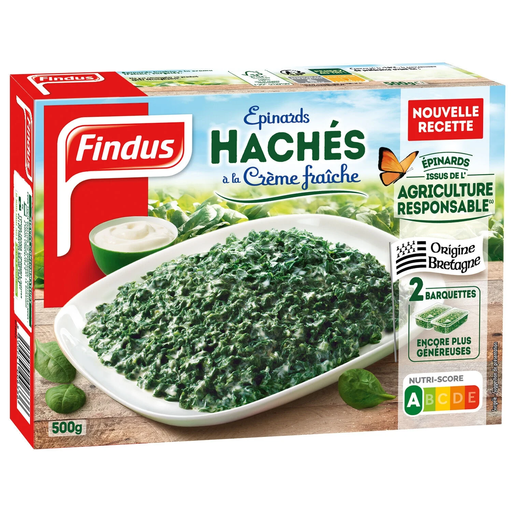 Image unavailable
Findus chopped spinach with cream 500 g
Keep this creamed spinach dish for a specific meal, rather than treating it like a pack of plain spinach. Check the ingredients, allergens and cooking instructions on the pack.
View on Joybuy
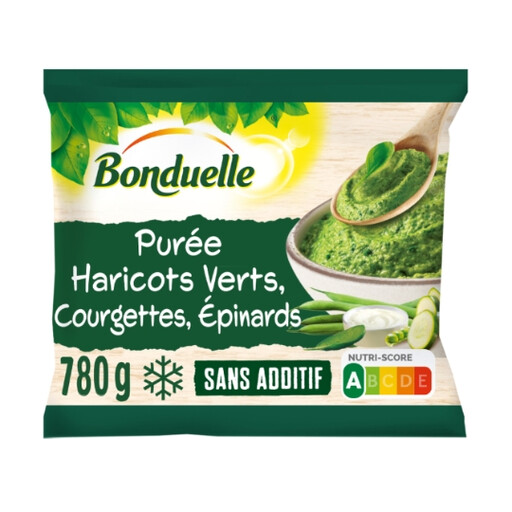 Image unavailable
Bonduelle green bean, courgette and spinach purée 780 g
For a meal where a vegetable purée is what you’re looking for. Choose this 780 g pack according to the quantity you’ll use, and check the pack for ingredients and preparation instructions.
View on Joybuy
Frequently asked questions
Can you put a pack of defrosted vegetables back in the freezer?
Don’t refreeze vegetables that have defrosted. Bonduelle says that only vegetables which have remained frozen can be returned to the freezer after opening the pack. Always follow the instructions for the specific product too.
Should you only choose 1 kg packs before your baby arrives?
No. A 1 kg pack is best suited to a vegetable you use often and when you have enough freezer space. Smaller packs or mixes may be a better fit if you cook less often or like more variety in your meals.
Can a vegetable fritter replace a pack of plain vegetables?
Not for every use. A fritter is a prepared dish for a particular meal, while plain vegetables can be used in all kinds of recipes. Check the fritter’s ingredients and allergens before adding it to your freezer stock.
How should you transport and store frozen vegetables?
Keep the time out of the freezer to a minimum and put the packs away as soon as you can. The DGCCRF notes that a rise in temperature speeds up microbial growth. Follow the storage temperature and instructions on each pack.


