Don’t assume frozen sardine fillets are a ‘low-fat’ product. The Réseau Krill, écomiam and Argel products reviewed declare 9.2 g, 9.48 g and 10.4 g of fat per 100 g respectively, while EU rules set a maximum of 3 g per 100 g for a ‘low fat’ claim on solid foods. If you want to keep some in your freezer, compare the value on the pack with the portion you plan to serve, and remember to account for any fat added during cooking.
Who is this a good choice for?
People keeping track of fat per portion
If you’re sticking to a specific limit, start with the amount you plan to serve rather than looking only at the value per 100 g. The Réseau Krill, écomiam and Argel products declare 9.2 to 10.4 g of fat per 100 g; whether they fit into your meal depends on the portion you choose.
People who want plain fillets to keep in the freezer
If you want to choose how to prepare them, check the ingredients, defrosting instructions and the amount of fat you’ll add during cooking. Instructions vary between products.
People who are mindful of bones and skin
How the fillets are presented matters just as much as how they’re prepared if bones are a concern. Argel describes its fillets as having few bones, while also noting that some may be naturally present. Maison Thiriet also mentions natural bones in its skin-on fillets.
What should you check before buying?
Start with the fat content of the portion you have in mind, then choose a product format and preparation method that suit the way you use your freezer.
| What to check |
Look for |
Who it matters to |
| Fat content |
The value per 100 g, the portion size and whether the product contains oil or marinade. |
If I have a limit for each meal, I want to know how much fat my portion contains before I choose. Around 36% of consumers make this a priority. |
| Storage and cooking |
The pack instructions for storage, defrosting and cooking without adding a significant amount of fat. |
When preparing meals from the freezer, I need to plan for defrosting and keep track of what I add during cooking. This is a priority for around 29% of consumers. |
| Skin and bones |
Labels such as ‘skin-on’, ‘few bones’ and ‘natural bones may be present’. |
If bones make mealtimes more difficult, I want to know whether I’ll need to check the fillets before serving. Around 21% of consumers prioritise this. |
| Product format |
The difference between frozen raw fillets, fresh fish and tinned fish; for tinned fish, check what the nutrition values are based on and the drained weight. |
If I don’t need raw fillets to keep in the freezer, I can compare tinned fish with the way I usually eat. For around 14% of consumers, product format comes before other criteria. |
Mistakes to avoid
-
Confusing ‘plain frozen’ with ‘low fat’
The fillets listed by Réseau Krill, écomiam and Argel contain 9.2 to 10.4 g of fat per 100 g. These values are above the EU limit of 3 g per 100 g for the ‘low fat’ claim on solid foods.
Compare the nutritional information on the pack with the portion you plan to serve. If you need to stick to a specific limit, choose a product whose stated value fits it.
-
Forgetting about oil added during cooking
A fillet sold plain can still be cooked with oil, which adds to the fat already present in the fish.
Choose a cooking method that suits the product instructions, and measure the oil if you use any.
-
Reading ‘few bones’ as ‘bone-free’
Argel says its fillets have few bones, but also notes that some may be naturally present. Maison Thiriet likewise mentions natural bones.
Check the wording on the packaging and inspect the fillets before serving, particularly if bones could be a problem at the table.
-
Not taking enough care when transporting frozen food
The DGCCRF recommends keeping the journey time for frozen food to a minimum, putting it away promptly and never refreezing food that has been defrosted.
Plan your journey home to the freezer and follow the storage and defrosting instructions on the pack.
Frozen fillet brands to know
Picard
Picard offers skin-on sardine fillets caught in France, in a 500 g pack.
- Picard’s product information recommends cooking the fillets from frozen, with options including grilling, oven-baking and steaming.
- If you’re choosing based on a fat limit, check the nutritional information on the pack.
écomiam
écomiam offers frozen raw sardine fillets made from sardine, including in a 500 g pack.
- The product information states 9.48 g of fat per 100 g and recommends defrosting in the fridge for around two hours.
- This is above the 3 g per 100 g maximum for a ‘low fat’ claim on solid foods.
Argel
Argel offers IQF frozen butterfly sardine fillets with the skin on, in a 500 g pack.
- The product information states 10.4 g of fat per 100 g and recommends storage at −18 °C.
- The ‘few bones’ description doesn’t rule out natural bones. The fat content also doesn’t meet the regulated ‘low fat’ claim.
Maison Thiriet
Maison Thiriet offers frozen skin-on sardine fillets made from Sardina pilchardus caught in the North-East Atlantic.
- Maison Thiriet’s product information recommends defrosting the fillets first, either in cold water while still wrapped in plastic film or in the fridge.
- Natural bones may be present. If your choice depends on a specific fat content, check the value on the packaging.
An alternative on Joybuy if sardine isn’t right for you
If the fat content of sardines doesn’t suit the meal you have planned, this hake fillet is another fish option to consider for your freezer. Check its nutritional information and preparation instructions before choosing.
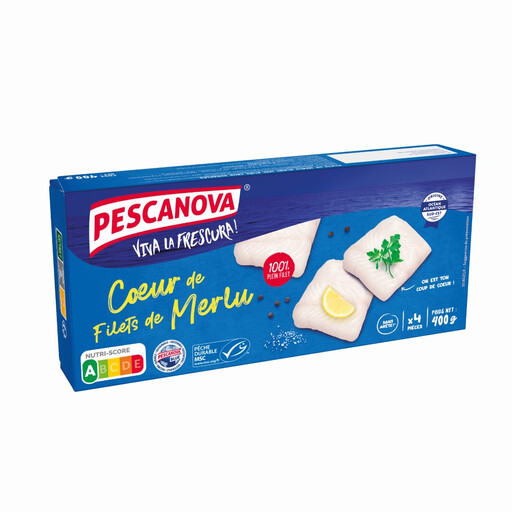 Image unavailable
PESCANOVA Hake Fillet Hearts MSC, 400 g
Worth considering if hake fillet could replace sardine in your meals. The pack is listed as 400 g; check the fat content per portion and the preparation instructions on the packaging.
View on Joybuy
Frequently asked questions
Are frozen sardine fillets low in fat?
The Réseau Krill, écomiam and Argel products mentioned here declare 9.2 g, 9.48 g and 10.4 g of fat per 100 g respectively. None meets the EU maximum of 3 g per 100 g for a ‘low fat’ claim on solid foods. For your meal, also consider the amount you’ll actually serve.
Does freezing reduce the fat content of sardines?
No. Freezing doesn’t make sardines a lean fish. The product information for frozen raw fillets from Réseau Krill, écomiam and Argel still declares 9.2 to 10.4 g of fat per 100 g.
How should I store and defrost these fillets?
Always follow the instructions on the pack, as preparation varies by product. écomiam recommends defrosting in the fridge for around two hours, while Picard says its fillets can be cooked from frozen. The DGCCRF recommends putting frozen food away promptly after bringing it home and never refreezing food that has been defrosted.
Can sardines in spring water replace frozen fillets?
Yes, if you don’t need raw fillets to keep in the freezer, but compare products on the same basis before choosing. The Pêche Océan tinned sardines featured by E.Leclerc declare 5.3 g of fat per 100 g of drained product. Also check the drained weight and salt content. This is still above the regulatory maximum of 3 g per 100 g for a ‘low fat’ claim.


