
Livraison le jour même ou le lendemain

Qualité garantie

Débloquez vos offres de bienvenue: Livraison GRATUITE | Jusqu'à -80 % | 30 jours d'essai gratuits à JoyPlus
Téléchargez l'application
Frozen prawns let you whip up a quick stir-fry, curry or seafood platter without relying on the day’s catch. But between gross weight, glazing, size grading, shell-on or peeled, and preparation level, the packaging doesn’t always make comparison easy.
Before you head to the checkout, it’s worth avoiding three common pitfalls:
Black Tiger prawns (Penaeus monodon) offer firm flesh and a very recognisable appearance. They are especially popular for grilling, seafood platters and curries. Vannamei prawns (Litopenaeus vannamei) come in many formats: whole, headless, shell-on, peeled or deveined.
Choose your size grade according to the recipe:
The terms HOSO refer to prawns with head and shell on. HLSO means they are headless but still have the shell on. EZP indicates an easy-to-peel presentation, while P&D means the prawns are peeled and deveined.
Glazing protects the prawns during storage, but it doesn’t end up on your plate. So check the net weight, the proportion of ice and the approximate number of pieces.
A bag might, for example, show a gross weight of 1 kg when the actual amount available after defrosting is lower. A product stating 25% glazing cannot be directly compared to another that doesn’t specify this information.
For a restaurant, caterer or professional use, compare the price per kilogram excluding glazing and assess the yield after peeling. At home, bags of 500 to 800 g are often easier to portion out and store.
Raw prawns must be cooked through. The instructions on the packaging should always take priority, especially for breaded or pre-cooked products. Cooked prawns are handy in a salad or pasta, but should be reheated carefully when the instructions require it.
Crustaceans are among the allergens that must be declared by law. Some products also contain wheat, soya or sulphites. A product like ebi fry, for example, may combine prawn, batter and panko breadcrumbs – so take the time to check the ingredients list.
Store products at −18 °C or below, respect the date on the pack and never refreeze a defrosted item. Depending on the manufacturer’s instructions, slow defrosting in the fridge or under cold running water may be suitable. However, avoid defrosting prawns in their sealed packaging if the label advises against it.
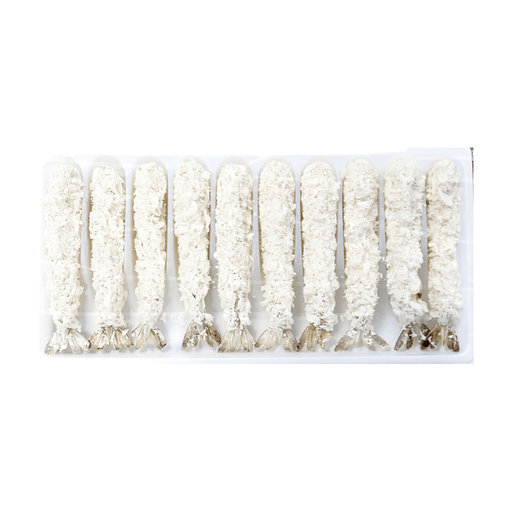
Why this choice suits this profile: At 250 g, this size is ideal for a first try or a quick meal, without having to prepare the crustaceans yourself.
The pieces are already coated and frozen in easy-to-use portions. Bear in mind, though, that the breading adds to the total weight.
An ebi fry-style product that can be cooked straight from frozen, following the instructions. Contains crustaceans and gluten.
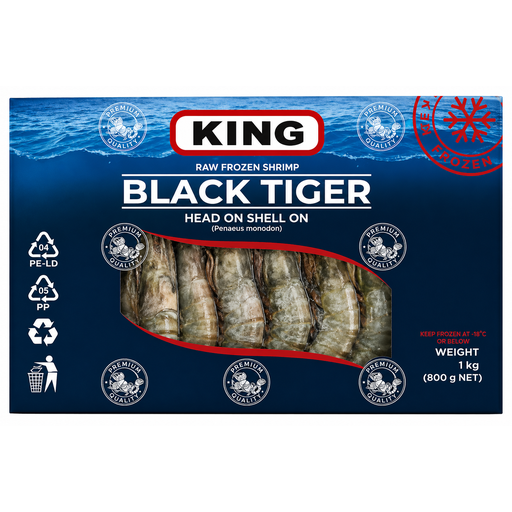
Why this choice suits this profile: Their 16/20 size grade and HOSO presentation lend themselves to a polished plate, grilling or a seafood platter.
The product page specifies the size grade and states 20% glazing. So you can more accurately assess the actual usable weight.
Whole Black Tiger prawns, size grade 16/20 pieces per kilogram, suitable for grilling, steaming and curry.
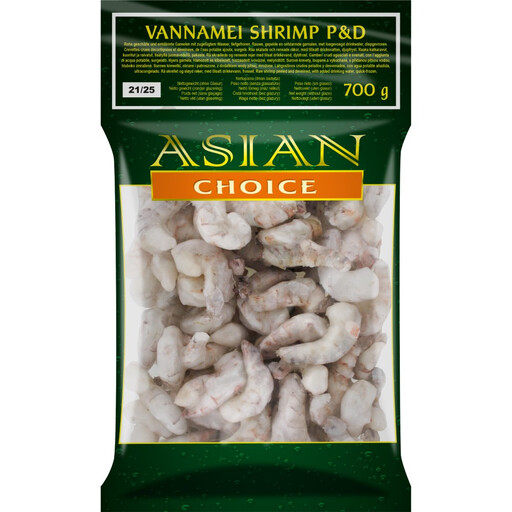
Why this choice suits this profile: Already peeled and deveined, these P&D prawns cut down on kitchen prep – a real bonus for stir-fries, curries and repeated use.
The presentation and size grade are clearly stated. Still, compare the net weight and number of pieces against your serving needs.
Vannamei prawns P&D, size grade 71/90, suitable for stir-fry, salad, pasta, pan-frying and curry.
We’ve selected a full range, updated in real time, of products that meet these selection criteria as well as European food safety standards.
To preserve their texture, defrost the prawns gradually in the fridge when the product allows it. Pat them dry with kitchen paper before stir-frying or grilling to remove excess water. Prawns destined for the grill can keep their shells on, while P&D formats are perfect for quick preparations.
Breaded prawns are often cooked straight from frozen, in the oven, in a pan or deep-fried, according to the label instructions. Never refreeze a product that has already been defrosted. To vary your meals, you can also combine prawns with frozen crab and frozen mussels in your seafood recipes.
Yes, for certain products – particularly breaded prawns or items where the packaging specifies cooking without defrosting. For standard raw prawns, follow the method on the label and check that the flesh is opaque and thoroughly cooked.
Store them at −18 °C or below, up to the date shown on the packaging. After defrosting, place them in the fridge and consume them within the time recommended by the manufacturer. Never refreeze a defrosted product.
Grades 26/30 to 41/50 are generally the most practical for a stir-fry or curry: the prawns remain clearly visible while cooking quickly. Smaller grades are better suited to salads and garnishes, while 16/20 or 21/25 are the ones to go for when the prawn is the star of the plate.