Organisers planning smaller portions
If pizza is just one of several buffet bites, compare the fat content on a like-for-like basis. Choose a format that lets you serve the portions you want without complicated slicing.


For a wedding buffet, first choose pizzas in a format that suits the way you plan to serve them. Then compare the fat content per 100 g with the size of the portions you intend to offer. A Margherita, vegetable or mini pizza is not necessarily « reduced in fat »: check the ingredients, allergens and cooking instructions on each box too. Whole pizzas offer another way to serve your guests, but you’ll need to plan for slicing and manage the pace of each batch.
If pizza is just one of several buffet bites, compare the fat content on a like-for-like basis. Choose a format that lets you serve the portions you want without complicated slicing.
If some guests avoid meat or certain allergens, check each recipe individually. The ingredients list, highlighted allergens and « may contain » statements matter more than the name of a range.
If you need to serve lots of pizzas within a short time, start by checking your oven capacity and the instructions on each box. Make sure you can store the pizzas correctly until they’re ready to cook, following the product guidance.
To plan your buffet, decide how you’ll serve the pizzas and which recipes your guests need, then compare the nutritional information on a like-for-like basis. Finally, check that storage and batch cooking will fit in with the running of your reception.
| Criteria | What to check | Who it matters to |
|---|---|---|
| Fat content and portions | Fat per 100 g, the weight of the pizza and the portion you’ll actually serve. | If I want to limit the fat in my portion, the recipe name alone isn’t enough to help me choose. Around 21% of consumers prioritise this need. |
| Serving format | The number of pieces and the pack weight; for a whole pizza, how much slicing will be needed. | At a buffet, I prefer portions that are easy to pick up and replenish without interrupting service. Around 29% of consumers put this first. |
| Ingredients and allergens | The ingredients list, highlighted allergens and « may contain » statements on each box. | If some guests avoid certain ingredients, I need to be able to clearly distinguish between the recipes on offer. Around 21% of consumers prioritise this when choosing. |
| Storage and cooking | Product-specific storage and cooking instructions, as well as oven capacity. | When I need to cook several batches, I want to make sure each pizza is cooked thoroughly while keeping the next ones in the recommended conditions. For around 29% of consumers, this is their main concern. |
These names don’t tell you how much fat a pizza contains. Carrefour lists 9.3 g per 100 g for its Margherita Bio, while Auchan lists 9.1 g per 100 g for Dr. Oetker Suprema Cinque Formaggi. The portion you eat still makes a difference.
Compare the nutritional values per 100 g, then work out how they apply to the portion you’ll serve. Don’t claim a product is « reduced in fat » based only on its name or a comparison between two recipes.
You can share a whole pizza, but you’ll need to slice it before serving it as a bite-sized option. Auchan also offers mini formats, including Buitoni Piccolinis Bolognaise, sold in packs of nine pieces weighing 270 g.
Choose the right balance of sliced pizzas and mini pizzas based on how guests will serve themselves and how much space you have for cooking batches.
Slicing the pizzas and preparing the trays takes time during service.
Ingredients and allergen statements apply to a specific recipe. The French Directorate-General for Competition Policy, Consumer Affairs and Fraud Control reminds food businesses that allergens must be listed and clearly highlighted on food labels.
Before preparing labels for your guests, check the ingredients, allergens, nutritional values and preparation instructions on the boxes you’ve received.
Preparation instructions vary by product. Auchan’s listing for Buitoni Piccolinis Bolognaise specifies that they must be cooked thoroughly before eating; Carrefour says to store its Margherita Bio at −18 °C and not to refreeze it after thawing.
Plan batches by product, following the temperature and cooking time shown on each box. Keep products waiting to be cooked under the recommended storage conditions.
These examples can help you compare specific formats and recipes. A brand or retailer name alone doesn’t tell you whether a pizza is lower in fat.
The Piccolinis range includes mini pizzas that are well suited to bite-sized servings. Auchan’s listing for Piccolinis Bolognaise specifies nine pieces weighing 270 g.
Suprema Cinque Formaggi is a 424 g whole pizza. Its description on Auchan highlights a triple-fermented base and stone baking as features of the range.
The listing for Carrefour Bio Margherita provides ingredients, allergen information and nutritional values for a meat-free recipe.
Auchan’s frozen pizza range includes mini pizzas, thin-crust pizzas and a variety of recipes from different brands.
The E.Leclerc catalogue features own-brand pizzas, including Turini products, which you can consider for your buffet.
These pizzas include mini formats for bite-sized servings and whole pizzas to slice. Choose the recipes and quantities to suit your guests, then compare the fat content per 100 g and the instructions on the boxes. None of these formats is, by itself, a « reduced in fat » claim.
 Image unavailable
This 385 g vegetable pizza is a whole-pizza format that you can slice for your buffet. Check the ingredients if you’d like to offer a meat-free recipe, along with the allergens and cooking instructions on the box.
 Image unavailable
The mini format is a good choice if you’d rather serve bite-sized pieces than slice a whole pizza. The pack weighs 270 g; check the number of pieces, ingredients and cooking instructions before planning your batches.
 Image unavailable
These 270 g Margherita mini pizzas could work well as bite-sized servings. Check the box for the number of pieces, allergens and cooking instructions; the name Margherita doesn’t mean the recipe is lower in fat.
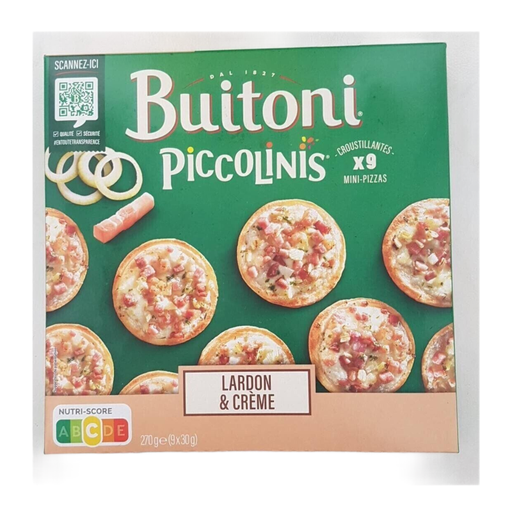 Image unavailable
The nine mini pizzas make it easy to plan how many pieces to serve without slicing. This cream and bacon variety is different from Piccolinis Bolognaise, so check its own ingredients, allergens and cooking instructions on the packaging.
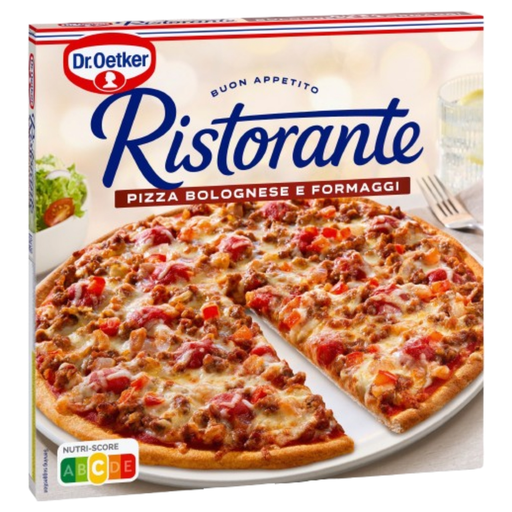 Image unavailable
This 375 g whole pizza needs to be sliced if you want to serve it in smaller portions. To compare it with other recipes, check the nutritional values on the box and consider how much you’ll serve. Follow its specific cooking instructions.
Simply comparing two product listings isn’t enough to justify this claim. EU rules govern the use of nutrition claims. When choosing pizzas for your buffet, compare the fat content per 100 g and only use a claim if it appears on the packaging of the specific product.
First compare the pizzas per 100 g, then consider the portion each guest will receive. For example, Auchan lists 9.1 g of fat per 100 g for Dr. Oetker Suprema Cinque Formaggi, but 39 g for the whole 424 g pizza. These figures answer different questions.
Check the packaging of every recipe you buy for allergenic ingredients and « may contain » statements, then clearly link this information to the pizzas you serve. The French Directorate-General for Competition Policy, Consumer Affairs and Fraud Control reminds food businesses that allergens must be listed and clearly highlighted on food labels. Don’t assume what a pizza contains from the name of its range alone.
Plan batches around the instructions on each box and your oven’s actual capacity, and store pizzas waiting to be cooked according to the manufacturer’s guidance. Auchan’s listing for Buitoni Piccolinis Bolognaise says they must be cooked thoroughly before eating; Carrefour says to store its Margherita Bio at −18 °C and not to refreeze it after thawing.