Guests who compare fat content first
If this is your main priority for pizza night, check the figures per 100 g for the recipes you’re considering. The weight of the box alone won’t tell you how their fat content compares.


For a pizza night at home, start by comparing the fat content per 100 g, then check the net weight, allergens and cooking instructions. A lower figure does not mean a pizza can be labelled “reduced fat”. Carrefour’s product pages list 6.6 g of fat per 100 g for the Royale Sensation, 9.3 g for the Margherita Bio and 15 g for the 4 fromages Extra. Their sizes and toppings may still lead you to choose differently.
If this is your main priority for pizza night, check the figures per 100 g for the recipes you’re considering. The weight of the box alone won’t tell you how their fat content compares.
A Margherita can be a good base if you’re planning your own sides or toppings. Check the ingredients in both the pizza you choose and anything you plan to add.
If you’re serving several people, work out how many pizzas you’ll need based on their net weight and the sides you’re serving. Ask guests about their dietary requirements, then check the labels, storage information and cooking instructions.
Before choosing your frozen pizzas, decide what matters most for your evening. Then check the other details on each box: a recipe with less fat per 100 g may differ in size, ingredients or preparation.
| Criteria | What to check | Who is it for? |
|---|---|---|
| Fat content | The figure per 100 g for the recipes you’re comparing; saturated fat if that detail matters to you. | If my main priority is finding the lowest-fat recipe among the ones I’m considering, I compare their labels on the same basis. Around 33% of consumers would make this their priority. |
| How much to serve | The net weight, number of pizzas and sides you’re planning. | When several people are sharing a meal, I want to make sure there’s enough pizza without estimating portions from the box size alone. This would be the main concern for around 20% of consumers. |
| Cooking and texture | The preparation method listed for the exact product and the type of base you’re looking for. | If I’m looking for a thin crust and cooking instructions that suit my equipment, the guidance on the box helps me choose. Around 27% of consumers would prioritise preparation and texture. |
| Allergens and storage | Allergens and any possible traces listed on the label, plus the product’s storage instructions. | When I’m hosting guests with dietary requirements, I need to check the pizza I’m actually buying and plan to keep it cold in transit. Compatibility and storage would come first for around 20% of consumers. |
Two pizzas may have different weights and recipes. Saying that one contains less fat in a specific comparison is not the same as making a regulated nutrition claim about it.
Compare the figures per 100 g for the products you’re considering. Only use the term “reduced fat” for products whose packaging carries the applicable claim.
According to Santé publique France, displaying the Nutri-Score is voluntary. It doesn’t replace the nutrition information, ingredients list or allergen statements for the recipe you choose.
In particular, check the fat content per 100 g, the net weight and the ingredients if these factors will determine your choice.
Ingredients and precautionary statements about traces vary between products. For example, a vegetable-based recipe still needs to be checked for allergens.
Ask guests about their requirements before you buy, and read the label on each pizza you choose. The DGCCRF reminds consumers that allergenic ingredients must be highlighted on pre-packed foods.
A pizza you’re saving for later in the evening must be transported and stored according to the instructions on its packaging. Anses advises against refreezing food after it has thawed.
Pick up frozen food at the end of your shop, carry it in an insulated bag and put it in the freezer as soon as possible.
The Royale Sensation, Margherita Bio and 4 fromages Extra recipes let you compare three specific toppings and sizes.
Ristorante Mozzarella may appeal if you’re looking for a thin crust and plan to cook your pizza in the oven.
Auchan’s product pages let you check the preparation methods for different products, including its own-brand 4 fromages and Ristorante Mozzarella.
These pizzas suit different kinds of pizza night: mini Margheritas to share, vegetable or cheese recipes, an option with air fryer cooking instructions and a Bolognese topping. To compare them, check the figures per 100 g, net weight and preparation instructions on each label.
 Image unavailable
The mini size is handy if you want to serve several small pizzas or put together a spread with sides.
Check the allergens and preparation instructions on the box before planning your meal.
 Image unavailable
This vegetable pizza is worth considering if the topping matters as much to you as comparing fat content.
Check the cooking instructions and ingredients list for this product. Its name alone doesn’t mean it’s suitable for a particular diet.
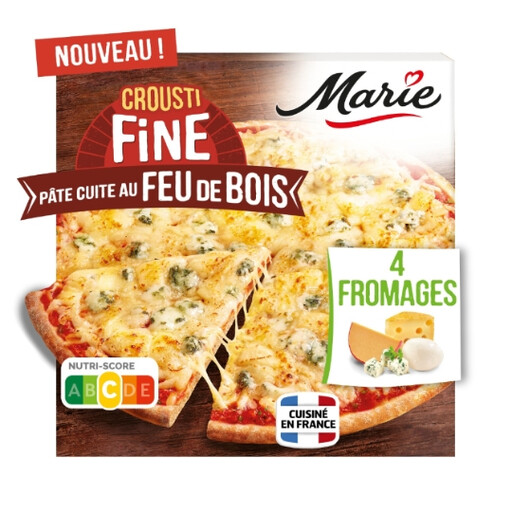 Image unavailable
At 390 g, this pizza is a good option for an evening when guests fancy a four-cheese topping and a thin crust.
If you’re comparing fat content, check the figure per 100 g on the box rather than guessing from the recipe name alone. Check the allergens and cooking instructions too.
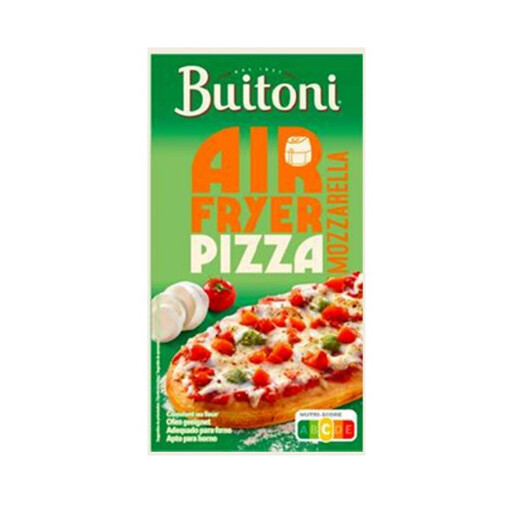 Image unavailable
At 195 g, this is an option if you’re planning to use an air fryer rather than an oven.
Before adding it to your menu, check the settings on the packaging, along with the ingredients and allergens.
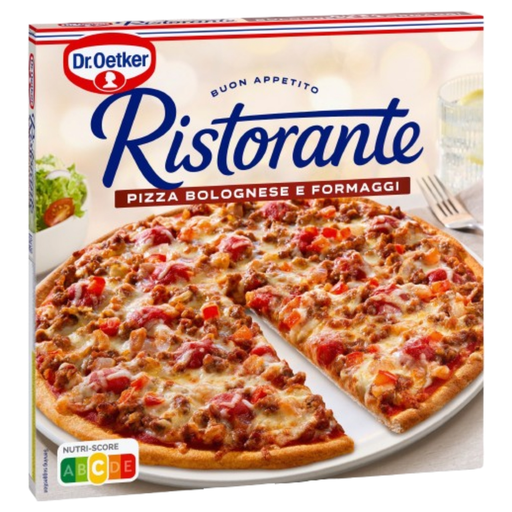 Image unavailable
At 375 g, this pizza is a good choice if you’d prefer a Bolognese topping to a Margherita or a cheese recipe.
To compare its fat content and plan your meal, check the nutrition table and cooking instructions on the packaging. Remember to check the allergens too.
No. A lower figure in a comparison between two recipes isn’t enough to support a nutrition claim. Compare the values per 100 g and check the claims on the packaging. Nutrition claims are governed by European Regulation (EC) No 1924/2006.
No. According to Santé publique France, displaying Nutri-Score is voluntary. For this specific factor, check the fat content per 100 g in the nutrition information for each pizza.
Read the ingredients list and any precautionary statements about traces on each box you buy. The DGCCRF says that allergenic ingredients must be highlighted on pre-packed foods. Don’t assume that two recipes in the same range have the same ingredients.
Buy frozen pizzas at the end of your shop, carry them in an insulated bag and put them back in the freezer promptly, following the instructions on the packaging. According to Anses, food that has thawed must not be refrozen and should be eaten promptly.
For this product, Auchan’s product page recommends preheating to 220 °C in a conventional oven or 200 °C in a fan oven, then cooking for 10 to 12 minutes. Check that it’s cooked through before serving. If you buy a different recipe, follow the instructions on its box.