Families with a 500 kcal limit per plate
You want to check the energy content of a whole pizza or the portion actually served. Compare the kcal per 100 g with the weight eaten, rather than relying on the individual size.


To keep each plate to no more than 500 kcal, choose a pizza whose energy content fits that limit for the amount actually served. That could mean a whole pizza, if its total allows, or a pizza to share, cut into measured portions. Multiply the kcal per 100 g by the weight eaten in grams, then divide by 100. A small size or a Nutri-Score doesn’t replace this calculation; also check the ingredients, allergens and cooking instructions.
You want to check the energy content of a whole pizza or the portion actually served. Compare the kcal per 100 g with the weight eaten, rather than relying on the individual size.
You’re looking for multipacks or pizzas that can be cut into portions for several people. In that case, work out the size of each portion before deciding whether a plate will stay under 500 kcal.
You also compare salt and ingredients, especially if someone needs to avoid an allergen. You’ll find this information on the packaging for the recipe you choose.
First decide whether the limit applies to a whole pizza or to the portion served to each person. This will affect which sizes you can consider.
Choose this if: everyone needs to be able to eat a whole pizza without exceeding 500 kcal.
The catch: the examples with figures available—Carrefour Bio Margherita, Buitoni Air Fryer Salami and Auchan 4 Cheese—all exceed this limit as whole pizzas. Check the total for another product before choosing it.
Choose this if: you can cut or weigh the portions according to how much each person will eat.
The catch: the limit applies to each portion served, not to the weight of the multipack or to a whole pizza automatically assigned to one person.
| Criteria | What to check | Who is it for? |
|---|---|---|
| Calories per plate | Calculate: kcal per 100 g × weight eaten in g ÷ 100. Check the weight of the whole pizza if it will make up one portion. | If everyone is eating a whole pizza, I want to know its total before buying. Around 31% of consumers would put this strict limit at the top of their list of concerns. |
| Portion sizes | Check the total weight, the number of pizzas in the multipack and how much you plan to serve each person. | When feeding several people from one pack, I need to plan portions to suit each plate; this would be the main priority for around 31% of consumers. |
| Ingredients | Read the ingredients, highlighted allergens and salt content, taking the portion served into account. | When guests have different dietary requirements, I need to look beyond the calories and check the recipe. Around 23% of consumers would make this their main concern. |
| Preparation | Check which appliance the pizza is suitable for and read the cooking and storage instructions on the pack. | If I need to get a meal ready quickly, I look for a size that suits my appliance without overlooking the instructions on the pack; around 15% of consumers would prioritise this. |
Carrefour’s listing for its Bio Margherita states 249 kcal per 100 g and a weight of 310 g, which works out at around 772 kcal for the whole pizza.
Do the calculation using the weight actually served before deciding that a plate contains fewer than 500 kcal.
Auchan’s 200 g 4 Cheese pizza contains 523 kcal in total. Based on the figures given for Buitoni Air Fryer Salami, its 195 g pizza contains around 517 kcal.
Check the kcal per pizza or multiply the kcal per 100 g by the total weight—even for an individual-sized pizza.
E.Leclerc’s Eco+ Margherita multipack contains three pizzas weighing 900 g in total. At 220 kcal per 100 g, one 300 g pizza contains around 660 kcal.
Plan the weight of each portion before serving if every plate needs to stay under 500 kcal.
Two recipes you’re comparing may have different ingredients and salt levels. The DGCCRF states that allergens must be highlighted in the ingredients list on prepacked foods.
Read the ingredients and nutritional information for the pizza you choose. Nutri-Score is no substitute for checking these or calculating the kcal per portion.
The range reviewed includes a 195 g individual Air Fryer Salami pizza and a sharing-size Four à Pierre pizza.
The Ristorante range includes a 295 g Margherita, listed by Auchan as one pizza per pack.
The 310 g Carrefour Bio Margherita shows why it’s important to calculate the kcal in a whole pizza.
Auchan’s frozen 4 Cheese pizza comes in a 200 g size.
E.Leclerc sells its Eco+ Margherita as a pack of three pizzas, weighing 900 g in total.
These options include mini pizzas, a pizza to cut into portions and lahmacuns to share. To keep each plate to a maximum of 500 kcal, check the nutritional information on the pack and measure the amount served. None of these options guarantees that a whole piece will be under this limit.
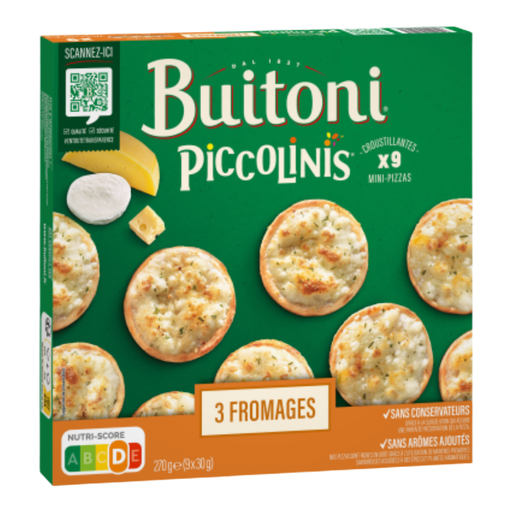 Image unavailable
This pack of nine mini pizzas can be shared between several plates. Count the pieces served and check their energy value on the pack before deciding on a portion under 500 kcal.
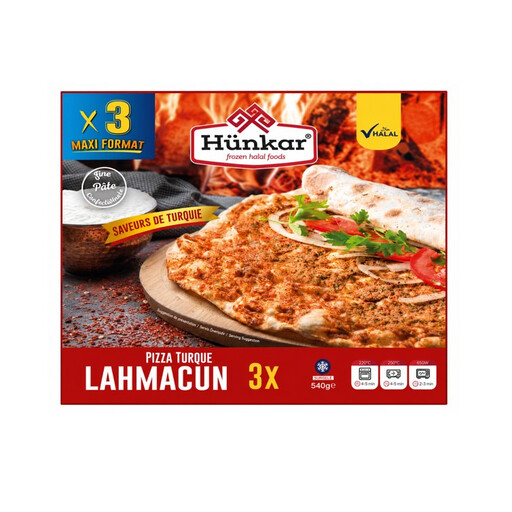 Image unavailable
This pack of three lahmacuns can be used to make several portions. The 540 g refers to the whole pack, so weigh each person’s serving and check the label to calculate the kcal per plate.
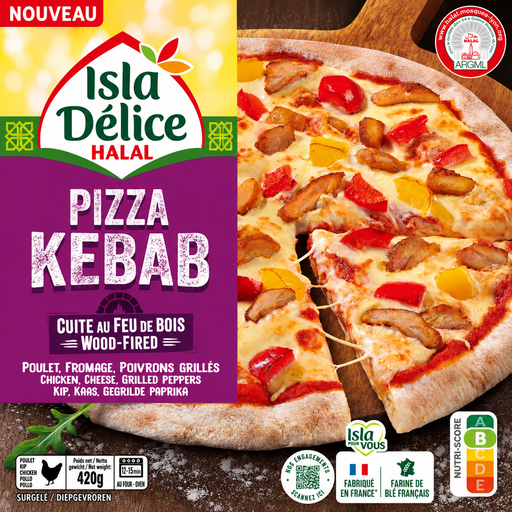 Image unavailable
This 440 g pizza can be cut into portions for several people. Calculate the kcal based on the weight of each slice, then follow the cooking instructions on the packaging.
 Image unavailable
These mini pizzas can be shared between plates. The pack weighs 270 g in total, so check the number and weight of the pieces on the packaging before calculating the portion served.
 Image unavailable
This mini pizza pack is easy to share between several people. The 270 g refers to the whole pack, so check the weight of the pieces and the energy value before serving a portion to each person.
Multiply the kcal per 100 g shown on the pack by the weight of the portion in grams, then divide by 100. The value per 100 g is useful for comparing pizzas, but it’s the weight you actually eat that determines the total on your plate.
Yes, as long as each portion served stays under this limit once you’ve done the calculation. For example, at 231 kcal per 100 g, a portion of around 216 g contains nearly 500 kcal. Check the energy value of the pizza you buy before cutting it.
No. To find out the kcal in a whole pizza or a portion, use its energy value and the weight eaten. Nutri-Score also doesn’t replace checking the ingredients and allergens.
Don’t refreeze a thawed pizza. The Ministry of Agriculture states that refreezing a thawed product encourages bacteria to multiply. Follow the storage and preparation instructions on the pack.