To give each attendee their own portion, an individual pizza saves you having to cut them up, provided you can cook all of them during the break. Mini pizzas work well for a self-serve buffet, while a pizza that needs cutting calls for an organised cooking and serving plan. Before ordering, check the instructions for each product, its ingredients and allergens, and the arrangements for transport and storage.
Who are these formats suited to?
Organisers serving one portion per person
If you know how many people are attending, individual pizzas make serving easier as there’s no need to cut them up. Auchan, Picard and E.Leclerc each list a 200 g option; you’ll need to decide whether that portion is right for the meal you have planned.
Organisers planning a buffet or standing break
Mini pizzas let you offer bite-sized pieces to share rather than assigning one pizza to each person. You’ll still need to plan how many pieces to serve and keep the different recipes separate on the buffet.
Organisers who can cook and cut pizzas on site
A pizza that needs cutting may be a good fit if you have an oven, a serving team and enough time. Carrefour lists options weighing 570 g and 590 g, for example; their weight alone doesn’t tell you how many portions to plan for.
What to consider when choosing how to serve
Individual pizza
Choose this if: everyone needs their own portion, with no cutting required.
Plan for: enough cooking cycles to prepare every pizza during the break.
Mini pizzas
Choose these if: people will help themselves at a buffet or standing break.
Plan for: how many pieces each person might have, as portions aren’t assigned in advance.
Pizza to cut into slices
Choose this if: a team can cook, cut and serve the slices on site.
Plan for: a coordinated service once the pizzas are cooked; this is less convenient if people arrive at different times.
| Consideration |
What to check |
Who this matters to |
| Serving speed |
Cooking instructions for each recipe and how many batches you can prepare during the break. |
If the break is short, I want to avoid a queue forming by the ovens; around 42% of consumers would put speed of service first. |
| Ingredients and allergens |
The ingredients in the product you receive and how to tell the recipes apart when serving. |
To cater for attendees with different dietary needs, I need to be able to identify what’s in each pizza; around 33% of consumers would put this concern first. |
| Number of portions |
How many units or pieces you need to serve, and how the pizza fits into the meal. |
If I’m planning lunch rather than a simple break, I want to order enough portions without ending up with lots of leftovers; around 25% of consumers would put this question first. |
Mistakes to avoid
-
Assuming “individual” means a complete lunch
A pizza sold as an individual portion, even one labelled 200 g, doesn’t tell you by itself how it will fit into the conference menu.
Decide whether you’re serving a snack or lunch, then choose any accompaniments before working out how many pizzas to order.
-
Planning to cook one pizza, but not the whole group’s
The cooking time given for one pizza isn’t the time needed to prepare all the portions. Cooking several batches in a row could take up much of the break.
Work out how many cycles you’ll need with the equipment available and compare that with the actual serving time.
Too many cooking cycles could lead to queues or mean you need another appliance.
-
Serving several recipes without labelling them
At a buffet, pizzas that look similar may contain different ingredients. Attendees need clear information about the allergens in the food being served.
Keep the packaging from the batch you receive to hand and label each recipe separately. Légifrance sets out French rules on providing information about substances that cause allergies or intolerances.
-
Using the pack weight alone to estimate portions
A box of mini pizzas and a pizza to cut into slices aren’t served in the same way. The weight doesn’t tell you how many pieces there are or how large the portions will be.
Count the pieces if the pack lists them, or decide how you’ll cut the pizza. Then compare that amount with the number of attendees and the rest of the menu.
Brands to consider by format
Auchan
Auchan lists, among other options, a 200 g frozen four-cheese pizza, as well as mini pizzas and other formats.
- The product page for the 200 g four-cheese pizza gives cooking times of 5 minutes in a 750 W microwave or 3 minutes at 900 W.
- These instructions apply to this specific product. Check the instructions for the one you choose and make sure your available appliances can handle it.
Carrefour Sensation
Carrefour lists Sensation pizzas weighing 570 g and 590 g, which are worth considering if you can cook and cut them on site.
- Their weights set them apart from the 200 g individual pizzas mentioned above.
- Plan how you’ll cut the pizzas and check the ingredients in each recipe before serving.
Turini / Marque Repère E.Leclerc
E.Leclerc lists a 200 g Turini individual chorizo pizza and Turini cheese mini pizzas, sold in packs of 9 in the product listed.
- These two formats suit different ways of serving: an assigned portion or a buffet.
- The chorizo recipe contains meat, so check the ingredients before including it in a menu for people with dietary restrictions.
Dr. Oetker Ristorante
The range listed by Auchan includes Ristorante pizzas and Piccolissima mini pizzas, including a ham option in a box of 12.
- The stated number of pieces for this product makes it easier to plan a buffet.
- Check the ingredients and allergens for the recipe you choose; details for one product don’t apply to the whole range.
Buitoni
Buitoni Piccolinis come in bite-sized pieces, making them worth considering for a buffet rather than as a named individual portion.
- The 3 Cheese and Ham & Cheese options shown below each contain 9 pieces and weigh 270 g.
- Plan how many pieces to serve per person and check the ingredients and allergens on the packaging you receive.
Joybuy products for buffets and serving by the slice
These options include four packs of mini pizzas to consider for a buffet, plus a 385 g pizza that may suit a service where it can be cut into slices. For each one, check the preparation instructions and how many portions you’ll need.
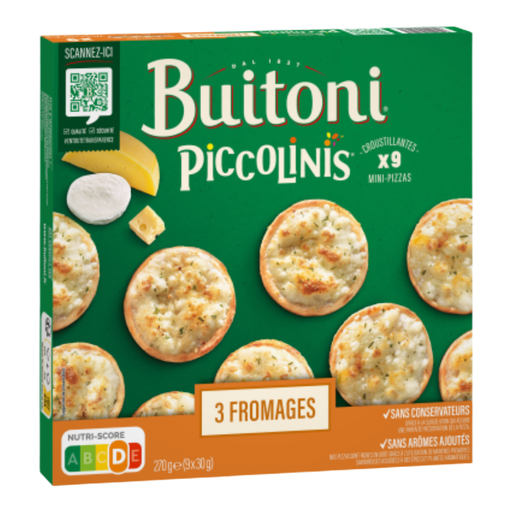 Image unavailable
BUITONI Piccolinis 3 Cheese, 9 mini-pizzas, 270 g
For serving individual pieces at a buffet. Include the 9 pieces listed in your serving plan, and check the cooking instructions and allergens on the packaging you receive.
View on Joybuy
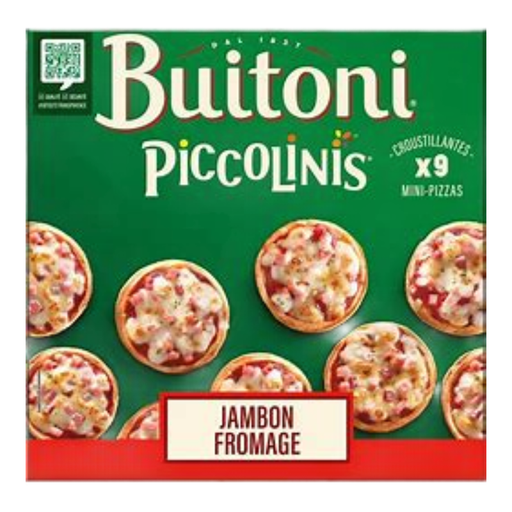 Image unavailable
BUITONI Piccolinis Ham & Cheese, 9 mini-pizzas, 270 g
For a buffet offering a ham and cheese option. The pack contains 9 pieces; check the cooking instructions, ingredients and allergens before adding it to the menu.
View on Joybuy
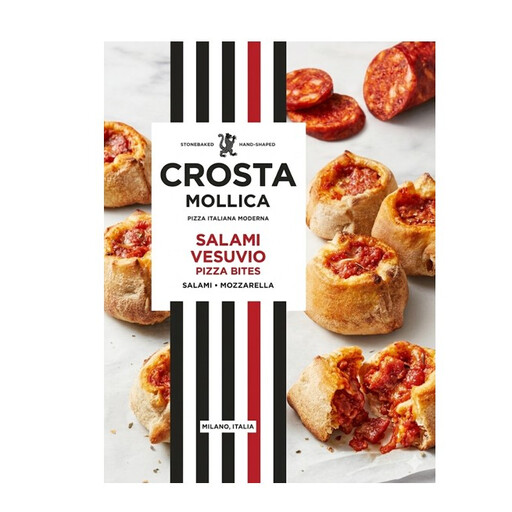 Image unavailable
Crosta et Mollica Mini Salami Pizzas, 270 g
For serving a salami option in bite-sized pieces at a buffet. Check the packaging for the number of pieces, cooking instructions and allergens before working out how many to serve.
View on Joybuy
 Image unavailable
Crosta et Mollica Mini Pizzas Margherita, 270 g
For adding a Margherita option to a buffet of bite-sized pieces. Check the packaging for the number of mini pizzas, preparation instructions and allergens before planning your buffet.
View on Joybuy
 Image unavailable
DR. OETKER Ristorante Vegetable Pizza, 385 g
Worth considering when your serving plan allows for a pizza to be cut into slices rather than serving mini pizzas. It weighs 385 g; decide how many portions to cut according to the menu, and check the cooking instructions, ingredients and allergens on the packaging.
View on Joybuy
Frequently asked questions
Is a 200 g individual pizza enough for lunch?
The individual format alone doesn’t determine what you should serve. Auchan, Picard and E.Leclerc list 200 g options; decide whether the pizza will be the main dish or part of a meal with accompaniments.
Can you cook these pizzas in the microwave?
Only if the instructions for the product you choose recommend this cooking method. For its 200 g four-cheese pizza, Auchan gives cooking times of 5 minutes at 750 W or 3 minutes at 900 W. Don’t apply these timings to other recipes, and allow for the number of cooking cycles needed for your group.
How should you share allergen information at a buffet?
Label each recipe and keep the information on the packaging you actually receive close at hand. Légifrance sets out French rules on providing information about substances that cause allergies or intolerances; avoid grouping different pizzas under the same description.
What should you do if a pizza defrosts during transport?
Don’t refreeze it on the assumption that transport hasn’t affected it. The French Directorate-General for Competition, Consumer Affairs and Fraud Control warns that a rise in temperature encourages microbial growth. Arrange transport to maintain the cold chain and follow the storage instructions on each pack.


