Hosts who want to keep track of portion sizes
You want to compare the calorie content of the pizzas on your buffet without describing any recipe as ‘light’. Check the kcal per 100 g, then consider the weight of the portion you plan to serve.


When choosing frozen pizzas for a christening buffet, compare the kcal per 100 g for each option, then work out how much you’ll actually serve. Mini pizzas make it easy to serve individual portions, but their size alone doesn’t tell you how many calories they contain. Check the ingredients, allergens and cooking instructions too.
You want to compare the calorie content of the pizzas on your buffet without describing any recipe as ‘light’. Check the kcal per 100 g, then consider the weight of the portion you plan to serve.
For a buffet where guests help themselves, mini pizzas or pre-cut slices make it easier to keep track of the portions on offer. Decide how many to serve based on what else is on the buffet.
If any guests have dietary requirements or you’ll need to cook several batches, check the ingredients and ‘may contain’ warnings on every pack. Remember to plan how you’ll transport the frozen pizzas and allow enough time to cook them.
Start by deciding how much you want to serve at the buffet, then compare the nutritional values on the same basis. You can then use the format and serving requirements to choose between recipes that meet your needs.
| Criteria | What to check | Who is this for? |
|---|---|---|
| Calories in the portion served | Compare the kcal per 100 g, then check the weight of the portion you plan to serve. | I want to compare recipes without losing sight of how much goes on each plate. Around 36% of consumers put the calories in the portion served first. |
| Buffet portions | Check the number and weight of the individual portions, or plan how you’ll cut up whole pizzas. | When guests help themselves at different times, I’d rather offer portions that are easy to count than cut up a hot pizza on the spot. For around 29% of consumers, ease of serving portions comes before other criteria. |
| Ingredients and allergens | Read the ingredients list, allergen information and ‘may contain’ warnings for the product you’re buying. | If a guest needs to avoid an ingredient, I need to be able to identify the recipe clearly, including when it contains pork. This is a priority for around 21% of consumers. |
| Cooking and storage | Check the storage and cooking instructions, and work out how many batches you can cook. | If I need to prepare several trays, I have to plan transport and oven time without disrupting service. Around 14% of consumers prioritise this kind of planning. |
The value per 100 g lets you compare pizzas, but it doesn’t tell you how much you’ll actually serve at the buffet. A large slice and several mini pizzas are different portion sizes.
First decide how you’ll cut the pizzas or how many individual portions to serve. Then use the corresponding weight to interpret the nutritional values.
These terms refer to a production method, a style of crust and a format respectively. None is a substitute for checking the kcal per 100 g and per portion.
Compare the figures on the packaging rather than assuming a recipe’s calorie content from its name.
Several of the products mentioned here contain wheat or milk; the ham and chorizo recipes mentioned contain pork. Some labels also warn that other allergens may be present.
Keep the packaging handy while serving and label the trays. If a guest has dietary requirements, always check the label of the product you’re actually serving.
A large number of pizzas may exceed your oven’s capacity when you need them. Frozen products also need to be handled carefully between shopping and cooking.
Plan the batches according to the instructions for each product. Anses advises buying frozen food towards the end of your shopping trip and using an insulated bag to transport it.
These examples cover specific recipes and formats: the figures for one pizza don’t represent a brand’s entire range. Compare the figures shown and check the label on the product you choose.
Eco+ Pizza Margherita is worth considering if you want to compare kcal per 100 g and a pack of whole pizzas suits the way you plan to serve them.
Piccolinis prosciutto are worth considering if serving individual portions matters more than cutting up a whole pizza.
Frozen chorizo pizza is worth a look if you want to offer a pork topping and can plan to cook it in the oven.
Carrefour Bio Pizza Margherita lets you compare an organic tomato and mozzarella recipe without making assumptions about its calorie content.
Ristorante Margherita is another whole pizza to compare by kcal per 100 g.
These options include mini pizzas to serve individually and whole pizzas to cut into portions. To choose between them, start with the format that suits your buffet, then check the nutritional information and instructions on each product’s packaging.
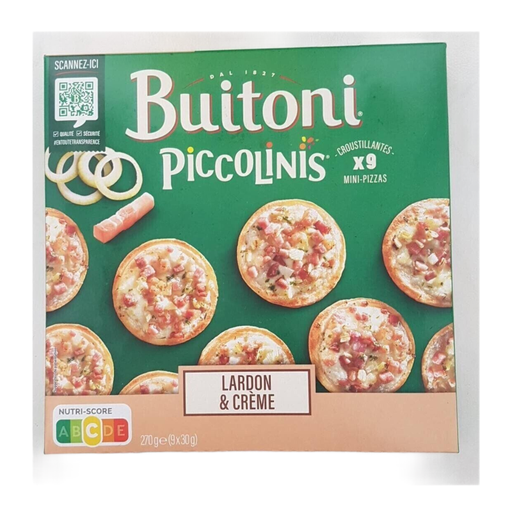 Image unavailable
The pack of nine mini pizzas makes it easy to serve individual portions. Decide how many to offer, and check the ingredients and cooking instructions before the buffet.
 Image unavailable
This whole pizza is a good option if you plan to cut it into portions before serving. Decide on the portion size, then check the label for nutritional values, ingredients and cooking instructions.
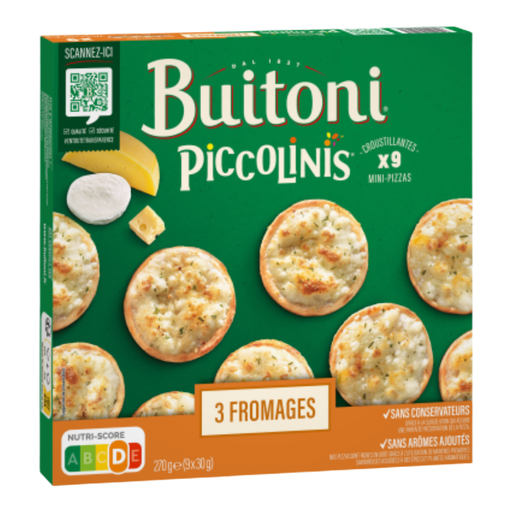 Image unavailable
The nine mini pizzas are easy to serve individually. Don’t assume their calorie content from their size: check the nutritional values and decide how many to serve.
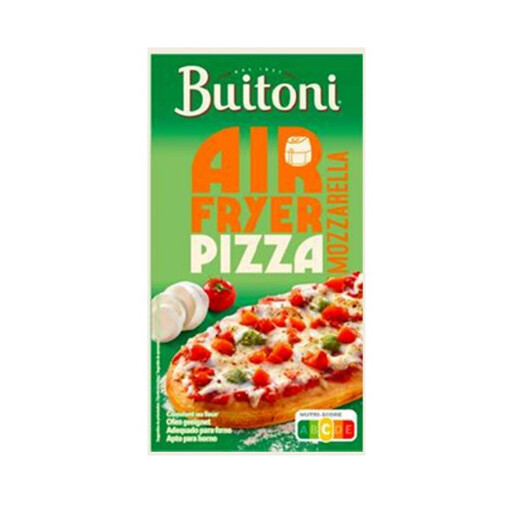 Image unavailable
You can cut this 195 g pizza into smaller portions if you’d like to offer a taste. Check the packaging for the serving size and cooking instructions for this specific product.
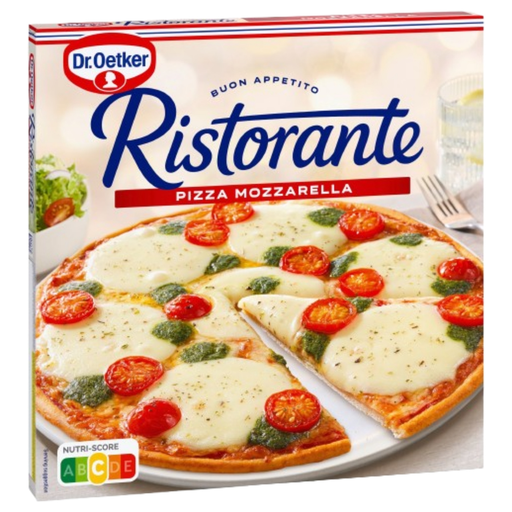 Image unavailable
This whole pizza can be shared at the buffet. Before calculating the calories in a portion, check the weight and nutritional serving size on the packaging: the information listed for this product doesn’t match.
First compare the kcal per 100 g for each frozen pizza, then take the weight of the portion you plan to serve into account. The value per 100 g alone won’t necessarily reflect what each guest receives.
No. The mini format makes it easier to count portions, but it doesn’t tell you how many calories you’re serving. For example, Carrefour lists 205 kcal per 90 g for Buitoni Piccolinis prosciutto, which is three mini pizzas from this range.
No. As Manger Bouger explains, Nutri-Score is calculated per 100 g, whereas the portion you serve may weigh a different amount. Also check the nutritional information, ingredients and allergens for your chosen pizza.
Check the label for every recipe you serve, especially for wheat, milk, pork and any ‘may contain’ warnings that are relevant to your guests. Don’t assume that two pizzas from the same brand have the same ingredients.
Buy them towards the end of your shopping trip and use an insulated bag during transport, in line with Anses advice on maintaining the cold chain. Then follow the storage and cooking instructions on each pack.