Anyone eating alone who wants to avoid leftovers
You’re looking for an amount that suits a meal on your own, rather than relying on a larger pizza you don’t plan to share or store.


For a meal on your own, choose between an individual pizza and one you can portion up, based on how much you plan to eat. Then compare the energy and salt content for that amount. A smaller size makes it easier to choose a portion, but that doesn’t guarantee a low intake: according to Auchan, its 200 g four-cheese pizza, labelled as one portion, contains 523 kcal and 2.1 g of salt in the whole pack. A larger pizza can also work if you plan how much to serve and what to do with the rest.
You’re looking for an amount that suits a meal on your own, rather than relying on a larger pizza you don’t plan to share or store.
You want to know the number of kilocalories in the whole pizza or the portion you serve, rather than looking only at the value per 100 g.
You compare the nutritional information and ingredients in similar recipes, while also checking for any allergens that affect you.
For a meal on your own, start by working out how much you’ll actually eat. You can then use the nutrition table and net weight to compare that portion, whether it’s a whole small pizza or part of a larger one.
| What to consider | What to check | Who is this for? |
|---|---|---|
| Energy in your portion | Net weight, number of portions and kcal per 100 g; if only the per-100 g figure is shown, calculate the amount for the portion you plan to eat. | I want to know what the portion I’ll eat contains, without assuming that a small pizza means a low intake. Around 27% of consumers prioritise the energy in their portion. |
| Salt and ingredients | Compare the salt and fat in similar recipes; check the Nutri-Score if one is shown. | If I’m tempted by several recipes, I want to check what’s in them before choosing, particularly how much salt they contain. This is the top priority for around 33% of consumers. |
| Convenience when eating alone | Check the number of pieces or portions and the cooking instructions on the pack. | I’d rather prepare the amount I want without having to organise sharing a large pizza. Around 20% of consumers prioritise this convenience when eating alone. |
| Ingredients to avoid | Read the ingredients list, highlighted allergens and any ‘may contain’ statements on the pack you buy. | If I need to avoid an ingredient, the exact recipe matters more than the size or the picture. This check is a priority for around 20% of consumers. |
A pizza sold as one portion still needs to be assessed as a complete meal: Auchan lists 523 kcal for its 200 g four-cheese pizza.
Check the kcal for the whole pizza, or calculate them from the net weight and per-100 g figure before deciding to eat it all.
The same per-100 g figure doesn’t represent the same amount eaten if the pizzas weigh different amounts or you serve different-sized portions.
Compare whole pizzas if you plan to eat them whole. If you’ll portion them up, use the weight of the portion you plan to serve.
According to Auchan, its 200 g four-cheese pizza contains 2.1 g of salt in the whole pack. Salty side dishes add to this amount.
Compare the salt in the portion you plan to eat and take the rest of your meal into account, rather than judging the pizza by its size alone.
Recipes can change: Carrefour, for example, notes that its Carrefour Extra Pizza Royale has a temporary recipe change.
If an ingredient or allergen matters to you, check the information on the pack you buy.
Auchan’s 200 g four-cheese pizza is labelled as one portion, making it an example of a size where the whole pack is intended as one serving.
The Ristorante range includes pizzas that vary in weight depending on the recipe, so check the amount you plan to eat if you’re dining alone.
Carrefour Extra and Carrefour Bio pizzas come in different recipes and weights, so compare them based on the amount you’ll actually eat.
Piccolinis are mini pizzas, while La Grandiosa is a larger size.
Here, E.Leclerc Drive is a place to look for frozen pizzas, rather than a specific recipe to compare nutritionally.
Lidl has a section for frozen pizzas and snacks; each pizza should be checked as a separate product.
These products show two ways to plan a meal on your own: choose how many mini pizzas to have, or plan to serve a portion of a larger pizza. For each product, check the portion you serve and the nutritional information on the pack.
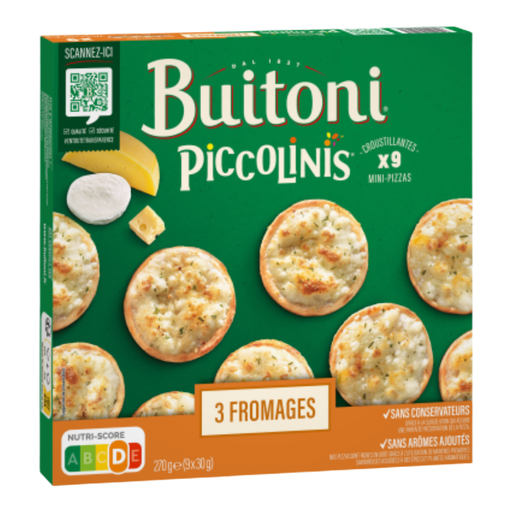 Image unavailable
The pack of nine mini pizzas lets you choose how many to serve for a meal on your own, rather than automatically treating the whole pack as one portion.
Total weight: 270 g. Check the nutritional values and allergens on the pack before deciding how much to have.
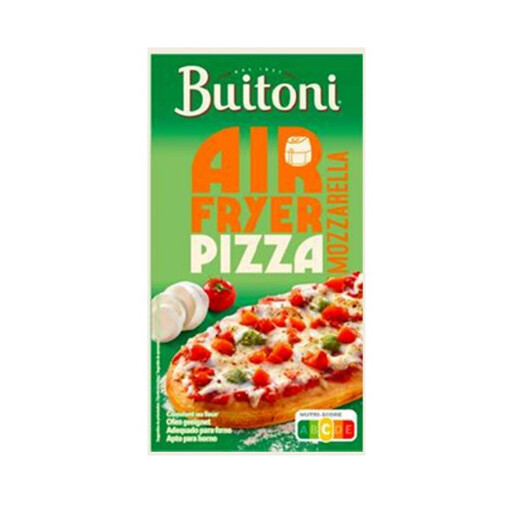 Image unavailable
For a meal on your own, decide whether you’ll eat this whole pizza or just part of it.
The title gives the weight as 195 g. Check the weight, cooking instructions and nutritional information on the pack you buy.
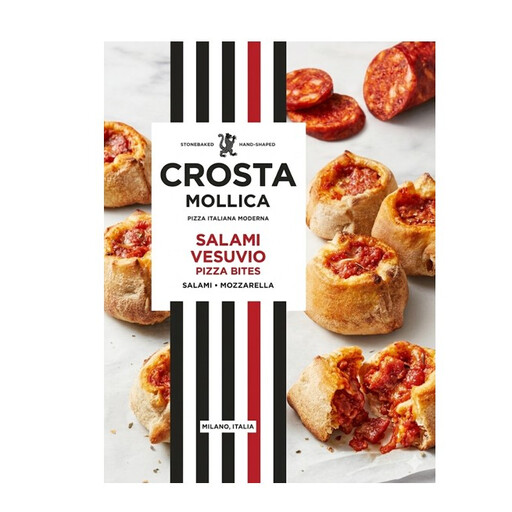 Image unavailable
You can serve as many of these mini pizzas as you like for a meal on your own. Check how many pieces are in the pack and their weight if you want to count your portion by the piece.
Pack weight: 270 g. Read the salt value and allergen information on the pack before comparing this recipe with another.
 Image unavailable
If you want to adjust how much you serve, check how many mini pizzas are in the pack and the weight of the ones you prepare.
Pack weight: 270 g. To compare energy and salt, match the values on the pack to the amount you eat.
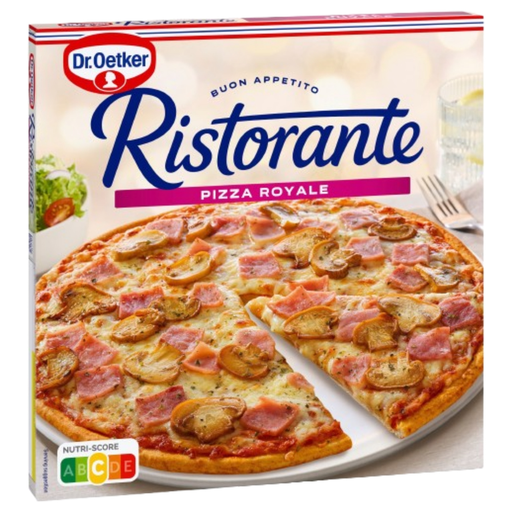 Image unavailable
At 350 g, this pizza is a good option if you plan to have one portion, rather than assuming the whole pizza is a single serving.
Decide how much to serve and check the nutritional values for this recipe on the pack. Also plan how to store the rest according to the instructions.
Multiply the kcal per 100 g by the net weight in grams, then divide by 100. Based on the figures shown by Carrefour, the 375 g Dr. Oetker Ristorante Bolognaise at 219 kcal per 100 g contains around 821 kcal if you eat the whole pizza. Use the figures on the pack for the recipe you buy.
No. The words ‘one portion’ describe the suggested serving size, not the nutritional intake that’s right for you. Auchan labels its 200 g four-cheese pizza as one portion, with 523 kcal and 2.1 g of salt in the whole pack. Consider these figures alongside the rest of your meal.
No. It can help you compare pizzas you’re eating on the same occasion, but it doesn’t tell you how much you’ll eat. Also check the portion weight, salt, ingredients and any allergens that affect you.