Who are these criteria for?

Students keeping an eye on lunch calories

Whether you plan to eat a whole pizza or just part of one, the amount you eat affects the calculation. Compare the kcal per 100 g and the calories in your portion, rather than relying on the recipe name alone.

Students without access to an oven on campus

If you plan to cook your pizza at university, check that the product explicitly says it can be prepared using the appliance you have available. An individual-sized pizza isn’t necessarily suitable for the microwave.

Students who also check what’s in their food

If calories aren’t your only consideration, check the salt content, ingredients list and allergens for the exact variety. If the packaging shows a Nutri-Score, use it alongside this information, but don’t let it replace your portion calculation.

What should you check before choosing?

First, work out how much you’ll eat and where you’ll be able to cook the pizza. Then check the nutrition information and ingredients for the product you’re considering.

Criteria What to check Who it matters to
Calories in your portion Note the kcal per 100 g and the weight you’ll eat. Multiply the two figures, then divide by 100. If I eat the whole pizza, I want to know the calories in the entire product, not just the figure per 100 g. Around 36% of consumers would make this calculation their priority.
Cooking on campus Check which appliance is suitable, along with its power or temperature and the cooking time specified for that product. When I have lunch at university, I need a pizza I can make with the equipment available during my break. Cooking method would be the top priority for around 29% of consumers.
Salt and nutrition information Compare the salt per 100 g with the amount in your planned portion. Also check the Nutri-Score, if one is shown. I don’t want to choose based on calories alone if the amount of salt in my meal matters too. Around 21% of consumers would put this nutrition check first.
Ingredients and allergens Read the ingredients list and check the allergens shown on the packaging for the variety you’re buying. Before comparing calories, I need to know whether the recipe contains an ingredient I avoid. Around 14% of consumers would make this their first check.

Mistakes to avoid

  • Comparing only the kcal per 100 g

    This figure lets you compare energy density, but not the calories you’ll actually eat if the pizzas weigh different amounts. Carrefour lists 179 kcal per 100 g for its 4 Stagioni Extra. If you eat the whole 400 g pizza, that works out at around 716 kcal.

    Before choosing between two sizes, calculate the total for the amount you plan to eat.

  • Assuming a small pizza is suitable for the microwave

    The cooking method depends on the product, not its size. Auchan says its 200 g four-cheese pizza can be cooked in the microwave, but strongly advises against using one for its stone-baked chorizo pizza.

    Check the packaging instructions before taking a pizza to cook on campus.

  • Assuming the Nutri-Score tells you how much you’ll eat

    The Nutri-Score doesn’t tell you how many calories are in the amount you’ll eat. Auchan’s product listing for Dr. Oetker Ristorante Mozzarella shows a Nutri-Score B and 238 kcal per 100 g. If you eat the whole 355 g pizza, that works out at around 845 kcal.

    Check the Nutri-Score, nutrition information and planned portion separately.

  • Choosing without checking allergens and storage instructions

    Ingredients and allergen information vary by recipe. The journey from the shop to your freezer and then to your lunch spot must also be compatible with the product’s storage instructions.

    Check the packaging for the variety you’ve chosen and follow its instructions, including any warning not to refreeze after defrosting.

Brands and retailers to know

Carrefour

The Carrefour Extra pizza listings reviewed show both weight and energy values, making it easier to calculate the calories in a portion.

  • Carrefour lists its 4 Stagioni Extra as containing 179 kcal per 100 g and weighing 400 g.
  • If you eat the whole pizza, that adds up to around 716 kcal. The per-100 g figure alone doesn’t tell you what your lunch contains.

Auchan

Auchan’s products show why it’s important to distinguish between a pizza that’s specifically suitable for the microwave and one designed for the oven.

  • According to Auchan, its 200 g four-cheese pizza takes 5 minutes at 750 W or 3 minutes at 900 W to cook.
  • The packaging lists 523 kcal and 2,1 g of salt. Another Auchan product, its stone-baked chorizo pizza, comes with a strong warning against microwave cooking.

Dr. Oetker

The Ristorante Mozzarella listed by Auchan is an oven-cooked pizza. Check its nutrition information against the portion you plan to eat.

  • Auchan’s listing shows a Nutri-Score B, 238 kcal per 100 g and a weight of 355 g for this product.
  • If you eat the whole 355 g pizza, that works out at around 845 kcal. The listing mentions wheat and milk, and says it may also contain soya and mustard.

Buitoni

Buitoni Piccolinis Tuna make it easy to count mini pizzas, rather than working out the calories in a whole large pizza.

  • Buitoni lists a portion of three Piccolinis Tuna, weighing 90 g, as containing 213 kcal.
  • The cooking instructions specify an oven. You can’t compare this mini-pizza portion with a whole pizza without taking the amounts eaten into account.

E.Leclerc

E.Leclerc Drive offers frozen pizzas as part of its frozen food range.

  • It could be an option if its collection or delivery services fit in with your plans.
  • To compare calories, cooking instructions and allergens, check the listing or packaging for the specific pizza you’re thinking of buying.

Lidl

Lidl France has a category for frozen pizzas and snacks.

  • This category can help you see which sizes are available in your local store.
  • Check the nutrition information and cooking instructions for the specific product you choose, rather than relying on the category alone.

Frozen pizzas available on Joybuy

For these pizzas, check the portion size and cooking equipment you’ll need before planning a lunch at university. The listed sizes range from 195 g to 385 g. Choose based on how much you’ll eat and the instructions on the packaging.

Dr. Oetker Ristorante Vegetable Pizza 385 g

Dr. Oetker Ristorante Vegetable Pizza 385 g

This size could work well if you plan to share the pizza or save some for another meal.

Weight shown in the product title: 385 g. Check the oven cooking instructions and how much you plan to eat before calculating the calories in your portion.

View on Joybuy
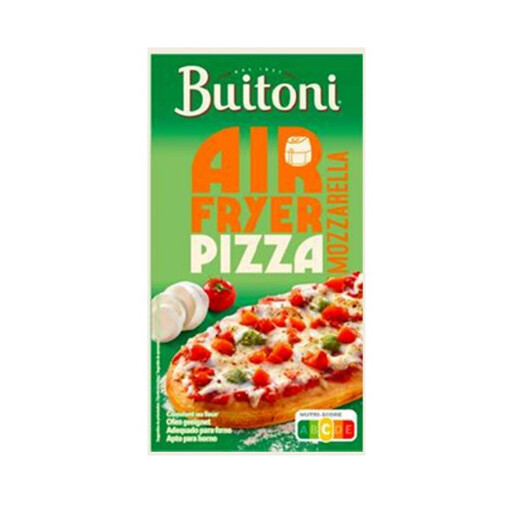
Buitoni Air Fryer Pizza Pesto Mozzarella 195 g

Buitoni Air Fryer Pizza Pesto Mozzarella 195 g

This smaller size is worth considering if you have an air fryer to prepare your lunch.

Weight shown in the product title: 195 g. Check the cooking settings on the packaging and don’t assume it can be cooked in the microwave.

View on Joybuy
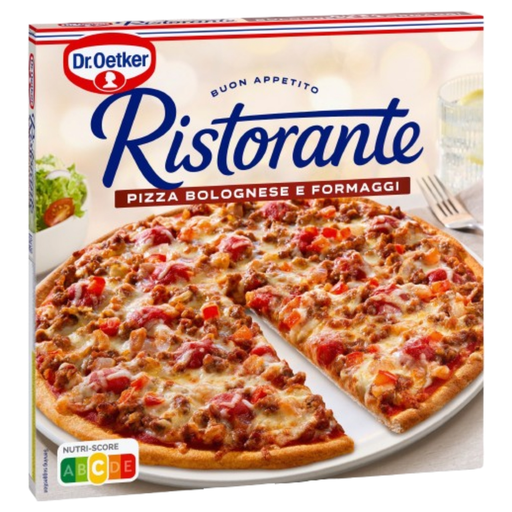
Dr. Oetker Ristorante Bolognaise Pizza 375 g

Dr. Oetker Ristorante Bolognaise Pizza 375 g

With this size, decide in advance whether you’ll eat the whole pizza or just a portion.

Weight shown in the product title: 375 g. The cooking instructions specify an oven. Check the packaging if salt or particular ingredients are important to your choice.

View on Joybuy
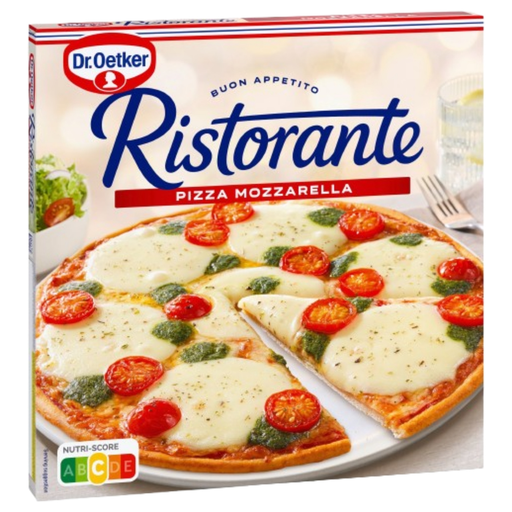
Dr. Oetker Ristorante Mozzarella Pizza listed as 355 g

Dr. Oetker Ristorante Mozzarella Pizza 355 g

This oven-cooked pizza should be compared based on how much you actually plan to eat.

The product title lists a weight of 355 g. Check the net weight on the packaging before calculating the calories in the whole pizza. Auchan lists 238 kcal per 100 g for its 355 g Ristorante Mozzarella. Check that this figure applies to the variety you’ve bought.

View on Joybuy

Frequently asked questions

How do I work out the calories in the pizza I’ll eat?

Multiply the kcal listed per 100 g by the number of grams you’ll eat, then divide by 100. For example, Carrefour lists 179 kcal per 100 g for its 4 Stagioni Extra. The 400 g pizza contains around 716 kcal if you eat the whole thing. If you’re only having part of it, use the weight of your portion.

Can I cook a frozen pizza in the microwave at university?

Yes, but only if the instructions for that particular pizza say it can be cooked in a microwave. Auchan says its 200 g four-cheese pizza takes 5 minutes at 750 W or 3 minutes at 900 W. Its stone-baked chorizo pizza, however, comes with a strong warning against this cooking method.

Does a Nutri-Score B mean a pizza is low in calories?

No. The Nutri-Score doesn’t tell you how many calories are in the meal you’ll eat. For a pizza, also check the kcal per 100 g, the weight of your portion and the salt shown in the nutrition information.

Which allergens should I check on a frozen pizza?

Before buying, read the allergen information for the exact recipe. Auchan’s listing for Dr. Oetker Ristorante Mozzarella mentions wheat and milk, and says it may also contain soya and mustard. The information may differ for other pizzas.

How should I store the pizza before taking it with me for lunch?

Follow the storage instructions on the packaging and plan your journey accordingly. Some products must be stored at −18 °C and must not be refrozen once defrosted. Check the instructions before planning a campus lunch.