Travellers comparing fat content
You want to check the nutritional values per 100 g, then work them out for the portion you’ll eat, rather than relying on the product name alone.


For a meal on the train, only choose frozen pizza if you can follow its storage instructions and prepare it using equipment you can actually access – possibly before you set off. Compare the fat content per 100 g, then calculate it for the amount you’ll eat: one figure alone isn’t enough to call a pizza ‘lighter’. If cooking or transport is a problem, it’s better to plan another meal than to rely on an appliance on board.
You want to check the nutritional values per 100 g, then work them out for the portion you’ll eat, rather than relying on the product name alone.
You don’t know whether an oven or microwave will be available during your journey. The cooking instructions will determine whether you need to prepare the pizza before you leave.
You need to plan how to transport a frozen product and check the allergen information for the specific product you choose, especially if you need to avoid certain ingredients.
For a meal on the train, first work out where the pizza will be cooked and how you’ll transport it. Then compare the fat content per 100 g and for the portion you plan to eat.
| Criterion | What to check | Who this matters to |
|---|---|---|
| Fat content and portion size | Compare the fat content per 100 g, then calculate it for the amount you’ll eat. | If I want to limit the fat in my meal, the value per 100 g doesn’t tell me enough about my portion. Around 33% of consumers prioritise this comparison. |
| Where it will be cooked | Read the cooking instructions and confirm what equipment you can access before or during your journey. | If I want to eat during my journey, I need to know where I can prepare the pizza without assuming the train has the right equipment; this is a priority for around 27% of consumers. |
| Storage | Check the pack instructions and plan how to transport the product while it is still frozen. | If I buy the pizza before setting off, I need to be able to keep it properly until I prepare it. This is the top priority for around 27% of consumers. |
| Allergens and pack size | Check the allergens for the exact product, its weight and the number of portions. | When I choose a pizza to take with me, I need to consider any ingredients I should avoid and how much I’ll eat; around 13% of consumers prioritise these points. |
According to Auchan’s product listings, the 424 g Dr. Oetker Suprema contains 9.1 g of fat per 100 g, or 39 g in the whole pizza. Auchan’s 200 g four-cheese pizza contains 9.8 g per 100 g, but 20 g in the whole pizza. The amount you eat changes how the options compare as a meal.
Check both the value per 100 g and the value for your portion.
Dr. Oetker Ristorante three-cheese mini pizzas and the Suprema need to be cooked in an oven. The catering services described by SNCF Connect vary by train and route; they don’t guarantee that passengers can access cooking equipment.
Check the product instructions and decide where you’ll be able to cook it before you buy.
The product listings for the pizzas covered here state that they should be stored at −18 °C and not refrozen after thawing. The DGCCRF advises using an insulated bag and keeping the time spent transporting frozen food to a minimum.
Plan your purchase, transport and preparation around the pack instructions; don’t rely on the journey to keep the product cold.
The products listed by Carrefour and Auchan include wheat and milk; other allergen information varies by pizza.
Check the ingredients and allergen information on the packaging of the product you buy.
The Ristorante three-cheese mini pizzas and the Suprema 5 Cheese are two examples of formats that need to be oven-cooked.
The Carrefour Bio Pizza Margherita is a 310 g option with nutritional information you can use for comparison.
Auchan’s 200 g four-cheese pizza comes with microwave cooking instructions.
These frozen pizzas come in different formats to consider for a meal on the train. Compare their weights and check the cooking instructions for each one before deciding where to prepare it; whichever format you choose, you’ll still need to plan how to transport it while frozen.
 Image unavailable
Worth considering if you can arrange to cook it before your journey and transport it while frozen.
Listed weight: 385 g. Check the pack for cooking instructions and the fat content for the amount you plan to eat.
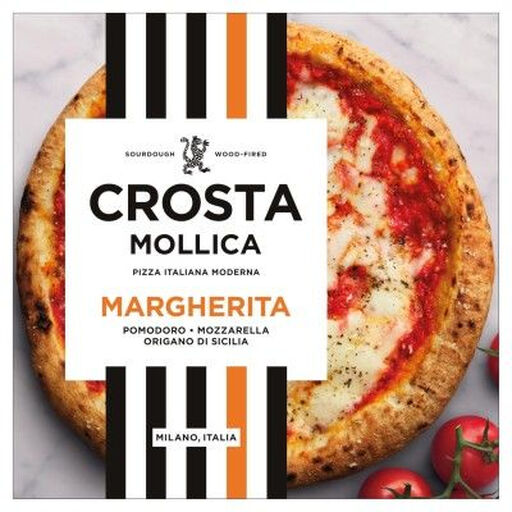 Image unavailable
This format is useful for comparing portion sizes if you already know where you’ll be able to prepare the pizza.
Listed weight: 403 g. Check the cooking instructions and nutritional information on the pack before you set off.
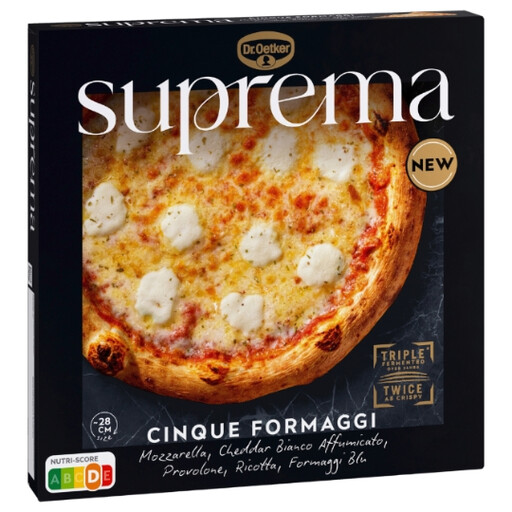 Image unavailable
Consider this if you can oven-cook it before setting off and choose how much to take with you.
For this 424 g Suprema, Auchan’s product listing states 9.1 g of fat per 100 g and an oven cooking time of 11 to 14 minutes at 220 °C. According to the listing, the whole pizza contains 39 g of fat.
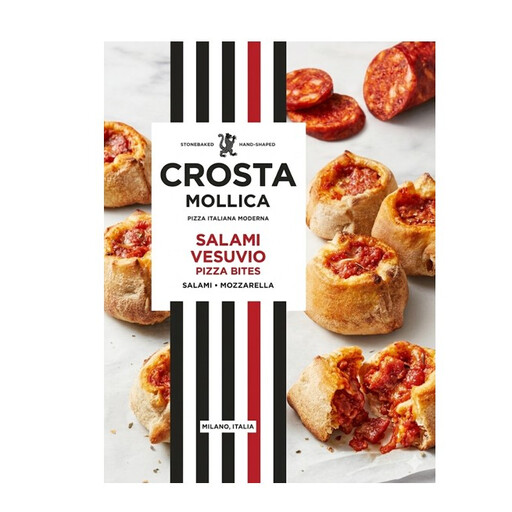 Image unavailable
The mini format can help you decide how many pizzas to take with you, but it doesn’t determine the fat content of your meal by itself.
Listed product weight: 270 g. Check the number of pieces and cooking instructions before planning your meal.
 Image unavailable
Worth considering if you’d rather choose how many mini pizzas to eat than take a whole large pizza with you.
Listed product weight: 270 g. Check the pack for cooking instructions before relying on this format for your journey.
No. A value per 100 g lets you compare recipes, but on its own it doesn’t prove that the pizza contains less fat than a comparable product. When choosing your portion, also consider how much you’ll eat and check any claim on the exact packaging.
Yes, as long as you can arrange transport and preparation in line with the instructions for the product you buy. The product listings reviewed state that the pizzas should be stored at −18 °C and not refrozen after thawing; the DGCCRF recommends using an insulated bag and keeping transport time as short as possible.
First, check the pizza’s cooking instructions and make sure you’ll actually have access to the right equipment, especially before you set off. If you plan to eat on board, check the services available on your train: SNCF Connect describes services that vary by train and route, but this doesn’t guarantee passengers access to an oven or microwave.