For an occasional toddler’s dinner, don’t choose a frozen pizza just because it contains fewer calories. Santé publique France recommends offering amounts suited to a child’s age and limiting salty foods. If your child already eats pieces of food and family meals, compare the salt content per 100 g, check the allergens and decide how much to serve based on their needs.
Who is this advice for?
Parents of a growing toddler
You’re looking for a dinner with an amount and ingredients suited to your child’s age, rather than choosing a product simply because it’s low in calories. Santé publique France highlights the importance of offering appropriate amounts when children start sharing family meals.
Parents looking for a quick, occasional dinner
You’re considering pizza from time to time, but want to compare the salt content and nutritional values per 100 g, as well as the amount you’ll actually serve.
Parents mindful of allergens and texture
Before serving, check the ingredients for the exact product and make sure your child can manage the pieces. The pizza product listings we reviewed include wheat and milk; other allergens vary by recipe.
What should you check before buying?
Start with your child’s age, needs and abilities, then compare recipes on the same per-100 g basis. The weight of the whole pizza doesn’t tell you how much to serve.
| Priority | What to check | Who is this for? |
|---|
| A meal suited to your child |
Consider your child’s age, the amount served and how this meal fits into their diet, rather than always looking for the lowest calorie option. |
If my child is growing and sharing family meals, I want to serve an appropriate amount rather than choose dinner to reduce their energy intake. Around 44% of consumers would put this need at the heart of their choice. |
| Salt and ingredients |
Compare the salt and energy per 100 g across recipes, then read the ingredients list. |
For a convenient but occasional dinner, I want to be able to compare recipes without relying on the calorie count alone. Around 33% of consumers would put this first. |
| Allergens, texture and portion |
Check the allergens for the exact recipe and make sure the texture and amount served are suitable for your child. |
If I need to take an allergy or the way my child handles pieces of food into account, whether the recipe is suitable matters more than its format. Around 23% of consumers would prioritise these checks. |
Mistakes to avoid
-
Choosing solely by the lowest calorie count
The calorie count tells you nothing about salt, allergens or the amount you serve. Santé publique France’s guidance for young children doesn’t make reducing calorie intake a shopping goal.
Compare the values per 100 g and the portion you’re considering. If you’re concerned about your child’s weight or diet, ask a health professional for advice rather than trying to restrict their energy intake.
-
Assuming an individual pizza is a child-sized portion
The pack size tells you what’s being sold, not how much is right for a toddler.
Decide how much to serve based on your child’s age and appetite, and what else is on the menu. Don’t assume they need to finish the pizza.
-
Assuming a Margherita or organic pizza is allergen-free
The recipes we reviewed include wheat and milk. The Carrefour Bio listing also warns that traces of soya and mustard may be present.
Check the ingredients and allergens on the pack of the product you’ve bought, even if you already know the recipe name.
-
Refreezing a thawed pizza
The Carrefour product listings we reviewed say not to refreeze the product once it has thawed.
Follow the storage and cooking instructions for the pizza you’ve bought.
Pizza brands to know when comparing labels
Bio Village (E.Leclerc)
The range includes a 350 g organic Margherita pizza with tomato and mozzarella.
- The E.Leclerc listing gives 214 kcal and 0.7 g of salt per 100 g for this product.
- The recipe contains wheat and milk; these values don’t determine how much is right for a child.
Turini (E.Leclerc)
This own-brand range offers a 400 g thin-crust frozen ham and cheese pizza.
- The E.Leclerc listing gives 214 kcal and 1.0 g of salt per 100 g for this product.
- The recipe contains ham, wheat and milk; check the ingredients before serving.
Auchan
The retailer’s range includes a 200 g individual frozen four-cheese pizza.
- Its listing gives 262 kcal and 1.1 g of salt per 100 g, making these figures useful for comparing labels.
- An individual-size pizza doesn’t indicate what portion is right for a toddler.
Carrefour Bio
The range includes a 310 g organic Margherita pizza made with wheat, tomato and mozzarella.
- The ingredients list lets you check the recipe for this product.
- The Carrefour listing warns that traces of soya and mustard may be present. Organic labelling doesn’t mean you can skip checking the allergens.
Dr. Oetker Ristorante
The range includes several frozen pizza recipes, including a Margherita.
- The Carrefour listing for the Margherita details ingredients including wheat flour, mozzarella and Gouda.
- Compare the nutritional values and allergens for each recipe: the range name won’t tell you what portion is right for a child.
Pizzas to compare on Joybuy
These two Dr. Oetker Ristorante frozen pizzas are worth comparing for an occasional dinner. Their weights refer to the whole pizza. Before serving either to a toddler, check the recipe and allergens, and decide how much is right for them.
 Image unavailable
Dr. Oetker Ristorante Vegetable Pizza 385 g
A vegetable recipe to consider when comparing pizza ingredients for an occasional meal. The pizza weighs 385 g; that doesn’t determine how much to serve. Check the allergens on the pack and make sure the texture is suitable for your child.
View on Joybuy
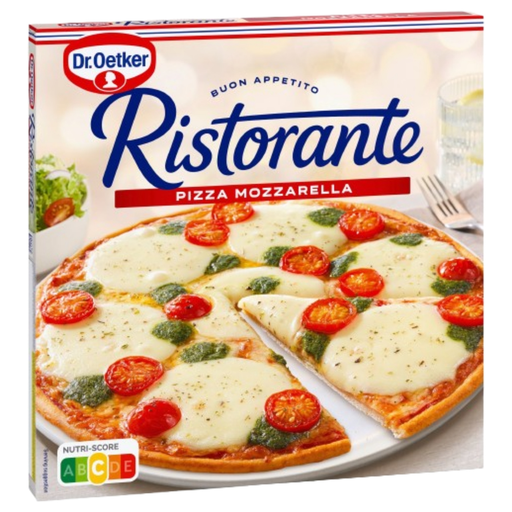 Image unavailable
Dr. Oetker Ristorante Mozzarella Pizza 355 g
A mozzarella recipe to consider if you want to compare the ingredients in two frozen pizzas. The pizza weighs 355 g; that isn’t a portion size for a child. Check the allergens for the exact product and decide how much to serve based on your child’s needs.
View on Joybuy
Frequently asked questions
Is a lower-calorie frozen pizza better for a toddler?
Not necessarily: calories alone can’t tell you whether the dinner and portion are right for your child. Santé publique France reminds parents that children under 3 have specific dietary needs. If you have concerns about your child’s weight or diet, ask a health professional for advice.
What should you compare between two frozen pizzas?
Compare the salt and energy per 100 g, then check the ingredients, allergens and how much you plan to serve. A lower figure for just one measure isn’t enough to decide which recipe is better for a toddler.
Which allergens should you check on a Margherita pizza?
Check the details for the exact product: the recipes we reviewed include wheat and milk, while some warn that traces of soya or mustard may be present. The name Margherita is no substitute for checking the information on the pack.
How should you store and serve a frozen pizza?
Follow the storage and cooking instructions on the product. The Carrefour listings we reviewed say to store the pizza at −18 °C and not to refreeze it once thawed. After cooking, let it cool before preparing the portion for your child.


