For a solo picnic, choose a frozen pizza labelled as one portion if you can prepare it as instructed before your meal. Auchan’s 200 g four-cheese pizza is explicitly labelled as one portion. Mini pizzas let you adjust how many you prepare, but they aren’t automatically a meal for one. If you can’t arrange to cook or reheat your pizza, a product that’s ready to eat is a better choice, provided you follow its storage instructions.
Who are these formats for?
For one, with cooking arranged
You want to prepare an amount that’s right for one person and have a way to cook or reheat the pizza according to the instructions on the packaging. Auchan’s 200 g four-cheese pizza is labelled as one portion, while its 390 g chorizo pizza, described as an individual size, is labelled as two portions.
For anyone who likes to adjust portions
You’d rather prepare a few mini pizzas to suit your appetite or share them with someone else. Auchan and E.Leclerc list bags containing nine or twelve pieces, depending on the product. Check how many you want to prepare and follow the instructions for your chosen product.
For anyone without access to cooking facilities
If you can’t prepare the pizza before you leave or cook or reheat it at your picnic spot, choose a product that’s explicitly ready to eat. Lidl describes its four-cheese Barchetta as freshly baked in the stores that sell it; it isn’t a frozen pizza.
What should you check?
For your picnic, first decide when and how the pizza will be prepared. Then choose the quantity and recipe by checking the exact product label.
| What to consider |
What to check |
Who is this for? |
| Preparation and transport |
Check the cooking or reheating instructions, and plan how to keep the pizza cold if you’re transporting it while still frozen. |
If I don’t have any equipment at the picnic spot, I’ll need to prepare my meal before I leave or choose something ready to eat. Around 45% of consumers would prioritise how easy a product is to prepare and transport. |
| Amount to serve |
Compare the net weight and number of portions. For a bag of mini pizzas, also check how many pieces it contains. |
If I’m eating alone and don’t want leftovers, I need to know whether the pack contains one portion or lets me choose how many pieces to prepare. Around 33% of consumers would put finding the right quantity first. |
| Recipe and label |
Read the ingredients, allergens and any warnings about traces, then check the nutritional information per 100 g and, if shown on the packaging, per portion. |
When choosing a recipe for myself or someone with dietary requirements, I need to check the exact product rather than relying on its name alone. Around 22% of consumers would consider the ingredients and nutritional information a top priority. |
Mistakes to avoid
-
Assuming frozen pizza is ready to eat
Preparation instructions vary. Auchan’s 200 g four-cheese pizza needs reheating, while the product information for an Italpizza pizza says to eat it after cooking. A picnic is no reason to ignore these instructions.
Before you buy, decide where and how you’ll prepare the product you’ve chosen. If you don’t have a suitable way to do so, look for something explicitly labelled as ready to eat and follow its storage instructions.
Preparing your pizza before you leave takes time. If you transport it while still frozen, you’ll also need a plan to keep it cold.
-
Relying on the word ‘individual’
Auchan’s 390 g chorizo pizza is described as an individual size, but its product information says it contains two portions. The size label alone won’t tell you how much to plan for one person.
Check the weight and number of portions. For mini pizzas, also check the number of pieces before deciding how many to prepare.
-
Letting the journey break the cold chain
If the pizza needs to stay frozen until you prepare it, transport is part of your planning. The French Ministry of Agriculture gives −18 °C as the reference temperature for frozen storage. An insulated bag doesn’t replace the need to follow the instructions on the packaging.
Anses recommends buying frozen food at the end of your shop and using an insulated bag. Keep the journey short, return the product to the freezer promptly if needed, and don’t refreeze a defrosted product if the label says not to.
-
Assuming every topping suits everyone
Ingredients and possible traces vary from one recipe to another. According to the DGCCRF, allergens must be highlighted in the ingredients list of prepacked foods.
Check the packaging for the exact recipe, particularly the allergens, any traces listed and the nutritional information per 100 g.
Brands and ranges to know
Auchan
The retailer offers whole frozen pizzas and mini pizzas, with portion information that varies from one product to another.
- Its 200 g four-cheese pizza is labelled as one portion.
- Its 390 g chorizo pizza is labelled ‘individual size’ but lists two portions. Check each product page or pack.
Dr. Oetker
Auchan lists Ristorante Piccolissima mini pizzas, including a ham recipe in a 288 g pack of twelve.
- The number of pieces lets you choose how many mini pizzas to prepare.
- Check the packaging for the portions, cooking instructions and allergens for the recipe you buy.
Buitoni
The three-cheese Piccolinis are among the mini pizzas sold in a 270 g pack of nine.
- The individual pieces make it easy to adjust how many you prepare.
- Don’t assume the number of pieces adds up to a meal-sized portion. Follow the pack’s cooking and storage instructions.
Carrefour
Carrefour lists Carrefour Sensation mini pizzas, including a three-cheese recipe.
- The mini format lets you adjust how many pieces you prepare.
- Check the portions, preparation instructions and allergens for the product you choose.
E.Leclerc / Marque Repère Turini
E.Leclerc lists Turini cheese mini pizzas in a 270 g pack of nine.
- The nine-piece pack lets you decide how many to prepare.
- Check the packaging for preparation and storage instructions, as well as allergen information.
Lidl
Lidl describes its four-cheese Barchetta as freshly baked and ready to enjoy. It’s an alternative, not a frozen pizza.
- You won’t need to cook a frozen pizza at your picnic spot.
- Check that your store has a hot food counter, sells this product and can provide its ingredients and allergen information.
Mini pizzas on Joybuy
These two products are frozen mini pizzas, so you can adjust the amount you prepare. Follow the packaging instructions and plan how to keep them cold if you’re transporting them while still frozen. They aren’t a substitute for something that’s already ready to eat.
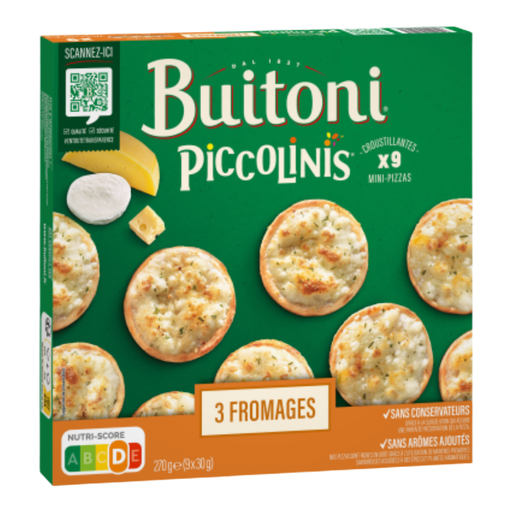 Image unavailable
Buitoni Piccolinis 3 Cheese, 9 mini pizzas, 270 g
This pack is a good choice if you want to decide how many mini pizzas to prepare, whether you’re eating alone or sharing.
It contains nine pieces and weighs 270 g in total. Cook in the oven according to the instructions on the packaging. If you transport the product while it’s still frozen, follow its storage instructions.
View on Joybuy
 Image unavailable
Crosta & Mollica Mini Pizzas Margherita, 270 g
This frozen mini format could suit you if you arrange to reheat it before your picnic or have access to suitable equipment.
The pack weighs 270 g. Check the packaging for the number of pieces, how many you want to prepare and the reheating instructions. Keep the product cold if you’re transporting it while still frozen.
View on Joybuy
Frequently asked questions
Can you eat frozen pizza as it is on a picnic?
Don’t assume it’s ready to eat without checking the instructions. Some products need reheating, while others need to be cooked before eating. If you can’t follow the instructions either before you leave or at your picnic spot, choose something explicitly labelled as ready to eat.
How should you transport frozen pizza in summer?
Buy it at the end of your shop and use an insulated bag, as Anses recommends. Keep the journey short and follow the storage instructions on the packaging. For products kept frozen, the French Ministry of Agriculture gives −18 °C as the reference temperature.
Does ‘individual size’ mean one portion?
No. Compare the net weight and the number of portions listed for that product. Auchan lists one portion for its 200 g four-cheese pizza, but two portions for its 390 g chorizo pizza, which is also described as an individual size.
What should you check on the label before choosing a recipe?
Read the ingredients and allergen information for the exact recipe, along with any warnings about traces on the packaging. To compare nutritional values, use the same basis for each product, such as the information per 100 g. The DGCCRF notes that nutritional information is given on this basis.


