Someone short on time and having lunch alone
You want to make a pizza without opening a large sharing-size one. The weight of the pack and how much you’ll eat matter just as much as how easy it is to prepare.


For a solo lunch, start by deciding how much you plan to eat, then compare the nutritional values per 100 g and the ingredients in similar pizzas. A compact pizza, a whole pizza and a pack of mini pizzas are portioned differently. The pack weight alone is no substitute for checking the label or considering what else you’ll be having.
You want to make a pizza without opening a large sharing-size one. The weight of the pack and how much you’ll eat matter just as much as how easy it is to prepare.
You want to compare the salt content and other nutritional values of similar pizzas. According to Santé publique France, displaying the Nutri-Score is voluntary. If it appears on the pack, consider it alongside the values per 100 g and the ingredients list.
Before choosing a size or topping, check the ingredients for the specific recipe. In France, the DGCCRF states that allergens in prepacked foods must be emphasised in the ingredients list.
Start with any ingredients you absolutely need to avoid. Then think about how much you’ll eat and compare the nutritional information for similar recipes. Whether you’re choosing a whole pizza or mini pizzas, base your decision on the amount you’ll serve, not just the values per 100 g.
| Criteria | What to check | Who it matters to |
|---|---|---|
| Ingredients and salt | Compare the salt content and other nutritional values per 100 g. Check the Nutri-Score when it is shown on similar pizzas. | If what’s in my lunch matters more than the topping, I want to compare recipes on a like-for-like basis. Around 36% of consumers may prioritise this criterion. |
| Portion size and staying power | Check the net weight, the number of pieces and how much you plan to eat. | When I’m having lunch alone, I look for an amount that suits my appetite rather than a pack simply labelled as an individual portion. Portion size would be the top criterion for around 29% of consumers. |
| Allergens and ingredients | Read the ingredients list, check which allergens are emphasised and look for any precautionary ‘may contain’ statements on the pack you buy. | If I need to avoid certain ingredients, whether the recipe is suitable for me comes before its weight or nutritional label. This would be the priority for around 21% of consumers. |
| Finding the right size | Check the weight and the number of pizzas or pieces in the options available at your local shop. | For my lunch break, I want to find a format nearby that I can actually prepare and portion out. Around 14% of consumers would put this ease of choice first. |
According to Santé publique France, displaying the Nutri-Score is voluntary. A score shown on a pizza doesn’t tell you how much you’ll eat or what you’ll serve with it.
Use it to compare similar pizzas when it is available, then check the nutritional values and the portion you plan to eat.
The ranges listed by Auchan and E.Leclerc include 200 g pizzas, while Carrefour also offers whole pizzas weighing more than 300 g. So values per 100 g alone don’t tell you how much you’ll actually eat at lunch.
Check the net weight and, for mini pizzas, the number of pieces you plan to serve.
A vegetable topping or a ‘Bio’ label doesn’t, by itself, tell you how much salt or fat is in that particular pizza.
Compare the label on the specific product rather than relying on how it is presented.
Ingredients vary by topping. A tuna recipe, for example, may contain fish, while cheese means it contains milk.
If you have an allergy, check the ingredients list and any ‘may contain’ statements on the product packaging.
These examples give you an idea of the different formats available; they don’t cover every recipe from each brand. Always check the pack you’re thinking of buying.
The Ristorante range includes whole pizzas. Carrefour, for example, lists a 335 g mozzarella pizza and a 355 g tuna pizza.
Carrefour offers, among other options, a 350 g Carrefour Extra tuna pizza, as well as other frozen pizza ranges.
The Auchan range mentioned here includes a 200 g four-cheese pizza, a 335 g mozzarella pizza and mini pizzas.
The Buitoni Piccolinis listed in the Auchan range are mini pizzas sold in a 270 g pack containing nine pieces.
E.Leclerc lists 200 g individual Turini pizzas as well as whole pizzas weighing more than 300 g.
These products offer three ways to plan a solo lunch: choose a whole pizza, pick a compact option or portion out mini pizzas. Whichever you choose, start with how much you’ll serve and check the recipe label.
 Image unavailable
This size is a good choice if you’re after a whole pizza rather than a compact portion. If you eat the whole pack, bear its 385 g weight in mind when checking the values per 100 g.
Check the ingredients and allergens on the packaging before serving.
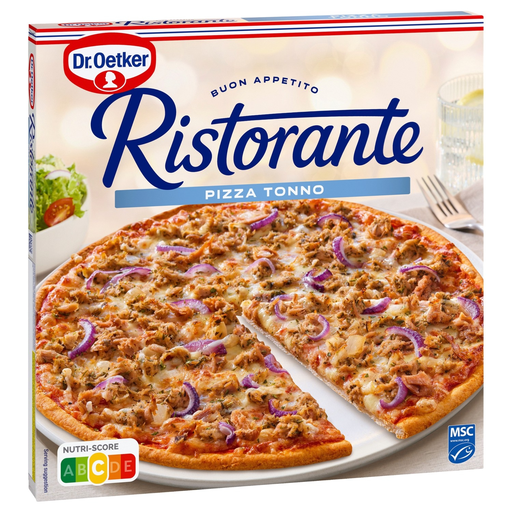 Image unavailable
This whole tuna pizza is prepared as a single item. Consider whether you plan to eat the whole thing for lunch.
Take extra care with this tuna recipe if you need to avoid fish. Check all the allergens on the pack you buy.
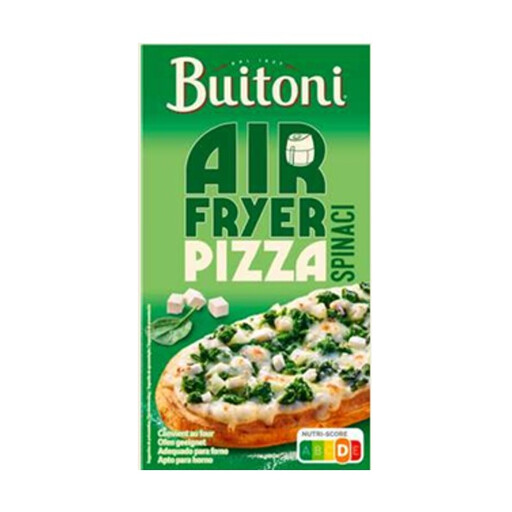 Image unavailable
This compact option could suit you if you’re planning a 195 g pizza for lunch and want to cook it in an air fryer.
Check the cooking instructions and, if you’re comparing Nutri-Scores, the score shown on the packaging, if there is one.
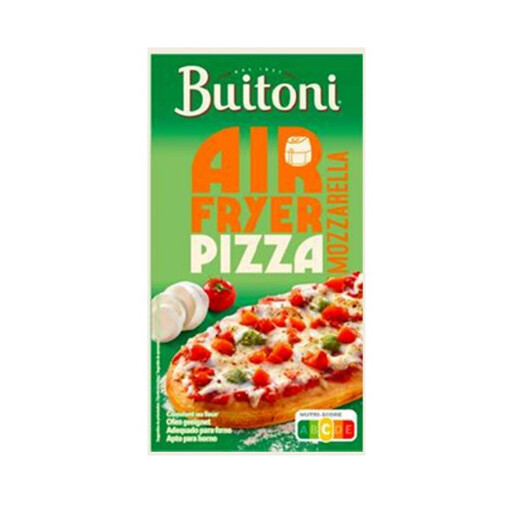 Image unavailable
If you’re looking for a compact pizza to cook in an air fryer, this 195 g option lets you decide on your portion as soon as you pick up the pack.
Check the cooking instructions, ingredients and nutritional information for the specific recipe.
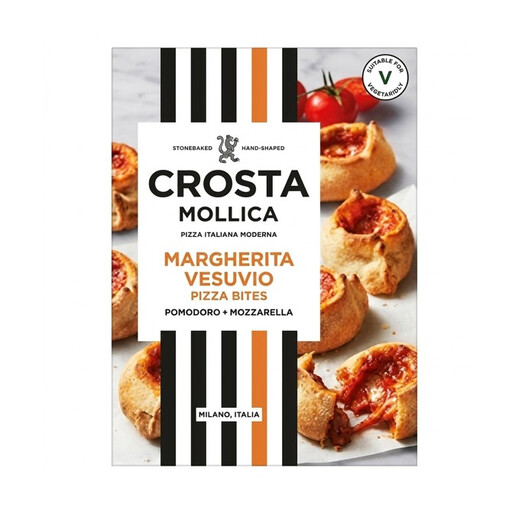 Image unavailable
Mini pizzas let you make up a portion from a 270 g pack, as long as you decide how many pieces you’ll serve.
Check the number of pieces, ingredients and nutritional values on the packaging before comparing this pack with a whole pizza.
No. Santé publique France explains that displaying it is voluntary. If it appears on the pack, it can help you compare similar pizzas, but it doesn’t replace checking the nutritional values per 100 g or considering how much you’ll eat.
No. These weights tell you the size of the product, not what it contains. Compare the nutritional values and ingredients for each recipe, then think about how much you’ll eat and what else will make up your lunch.
Check the net quantity, ingredients list, allergens and nutritional information. For prepacked foods sold in France, the DGCCRF states that allergens must be emphasised and that nutritional information is given per 100 g or 100 ml to make comparisons easier.
No. If you need to avoid an allergen, check the packaging on the product you’ve bought before eating it. Ingredients vary by recipe, so a photo or brand name is no substitute for the ingredients list.
Follow the storage instructions on the packaging. For its Carrefour Extra tuna pizza, Carrefour specifies storage at −18 °C and advises against refreezing the product after it has thawed.