People who are mindful of fat
If you want to compare pizzas on this basis, check the fat and saturates per 100 g, then consider how much you plan to serve. A recipe name is no substitute for its nutritional information.


If you’re choosing a frozen pizza with fat content as your priority, compare the figures per 100 g and how much each person will eat, rather than relying on the recipe name. For Sunday lunch, also check how many portions you’ll need and the cooking instructions for your oven. A topping that looks simpler doesn’t necessarily mean the pizza is lower in fat.
If you want to compare pizzas on this basis, check the fat and saturates per 100 g, then consider how much you plan to serve. A recipe name is no substitute for its nutritional information.
The net weight and number of portions will help you plan how much to serve. Also check whether your oven can cook enough pizzas for the meal.
Cooking times and temperatures vary between products. Before buying, check the pizza’s instructions and make sure they suit your oven and mealtime plans.
If fat content is your priority, start with the nutritional values per 100 g. Then decide how many portions you need and check the cooking instructions: each criterion meets a different need.
| Criterion | What to check | Who is it for? |
|---|---|---|
| Fat | Compare the fat and saturates per 100 g, then relate these figures to the portion you plan to serve. Check the energy and salt content too. | I want to keep pizza on the Sunday menu, but my priority is choosing based on its fat content rather than the name of its topping. Around 45% of consumers put this need first. |
| Sharing size | Check the net weight and the stated number of portions to plan how much to serve. | If several people are eating together, I need to know how many portions the pizza will provide and whether we’re having a side dish. This need comes first for around 33% of consumers. |
| Cooking | Check the type of oven, temperature, cooking time and whether the pizza needs to be cooked from frozen. | I want to serve the meal on time without guessing the oven settings or thawing the pizza when I shouldn’t. Cooking is the priority for around 22% of consumers. |
If a Nutri-Score is shown on the pizza, it can provide another useful reference, but it doesn’t replace the detailed values or the portion you serve. Manger Bouger explains that its calculation takes account of factors including energy, saturates, sugars and salt.
Words such as “margherita” or “vegetable” don’t tell you the fat and saturates content on their own. The product listing for E.Leclerc’s Montagnarde Turini pizza states that this particular product contains 11.1 g of fat and 6.1 g of saturates per 100 g.
Compare the nutritional information for the specific pizzas you’re considering, and take the portion you serve into account. If a reduction in fat is claimed, also check the comparison shown on the label.
A pizza designed for sharing won’t necessarily provide the right number of portions for your guests. For example, Maison Thiriet describes its 700 g Montagnarde pizza as serving 2 to 4 portions.
Check the weight, stated portions and space available in your oven before deciding how many pizzas to cook.
Cooking instructions differ between products. The European Food Safety Authority recommends following the manufacturer’s storage instructions and not refreezing food once it has been thawed.
Store and cook the pizza as directed on its packaging, especially if it needs to be cooked from frozen.
Sizes and recipes vary within each range. To compare fat content, always start with the specific product you plan to serve.
The retailer offers frozen pizzas, including products in the Carrefour Original and Carrefour Sensation ranges.
This E.Leclerc brand includes a variety of recipes and pizzas for sharing.
Picard offers a Margherita pizza and frozen mini pizzas, among other products.
The retailer offers frozen pizzas in different sizes, including a 700 g Montagnarde advertised as serving 2 to 4 portions.
Auchan offers Dr. Oetker pizzas from the Suprema range, among others.
These frozen pizzas come in a range of recipes and sizes for a Sunday meal. Compare their nutritional information and the portions you need before choosing the one that suits your priorities. A recipe name alone doesn’t prove that a pizza is lower in fat.
 Image unavailable
The mini size could work well if you’d like to share the pizzas between your guests. The pack weighs 270 g; check how many pieces it contains and how many portions you need.
If fat content is your priority, compare the values per 100 g with those of the other pizzas you’re considering. Follow the cooking instructions on the packaging.
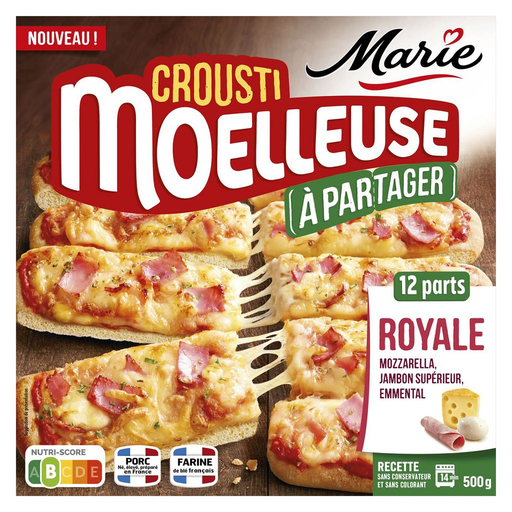 Image unavailable
This pizza is presented as a sharing size and weighs 500 g. Plan the portions based on the number of people eating, rather than treating the pack weight as an individual serving.
If fat content is guiding your choice, compare the values per 100 g, then check the cooking instructions on the packaging.
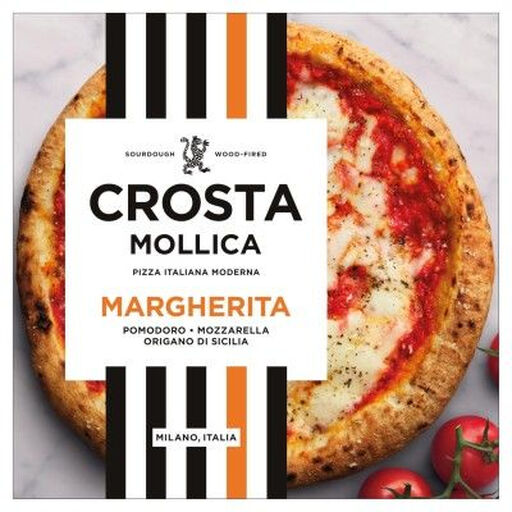 Image unavailable
This 403 g Margherita offers a different recipe from the mini pizzas in the same range. Decide how many portions you’ll serve before comparing how much people are likely to eat.
A Margherita topping doesn’t prove that a pizza is low in fat: check the values per 100 g and the cooking instructions for this particular pizza.
 Image unavailable
This 385 g Vegetable pizza is another recipe to consider for Sunday lunch. Plan the portions based on how much you want to serve.
Don’t assume it’s lower in fat because of its topping: compare the nutritional information per 100 g and follow the cooking instructions on the packaging.
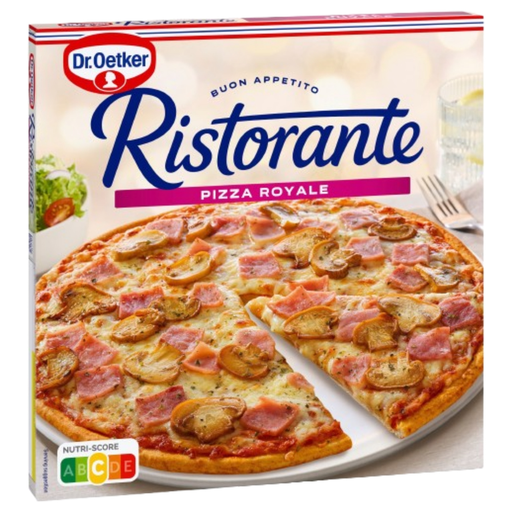 Image unavailable
This 350 g ham and mushroom pizza can be compared with the other recipes if you like this topping. Its weight helps you plan the portions, but doesn’t tell you how much each person will eat.
Check the fat and saturates per 100 g before drawing conclusions, and check the cooking instructions on the packaging too.
No. This claim alone isn’t enough to help you choose between two pizzas for Sunday lunch. Check the comparison shown on the label, then look at the fat, saturates, salt and energy per 100 g, as well as how much you’ll serve. If shown, the Nutri-Score offers another point of reference, but it doesn’t tell you about your portion.
First compare their nutritional values per 100 g, then take into account the weight of the portion you plan to serve. Don’t confuse the total weight of a pizza for sharing with an individual portion.
Check the instructions for the pizza before changing how you prepare it: some need to be cooked from frozen. The European Food Safety Authority recommends following the manufacturer’s instructions and not refreezing food once it has been thawed.
Use the setting specified for each pizza rather than assuming one cooking time applies to them all. As a guide for this particular product, Picard gives a cooking time of 8 minutes at 210 °C for its 400 g Margherita. Check the packaging for the pizzas you plan to serve, and make sure there’s enough room in the oven.