People short on time at lunchtime
You’re looking for a quick meal, while keeping the amount you actually eat under 500 kcal rather than automatically finishing the whole pizza.


To put together a lunch under 500 kcal with a frozen pizza, work out the energy in the amount you’ll actually eat, rather than looking only at the figures per 100 g. A whole pizza may fit the bill if its weight and nutritional information confirm this; otherwise, serve yourself a measured portion. The topping, Nutri-Score and individual size are no substitute for doing the calculation.
You’re looking for a quick meal, while keeping the amount you actually eat under 500 kcal rather than automatically finishing the whole pizza.
You can serve part of a standard-sized pizza and keep the rest, following the storage instructions on the packaging.
You compare toppings and check allergens, without assuming that a vegetable recipe on its own will keep you within your calorie limit.
First decide whether you’ll eat the whole pizza or just part of it: the weight used in your calculation will differ.
| What to consider | What to check | Who it matters to |
|---|---|---|
| Amount under 500 kcal | Multiply the kcal per 100 g by the number of grams you’ll eat, then divide by 100. | If I’m mainly keeping an eye on my total lunch intake, I need to count the amount on my plate, even if the pack contains more. Around 36% of consumers prioritise this calculation. |
| Convenient size | Compare the net weight with the energy in the whole pizza: ‘individual’ doesn’t mean ‘under 500 kcal’. | For a quick lunch, I’d rather know whether I can eat the whole pizza or will need to save some for later. Size is the top priority for around 29% of consumers. |
| Ingredients and allergens | Read the ingredients and allergen information for the specific product, then check its energy value separately. | If I choose a vegetable topping or need to avoid an ingredient, the list on the packaging matters just as much as the recipe name. Around 21% of consumers put this check first. |
| Storage and cooking | Check the transport, storage and preparation instructions on the packaging. | If I’m saving some pizza for later, I want to know how to store it without confusing a product that’s still frozen with one that has thawed. This is the top concern for around 14% of consumers. |
Carrefour France’s product information for Carrefour Extra 4 Stagioni gives 179 kcal per 100 g. At 400 g, the whole pizza contains around 716 kcal.
Calculate the total based on the weight you actually serve. Weigh your portion if the packaging doesn’t specify its size.
Auchan’s 200 g four-cheese pizza contains 523 kcal per pizza. Carrefour France’s product information for Dr. Oetker Ristorante Vegetable gives it a Nutri-Score of B, but at 385 g and 193 kcal per 100 g, the whole pizza contains around 743 kcal.
Use these details to understand the size or labelling, then check the kcal separately for the amount you plan to eat.
A topping described as vegetable-based may also contain wheat or dairy products. The name doesn’t tell you everything that’s in the product.
Read the ingredients list, any highlighted allergens and any ‘may contain traces’ statements on the packaging you buy.
If you plan to portion out a pizza, it also needs to be transported and stored according to the instructions on its packaging.
The French Directorate-General for Competition, Consumer Affairs and Fraud Control (DGCCRF) advises picking up frozen products last, keeping transport time to a minimum and preferably using an insulated bag. Follow the manufacturer’s instructions if the product has thawed.
Carrefour Extra and Carrefour Bio products let you compare net weight, toppings and energy per 100 g.
The Ristorante range includes recipes with nutritional information you can use to calculate a portion.
The 200 g four-cheese pizza shows why it’s worth calculating the energy in an individual pizza.
These pizzas give you the option of having a whole smaller pizza or a portion of a larger one. For each product, compare the weight you’ll eat with the nutritional information on the packaging you receive.
 Image unavailable
A vegetable topping you can enjoy as part of a measured portion: don’t assume the whole pizza makes a lunch under 500 kcal.
Check the nutritional information and allergens on the packaging before deciding how much to eat.
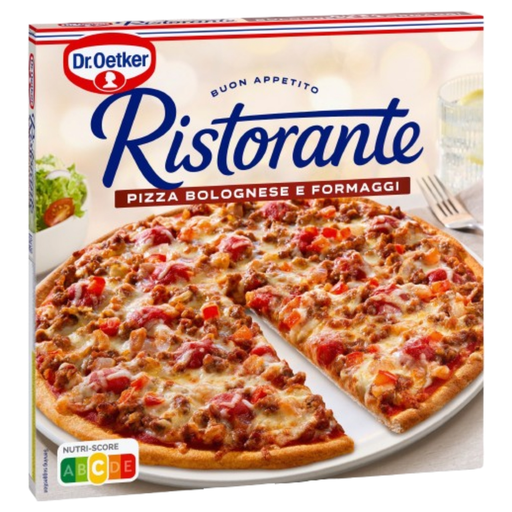 Image unavailable
A good choice for lunch if you’re happy to serve part of the pizza rather than eat the whole thing.
It weighs 375 g, so calculate your portion using the kcal per 100 g shown on the packaging.
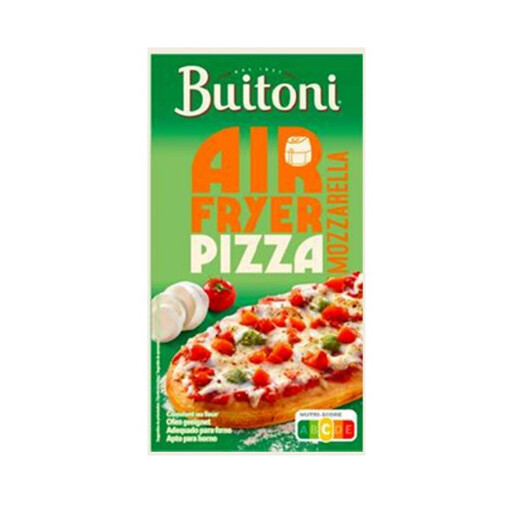 Image unavailable
A smaller pizza you could consider eating whole, provided you confirm its weight and energy value on the packaging.
The title gives the weight as 195 g and indicates Air Fryer preparation; follow the cooking instructions for the product you receive.
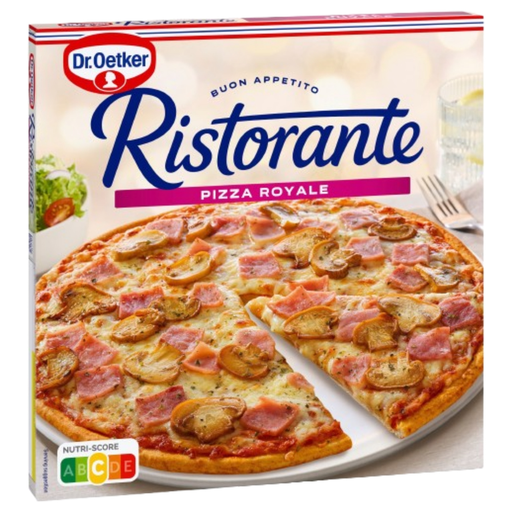 Image unavailable
A ham and mushroom pizza to enjoy by serving yourself a measured portion rather than counting on the whole pack.
It weighs 350 g, so check the kcal per 100 g and weigh a portion that fits your lunch.
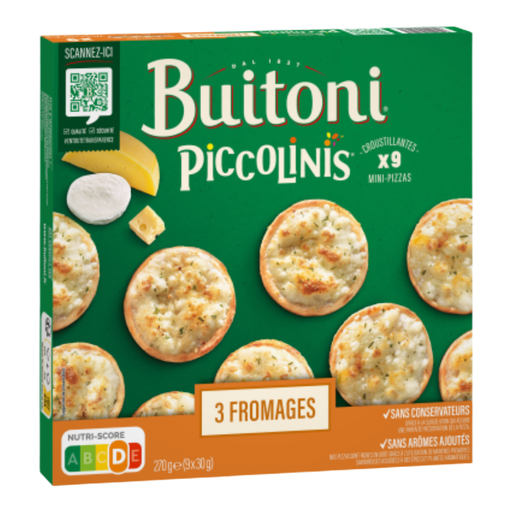 Image unavailable
A handy way to count how many pieces you eat instead of cutting up a large pizza.
The pack is listed as containing nine mini pizzas, weighing 270 g in total. Check the energy for the number of pieces you serve: eating the whole pack doesn’t mean you’ll be under 500 kcal.
Multiply the kcal per 100 g by the weight you’ll eat in grams, then divide by 100. Carrefour France gives 179 kcal per 100 g for the Extra 4 Stagioni pizza, so a 279 g portion comes to around 499 kcal.
No. Auchan France gives 523 kcal for its 200 g four-cheese pizza. Check the total for the specific pizza before planning to eat it all.
No. Nutri-Score alone doesn’t tell you the energy in the whole pizza. Carrefour France’s product information gives Dr. Oetker Ristorante Vegetable a Nutri-Score of B, but it contains around 743 kcal for 385 g.
Check the ingredients, any highlighted allergens and any ‘may contain traces’ statements for the product you buy. The French Ministry of the Economy notes that allergenic ingredients must be identified on food labels.
Don’t treat it as a pizza that’s still frozen. Follow the instructions on its packaging, particularly those about refreezing. To reduce the risk, the DGCCRF recommends keeping transport time for frozen products to a minimum and preferably using an insulated bag.