When choosing a frozen pizza for a TV dinner, start by deciding how much you plan to eat and how many calories it contains, then compare the figures per 100 g. A small pizza makes it easier to choose a portion, but it isn’t necessarily low in calories. A large pizza may suit you if you’re sharing it or saving some for later. Also check the salt, ingredients and cooking instructions for the product you choose.
Who are these criteria useful for?
A solo dinner with a set portion
If you don’t want to eat a whole pizza meant for sharing, check the weight of one pizza or the number of portions stated on the pack. An individual-sized pizza makes this easier, but you should still check its calories.
Comparing calories for the whole meal
The figures per 100 g aren’t enough if you plan to eat the whole pizza. The net weight and the figures per pizza or portion let you compare the amount you’re actually planning to have for dinner.
Quick preparation with ingredients to check
Depending on the appliances you have, check whether the pizza needs to be cooked in the oven or can be heated in the microwave. Read the ingredients list and allergen information before choosing, too.
What should you check before choosing?
First decide how much you’ll eat, then check whether the preparation method and ingredients suit you. The percentages below show the main priority for each need among consumers making this choice.
| Criteria |
What to check |
Which consumers? |
| Calories in your portion |
Compare the kcal per 100 g with the amount you’ll eat, or use the figure given per portion or per pizza. |
If I’m eating alone, I want to know the calories on my plate, not just those in 100 g of pizza. Around 36% of consumers prioritise knowing how much they’ll actually eat. |
| Size and cooking method |
Check the number of pizzas, the permitted cooking method and the instructions for the exact product. |
If I’m short on time or only have a microwave, I need a size I can prepare as directed. Ease of preparation comes first for around 22% of consumers. |
| Salt and fat |
Check the salt and saturated fatty acids for the portion you plan to eat. If the pack displays a Nutri-Score, read it alongside the nutrition information. |
I want to look beyond calories when choosing my dinner. For around 21% of consumers, other nutritional information is the main priority. |
| Ingredients and allergens |
Read the ingredients list, highlighted allergens and any precautionary statements about traces on the pack you buy. |
If certain ingredients don’t suit me, the recipe name alone isn’t enough to decide. This check is a priority for around 21% of consumers. |
Pitfalls to avoid
-
Comparing only the kcal per 100 g
Two pizzas with similar figures per 100 g can make for different meals if they weigh different amounts or you eat different quantities. Auchan’s product information lists 442 kcal for a 195 g portion of its 390 g chorizo pizza.
Before you eat, decide whether you’ll have one stated portion, half a pizza or the whole pizza. Then compare the calories for that amount.
-
Taking a phrase such as “low calorie” at face value
A range name doesn’t replace the nutrition information. In the European Union, rules on nutrition claims set conditions for statements about reduced energy value, among other things: the reduction must be at least 30% compared with a similar product.
When choosing your dinner, check the kcal per 100 g, the weight and the figures per portion where provided, rather than guessing the calorie content from the pizza’s name.
-
Looking only at the calories
A pizza can also contain a considerable amount of salt. Dr. Oetker lists 3 g of salt for a whole 295 g Ristorante Margherita.
Compare the salt and saturated fatty acids for the amount you plan to eat, especially if you’re adding other salty foods to your meal.
-
Guessing how to cook or store it
Cooking methods vary: Auchan’s 200 g 4 Cheese pizza can be heated in the microwave, while Buitoni says not to cook its Bella Napoli Margherita this way. The DGCCRF notes that a rise in temperature encourages microbial growth.
Follow the cooking and storage instructions on the pack, and keep the product frozen until you’re ready to prepare it.
Brands and retailers to compare
The examples below relate to specific products. Compare their weight and nutrition information, and don’t assume the same figures apply to every pizza from the same brand.
Buitoni
Buitoni describes its Bella Napoli Margherita as three 141 g portions.
- Buitoni lists 227 kcal per 100 g and 321 kcal per third of a pizza. This makes it easy to work out your portion if you’re sharing.
- These figures are for one third, not the whole pizza. The product contains, among other things, gluten and milk.
Dr. Oetker
The Ristorante Margherita is a 295 g pizza designed to be cooked in the oven.
- Dr. Oetker gives the figures for the whole pizza: 766 kcal and 3 g of salt. This makes it easier to assess as a meal if you’re not sharing.
- If you’re looking to cut the calories in your dinner, compare this total with the amount you actually plan to eat.
Carrefour
The SIMPL Margherita is sold in a pack of three 300 g pizzas.
- Carrefour lists 200 kcal per 100 g for this product, making it useful for comparing recipes on a like-for-like basis.
- Based on this figure, a 300 g pizza contains around 600 kcal. Take into account how many pizzas or slices you’ll eat.
E.Leclerc
The stone-baked ECO+ Margherita is sold in a pack of three 300 g pizzas.
- For this product, E.Leclerc lists 220 kcal and 0.9 g of salt per 100 g, as well as a Nutri-Score of C.
- Based on its weight and the calories listed per 100 g, a whole pizza contains around 660 kcal.
Auchan
The 200 g 4 Cheese pizza is an example of an individual-sized pizza that can be heated in the microwave.
- Auchan lists one portion per pack and 523 kcal for the whole pizza, so there’s no need to work out a portion from a larger product.
- The product also lists 262 kcal and 1.1 g of salt per 100 g. An individual-sized pizza isn’t necessarily low in calories.
Lidl
Lidl has a section dedicated to frozen pizzas and snacks.
- If you choose a pizza from this section, compare the label on the product available with the portion and cooking criteria used here.
- The fact that there’s a dedicated section doesn’t tell you the calories or ingredients of any particular pizza.
Pizzas available on Joybuy
These pizzas offer a range of formats for a TV dinner: pizzas you can portion out and mini pizzas where you can choose how many to serve. Their weight doesn’t replace checking the nutrition information or cooking instructions for each product.
 Image unavailable
DR. OETKER Ristorante Vegetable, 385 g
If you plan to share this 385 g pizza or save some for later, decide how much you’ll eat before comparing its nutrition information.
Follow the cooking instructions on the pack.
View on Joybuy
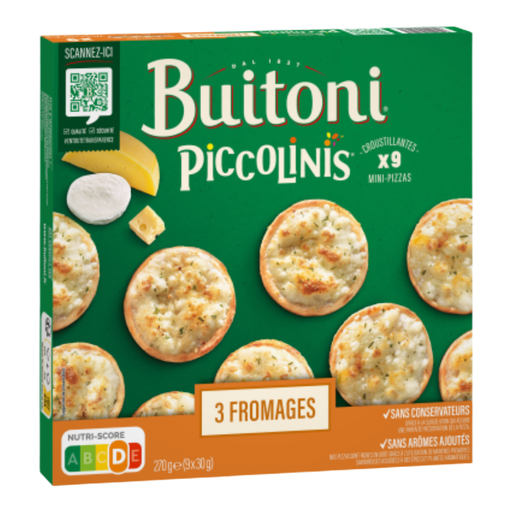 Image unavailable
BUITONI Piccolinis 3 Cheese, 9 mini pizzas, 270 g
The nine mini pizzas let you choose how many to serve for dinner, rather than treating the whole pack as one portion.
Compare the nutrition information for the amount you choose, and follow the cooking instructions on the pack.
View on Joybuy
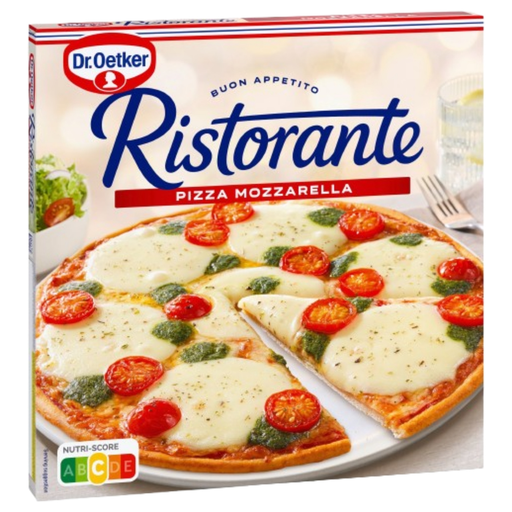 Image unavailable
DR. OETKER Ristorante Mozzarella, 355 g
If you plan to eat this 355 g pizza whole, check the figures for the entire product. If you’re having a slice, base your comparison on the amount served.
Check the pack for cooking instructions.
View on Joybuy
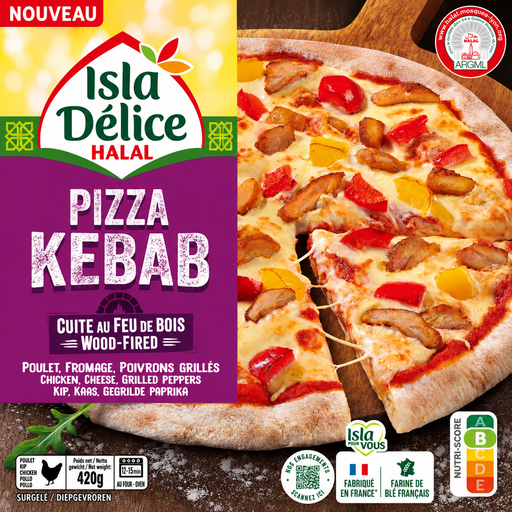 Image unavailable
IDÉAL DÉLICES Pizza Kebab & Peppers, 440 g
With a 440 g pizza, choosing between a slice and the whole product changes how much you need to take into account for dinner.
Read the ingredients and cooking instructions on the pack for this recipe.
View on Joybuy
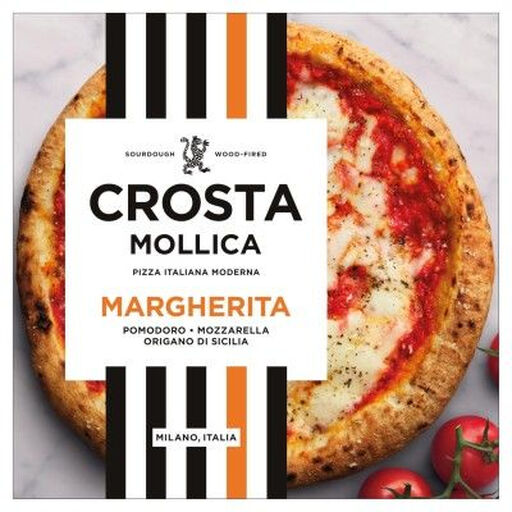 Image unavailable
Crosta et Mollica Pizza Margherita, 403 g
For this 403 g pizza, decide how much you’ll eat before working out the calories in your dinner.
Check the pack for the ingredients and preparation instructions for this product.
View on Joybuy
Frequently asked questions
Does a pizza with fewer kcal per 100 g always make for a lower-calorie dinner?
No. The calories in your dinner also depend on how much you eat. Carrefour lists 200 kcal per 100 g for its SIMPL Margherita, which works out at around 600 kcal for a whole 300 g pizza. So check whether you plan to eat it all or save a slice for later.
Is the phrase “low calorie” enough to help you choose a pizza?
No. Use the nutrition information and the weight of your portion to guide you. A reduced-energy claim must meet conditions set out in European Union regulations, including a reduction of at least 30% compared with a similar product. You can’t simply infer this from a recipe name.
How can you check the ingredients or allergens in a frozen pizza?
Read the ingredients list and highlighted allergens on the pack for the exact product, along with any precautionary statements about traces that are relevant to you. The DGCCRF notes that this information forms part of the labelling for prepacked foods; you can’t tell what a pizza contains from its recipe name alone.
Can you cook all frozen pizzas in the microwave?
No. Only use the cooking method stated for the product you’ve chosen. Auchan’s 200 g 4 Cheese pizza can be heated in the microwave, while Buitoni says its Bella Napoli Margherita must not be cooked this way.
Does the Nutri-Score replace the figures per portion?
No. If a pizza displays a Nutri-Score, it won’t tell you on its own how many calories or how much salt is in your portion. Check the nutrition information and relate it to the amount you plan to eat.


