Older people looking for a lower-energy portion
For a snack or small meal, kcal per 100 g make it easier to compare recipes, but the weight of the portion served determines how much energy you consume.


When choosing a frozen pizza for a snack or light meal, compare the kcal per 100 g, then take into account the weight of the portion you’ll actually eat. For an older person, the recipe with the lowest energy content isn’t necessarily the best choice: check the protein, salt and ingredients too, especially if you need to follow specific dietary guidance.
For a snack or small meal, kcal per 100 g make it easier to compare recipes, but the weight of the portion served determines how much energy you consume.
If reducing calories isn’t your only aim, compare the protein per 100 g too. Anses notes that protein plays a role in the renewal of muscle tissue, among other things.
If you have an allergy or need to follow guidance about salt, check the label for the exact recipe before buying. If you need to follow a prescribed diet, ask the healthcare professional responsible for your care for tailored advice.
Start with the energy per 100 g and the amount you plan to serve, then compare the other details that matter for your circumstances. The DGCCRF explains that nutrition information per 100 g makes it easier to compare pre-packed foods.
| Criteria | What to check | Who it’s relevant for |
|---|---|---|
| Energy in your portion | Compare the kcal per 100 g, then work out the amount for the portion you’re serving. | For a light snack, I want to know how much energy I’ll get from what I eat, not just the amount listed per 100 g. Around 36% of consumers would make this their top priority. |
| Protein | Check the protein per 100 g alongside the kcal per 100 g. | If I’m reducing the size of my portion, I also want to take into account the protein in the recipe. This would be the top priority for around 29% of consumers. |
| Salt | Check the salt per 100 g and the amount in the portion you’ll eat. | If I need to follow dietary guidance about salt, the amount in my portion matters just as much as the topping I choose. Around 21% of consumers would prioritise this. |
| Allergens and preparation | Read the ingredients and allergen information, as well as the storage and cooking instructions for the variant you’re buying. | If I need to avoid an ingredient, I check the exact recipe before thinking about its calorie content. I also want to be able to follow its preparation instructions. Around 14% of consumers would make this their first consideration. |
This figure lets you compare two recipes, but it doesn’t necessarily tell you the energy content of the whole pizza or the portion you eat.
To work out the energy in your portion, multiply the kcal per 100 g by its weight in grams, then divide by 100. Check the protein and salt too.
According to Anses, older people have specific nutritional needs. Choosing a pizza based on its energy content alone won’t necessarily meet the needs of the person eating it.
If you’re losing weight unintentionally, have a very poor appetite or need to follow a prescribed diet, ask a doctor or dietitian for advice before routinely looking for the recipe with the lowest energy content.
Ingredients vary from one pizza to another. The DGCCRF notes that allergens must be clearly highlighted in the ingredients list on pre-packed foods.
Check the packaging for the variant you’ve bought and follow its storage and cooking instructions, including any guidance on defrosting.
The range includes 4 Stagioni, Del Mare and Prosciutto pizzas.
The Turini pizzas featured by E.Leclerc include recipes with grilled vegetables, ham and cheese, and four cheeses.
The 350 g Ristorante Royale ham and mushroom pizza offers another point of comparison for energy, protein and salt.
These frozen pizzas come in a range of toppings and sizes. For a snack or light meal, first decide how much you plan to serve, then compare the nutrition information for each variant.
 Image unavailable
This vegetable recipe is worth considering if you’re looking for this type of topping for a small portion. Compare the per-100 g values on the packaging with the weight of the portion you plan to serve.
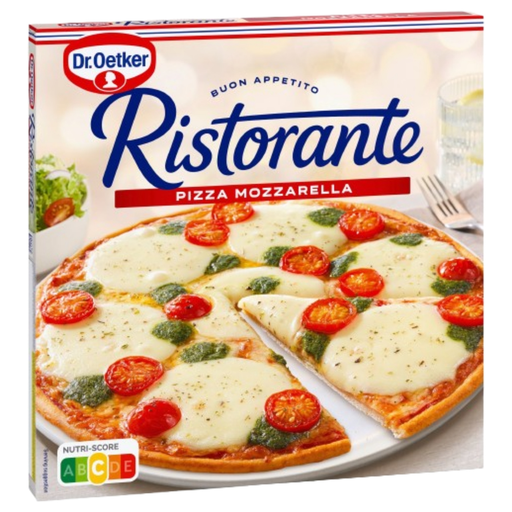 Image unavailable
If you prefer a mozzarella recipe, check the net weight on the packaging before working out the energy in the portion you’ll serve. Compare the protein and salt per 100 g too.
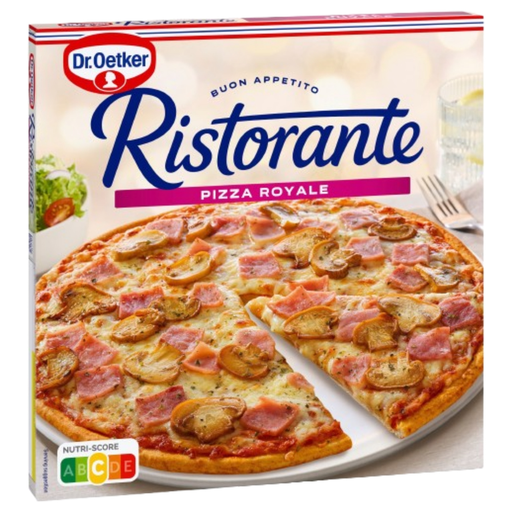 Image unavailable
For this ham and mushroom recipe, Joybuy lists 229 kcal, 11 g of protein and 1,1 g of salt per 100 g. Use these figures to work out the values for the portion you’ll actually serve.
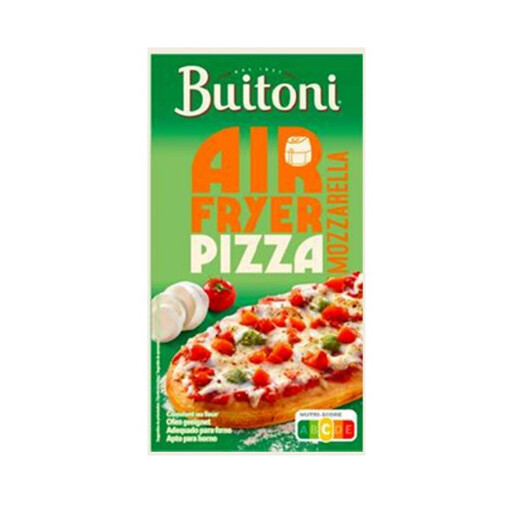 Image unavailable
This pesto and mozzarella option is worth comparing if you’re considering cooking your pizza in an air fryer. Check the cooking instructions and nutrition information for the variant you buy.
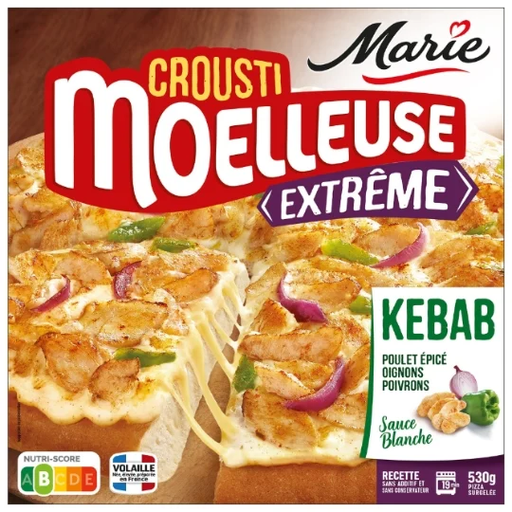 Image unavailable
With this kebab-style chicken pizza, portion size matters especially if you won’t be eating the whole product. Check the packaging for nutrition information and cooking instructions.
First compare their kcal per 100 g, then work out the energy in the amount you’ll eat. Multiply the kcal per 100 g by the weight of your portion in grams and divide by 100. The DGCCRF says that figures per 100 g make it easier to compare pre-packed products.
Because two pizzas with different energy contents may also contain different amounts of protein. Anses highlights the role of protein in the renewal of muscle tissue. Compare the protein per 100 g, rather than choosing a meal based on calories alone.
Read the ingredients list and check the allergens highlighted on the packaging for the exact variant. Toppings and ingredients vary between recipes, so the pizza’s name isn’t a substitute for checking the label.
Follow the storage temperatures and cooking instructions on the packaging. The Joybuy product page for the Dr. Oetker Ristorante Royale pizza specifies storage at −18 °C and says not to refreeze the product after defrosting. Check the instructions for any other variant you buy.