People in a hurry who want to compare recipes
You’re looking for a convenient frozen lunch, but want to check the portion, salt and ingredient list rather than relying on the pizza’s name alone.


For a quick lunch, compare pizzas in the same category using the Nutri-Score when it’s displayed, then check how much you’ll eat, along with the salt, fat, ingredients and allergens. A vegetable topping alone isn’t enough to judge a meal, and a convenient smaller format still calls for the same careful label check.
You’re looking for a convenient frozen lunch, but want to check the portion, salt and ingredient list rather than relying on the pizza’s name alone.
You want to know how much of the whole pizza your lunch will include, how much you’ll eat and whether you’re planning a side dish.
You need to check for meat, wheat, milk or potential allergens. The recipe name and Nutri-Score are no substitute for checking the ingredient list of the exact product you choose.
Start with how much you plan to eat and the nutritional information for comparable pizzas. Then check that the recipe and cooking method suit your lunch.
| Criteria | What to check | Who it matters to |
|---|---|---|
| Nutritional composition | Compare the Nutri-Score, if displayed, across similar pizzas. Also check the salt, saturated fat and fibre per 100 g, then for the amount you’ll eat. | I want to choose a recipe with a clear idea of what my portion contains, rather than basing my decision on a single letter; around 37% of consumers would put this nutritional comparison first. |
| Amount for lunch | Check the net weight, how much you’ll serve and whether you might have a side dish. | If I’m sharing a large pizza or choosing a smaller one, I want to know how much will actually make up my lunch; this would be a priority for around 27% of consumers. |
| Cooking method and format | Check which appliance is listed on the packaging and follow the instructions for that specific product. | When my break is short, I need a pizza that suits the appliance I have; around 18% of consumers would prioritise ease of preparation. |
| Ingredients and allergens | Read the ingredient list and allergen information for the exact product, including any possible traces. | If I avoid an ingredient or need to take an allergen into account, the exact composition matters more than the recipe name; this would be the main concern for around 18% of consumers. |
A vegetable pizza can also contain cheese, oil and salt. E.Leclerc’s product page for Turini Grilled Vegetables gives it a Nutri-Score C and 0.7 g of salt per 100 g, so the presence of vegetables doesn’t tell you everything on the label.
Compare the portion you plan to eat, the salt, saturated fat and ingredients in each recipe.
The format makes serving easier, but tells you nothing about the composition by itself. Auchan’s product page for its 200 g four-cheese pizza lists 2.1 g of salt for the whole pizza.
To compare different sizes, start with the values per 100 g, then check those for the amount you’ll eat.
Cooking methods and allergens vary between products. For example, Auchan’s product page for its 200 g four-cheese pizza says not to refreeze it after defrosting.
Check the packaging for ingredients, allergens, storage advice and instructions suited to your appliance.
The Ristorante range includes a 355 g Mozzarella pizza with a thin crust, worth considering if you’re looking for this type of recipe.
The products listed by Carrefour include individual Air Fryer formats and a Fraich’Up 5 légumes pizza.
The retailer offers pizzas from national brands as well as recipes under its own ranges, including Carrefour Extra.
The Turini range includes a grilled vegetable pizza and a Merveillosa four-cheese pizza.
The retailer offers, among other products, a 200 g individual four-cheese pizza with microwave preparation instructions.
Lidl includes pizzas in its frozen food range.
These frozen pizzas include vegetable and mozzarella recipes, Air Fryer formats and mini pizzas. Compare their weight with the amount you plan to serve; a topping in the name is no substitute for checking the label.
 Image unavailable
Worth considering if you’d like to compare a vegetable recipe for lunch. It weighs 385 g, so check the portion you plan to have and the ingredients on the packaging.
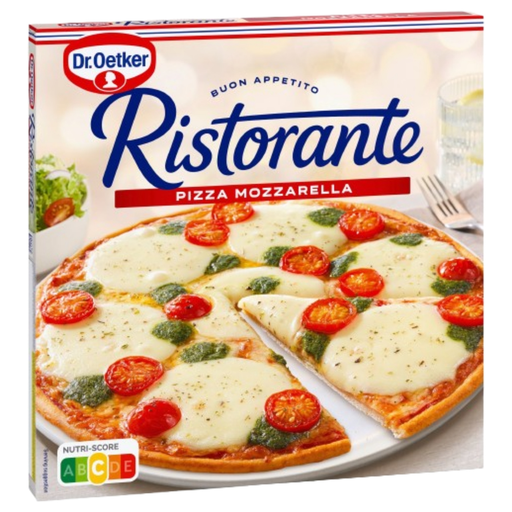 Image unavailable
A mozzarella recipe to compare with similar pizzas. Carrefour’s product page for this one lists 24% mozzarella and 16% tomato purée; it also mentions wheat and possible traces of soya and mustard. Remember to take into account how much you’ll eat.
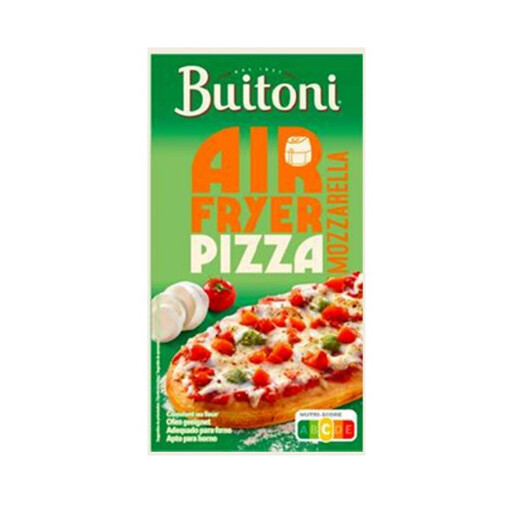 Image unavailable
This 195 g format may appeal if you prefer to serve an individual pizza. Check the cooking instructions for the Air Fryer version and compare its nutritional information with that of other individual pizzas.
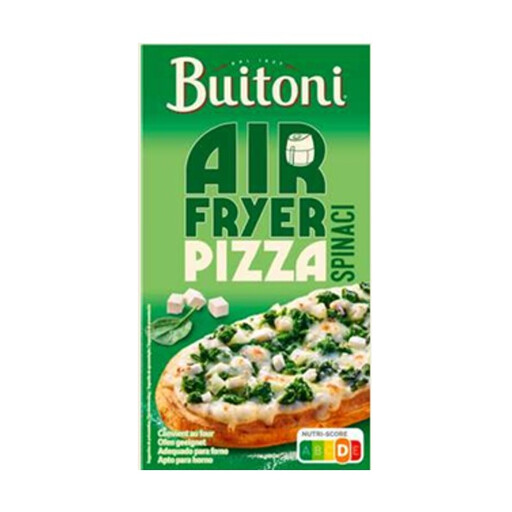 Image unavailable
Another 195 g individual recipe to compare with other Air Fryer toppings. The name’s mention of spinach and cheese doesn’t tell you everything about its composition: read the ingredients and nutritional values for this product.
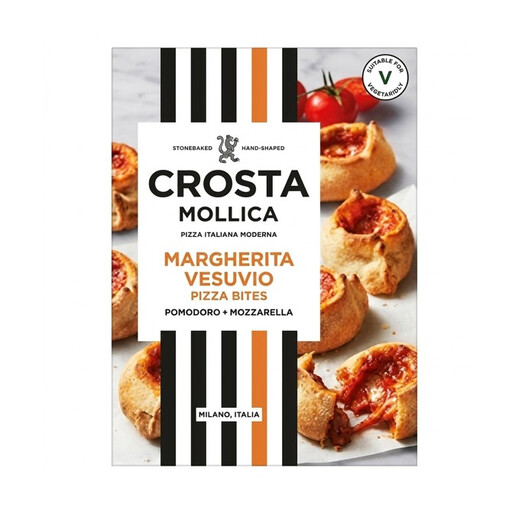 Image unavailable
Mini pizzas let you choose how much to serve, rather than starting with a whole large pizza. The pack weighs 270 g; work out your portion based on the actual contents and check the packaging for cooking instructions and allergens.
No. Use it as a guide to compare similar pizzas when it’s displayed, then check the nutritional values, ingredients and how much you’ll eat. Santé publique France presents the Nutri-Score as a way to help people understand nutritional information, not as a guide to allergens or the portion you choose.
You could serve vegetables on the side, such as a salad, depending on what else you’re having for lunch. Santé publique France’s Fabrique à menus features a pizza recipe served with a salad; this doesn’t automatically make frozen pizzas complete meals.
For Auchan’s 200 g four-cheese pizza, the instructions say never to refreeze a defrosted product. Follow the storage instructions on the packaging of the pizza you’ve bought.
Read the ingredient list and allergen information for the exact product, rather than relying on the topping in its name. For example, Carrefour’s product page for Ristorante Mozzarella mentions wheat and possible traces of soya and mustard.