Parents looking to adjust the portion
If your child only eats part of their pizza, look at both the kcal per 100 g and the number of grams you plan to serve. The weight of the whole pizza won’t necessarily match the amount they eat.


For a fussy child, start by choosing a recipe they’ll accept and an amount that’s easy to serve, rather than looking for a pizza labelled “low in calories”. Then compare the kcal per 100 g with the weight you’ll actually serve. A small pizza or a few mini pizzas make it easier to adjust the portion, but they aren’t necessarily lower in calories per 100 g. If the meal is being taken to school, check the allergens for the exact product and the school’s arrangements.
If your child only eats part of their pizza, look at both the kcal per 100 g and the number of grams you plan to serve. The weight of the whole pizza won’t necessarily match the amount they eat.
A margherita may be worth considering if your child already likes tomato and cheese. Mini pizzas let you start by offering just a few pieces. Manger Bouger advises offering a small amount without pressuring children to eat more.
If your child has a diagnosed food allergy, both the recipe and the arrangements for school meals matter. The French Ministry of National Education says that an individual care plan, or PAI, can set out appropriate adjustments.
Start with flavours your child already likes and the amount you want to offer, then check the nutritional information and allergens for the product you’ve chosen. An individual pizza, a margherita and mini pizzas suit different needs; the format alone doesn’t tell you which has the lowest energy content.
| Criterion | What to check | Who it matters to |
|---|---|---|
| Energy in the portion | The kcal per 100 g and the weight you’ll serve, rather than just the weight of the box. | If I’m only serving part of the pizza, I want to estimate the energy in that amount without assuming my child will finish the rest. Around 34% of consumers would prioritise portion size. |
| Whether they’ll accept the recipe | A topping your child already knows and a format that lets you start with a small amount. | If my child turns down mixed toppings, I’d rather offer a familiar recipe or a few small pieces, without pressuring them to finish. Around 33% of consumers would prioritise whether their child accepts the recipe. |
| Allergens and school | The ingredients and any “may contain” statements for the exact product; if needed, the arrangements for school meals. | If my child has a diagnosed allergy and eats at school, I need to choose a recipe that fits their agreed care arrangements. Around 13% of consumers would put these checks ahead of other criteria. |
| How it fits into the meal | An amount suited to your child’s age and appetite, as well as the rest of the meal. | I want to serve an appropriate amount without turning the meal into a restrictive diet, and take into account the other foods my child will eat. Around 20% of consumers would prioritise planning the meal as a whole. |
To estimate the energy in a portion, multiply the kcal shown per 100 g by the number of grams served, then divide by 100. The Carrefour and Auchan listings cited for the 310 g Carrefour Bio Margherita Pizza and the 200 g Auchan 4 Cheese Pizza show 249 and 262 kcal per 100 g respectively. Their different sizes also mean that the energy content of each whole pizza differs. Manger Bouger also reminds parents that weight-loss diets are not appropriate for children.
A lighter individual pizza may contain fewer calories if it’s eaten whole, without having fewer kcal per 100 g. Auchan’s listing for its 200 g 4 Cheese Pizza shows 523 kcal per pizza, or around 262 kcal per 100 g.
Compare the values per 100 g, then work them out for the amount you plan to serve. With mini pizzas, you can choose how many pieces to serve when preparing the meal.
For solid foods, European Union Regulation (EC) No 1924/2006 reserves this claim for products containing no more than 40 kcal per 100 g. Saying that one pizza has fewer kcal per 100 g than another doesn’t mean it meets this threshold.
When comparing two products, give their nutritional values and serving sizes. Don’t describe either as a “low energy” pizza on that basis alone.
A tomato and cheese topping doesn’t tell you everything about the ingredients or possible traces. The Carrefour listing for Dr. Oetker Ristorante Margherita and Auchan’s listing for its 4 Cheese Pizza both mention wheat and milk, among other ingredients.
Check the label on the exact product every time you buy it. If a diagnosed allergy means your child needs adjustments at school, confirm the meal arrangements with the school and, where relevant, check the PAI.
Looking for an appropriate portion shouldn’t become a rule about restricting food. Manger Bouger advises against weight-loss diets for children and recommends not pressuring young children to eat more when they refuse.
Serve an amount suited to your child’s age and appetite, taking the meal as a whole into account.
These brands offer examples of recipes and pack sizes to compare. A range name is no substitute for checking the label on the product you choose.
Auchan’s range includes Piccolinis in a 270 g box containing nine mini pizzas, including a Three Cheese recipe.
The Ristorante range includes a 295 g Margherita, shown on Carrefour’s product listing. Auchan’s range also includes Piccolissima mini pizzas.
According to its product listing, the 310 g Carrefour Bio Margherita Pizza combines tomato and mozzarella.
Auchan’s frozen pizza range includes a 200 g 4 Cheese Pizza.
The retailer offers Marque Repère frozen pizzas in different formats, including mini pizzas and sharing pizzas.
This selection includes mini pizzas, a margherita and a pesto and mozzarella pizza. For a fussy child, the right choice depends on flavours they already like and the amount you plan to serve. Also check the nutritional information, allergens and storage instructions on the packaging.
 Image unavailable
The mini format may suit you if you’d like to start with a small amount and your child likes margherita. The pack weighs 270 g; check the number of pieces and the nutritional information on the packaging to work out how much to serve.
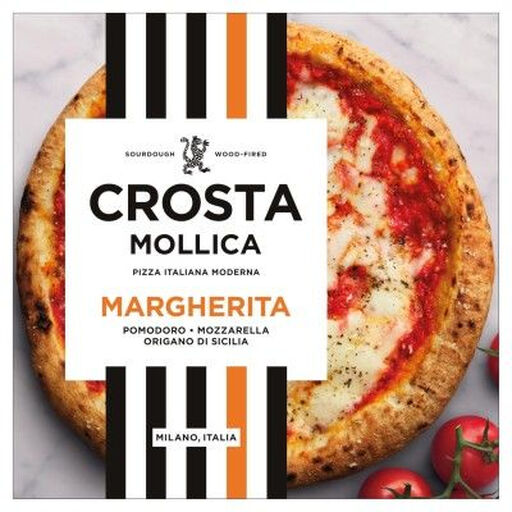 Image unavailable
This margherita is worth considering if your child already likes a tomato and cheese topping. At 403 g, the pizza’s weight doesn’t define a child-sized portion. Choose how much to serve and check the nutritional information and storage instructions for the product you buy.
Image unavailable
This pesto and mozzarella recipe is worth comparing if your child already knows and likes these flavours. The pizza weighs 195 g; check the portion you want to serve and follow the cooking instructions on the packaging, particularly for air fryer preparation.
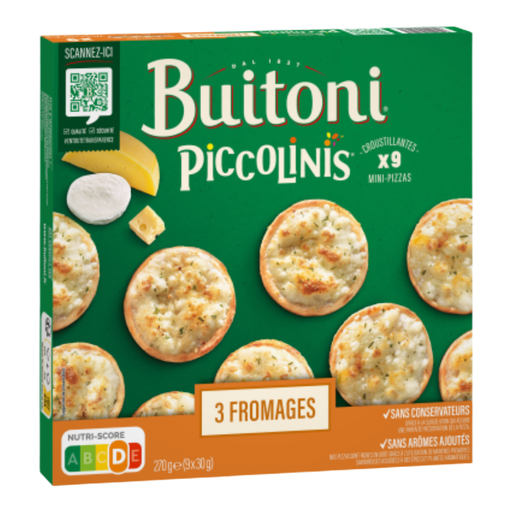 Image unavailable
The nine small pieces make it easy to choose how many to serve to start with, if your child likes a three-cheese recipe. The pack weighs 270 g; remember that the number of pieces you serve is different from the nutritional values given per 100 g.
A pizza can only carry a claim equivalent to “low energy” if it meets the applicable conditions. For solid foods, European Union Regulation (EC) No 1924/2006 sets the threshold at no more than 40 kcal per 100 g. Comparing two pizzas with each other isn’t enough to justify this claim.
Compare the kcal per 100 g between products, then work out the figure for the amount you’ll serve. Carrefour’s listing shows that the 310 g Carrefour Bio Margherita Pizza contains 249 kcal per 100 g. That means the whole pizza contains around 772 kcal, but that doesn’t mean a child will eat it all.
No. Manger Bouger advises offering a very small amount without pressuring a child to eat more. Start with a modest portion and follow the product’s storage instructions for anything you don’t serve.
Check the ingredients and any “may contain” statements on the packaging for the exact product, then confirm meal arrangements with the school or school caterer. If a food allergy means adjustments are needed, the French Ministry of National Education says a PAI can be used to organise measures such as dietary adjustments.
Don’t refreeze a pizza if its product information says not to. The instructions for the Carrefour and Auchan products mentioned here say not to refreeze a defrosted product. For the pizza you’ve bought, follow the storage and cooking instructions on its packaging.