Carers preparing a simple dinner for two
If you’re organising a meal for two older adults, an easy-to-share weight, clear cooking instructions and accessible allergen information can help you plan how much to serve.


For two older adults, a pizza labelled as serving two makes sharing easier if they have similar appetites. Separate smaller pizzas let you serve different amounts, while a large pizza means deciding on the portions before the meal. In every case, compare the nutritional information with the amount you’ll actually serve, check the allergens, and follow the cooking and storage instructions. A ‘serves 2’ label alone does not mean the portion is right for each person.
If you’re organising a meal for two older adults, an easy-to-share weight, clear cooking instructions and accessible allergen information can help you plan how much to serve.
A smaller portion is not automatically the right choice: Santé publique France points out that nutritional needs do not necessarily decrease after the age of 75 and highlights the risk of malnutrition.
If someone has an allergy or a prescribed dietary restriction, check the exact recipe and follow the advice of the professional supporting them, rather than relying on the pack size alone.
First decide how you’ll serve the two plates, then check the nutritional information and instructions for the product you choose.
Worth considering: if both people want similar-sized portions; the 400 g Auchan Pizza royale is labelled as making two portions.
Bear in mind: the number of portions helps you share the pizza, but does not determine each person’s nutritional needs.
Worth considering: if appetites differ or each person would prefer a different topping.
Bear in mind: check the amount eaten and the allergens for each product.
Worth considering: if you can decide how much to serve or plan to spread it over several meals.
Bear in mind: ‘to share’ or ‘family size’ does not specify how much each person will eat.
| Criteria | What to check | What matters to shoppers |
|---|---|---|
| Size and sharing | Net weight, stated number of portions and the amount you plan to serve each person. | If our appetites differ, I want to share dinner without making us eat the same-sized portion; around 29% of shoppers put this need to share first. |
| Nutritional content of the portion | Nutritional values per 100 g and, if shown on the pack, per portion; the amount actually eaten. | When someone has a smaller appetite, I want to know what the portion they’ll actually eat contains. Around 29% of shoppers prioritise checking nutritional content. |
| Salt and ingredients | Salt and saturated fat per 100 g and for the planned portion; ingredients and allergens for the exact recipe. | If a dietary instruction or allergy is a factor, I need to be able to check the recipe before serving it; around 24% of shoppers put this check first. |
| Preparation | Storage instructions, cooking method and whether you can serve the pizza at a texture that suits your guests. | When I’m preparing a meal for someone who is vulnerable, I want to store and cook the pizza according to the instructions on its packaging; around 18% of shoppers prioritise this practical consideration. |
This label explains how to share the pack, not how much is right for each person. It does not account for different appetites or individual dietary advice.
First decide how much to serve each person, then match the nutritional values to those portions.
The Nutri-Score is no substitute for the nutritional information table, ingredients list or allergen information for the recipe you’ve chosen.
Compare the values per 100 g, then check what they mean for the planned portion and look for allergen information on the packaging.
Dr. Oetker’s product information lists 36 g of protein and 3.6 g of salt for the whole 355 g Ristorante Mozzarella pizza. Both figures change with the amount served.
Check both values for the portion you’re considering and take account of any individual advice about salt.
A frozen pizza must be transported, stored and prepared according to the instructions for the product you’ve bought.
Pick up frozen foods last while shopping, keep them frozen and follow the cooking instructions on the pack.
The Ristorante range includes a 355 g Mozzarella pizza that is cooked in the oven.
The 400 g Auchan Pizza royale is labelled as making two portions.
Carrefour stocks products including a 340 g Carrefour Extra 4 Cheese Pizza.
The E.Leclerc range includes a 500 g Turini 3 Cheese pizza labelled ‘to share’.
Buitoni Piccolinis are mini pizzas, not one pizza labelled as serving two.
Lidl stocks a multipack of 3 × 390 g Trattoria Alfredo Maxi Soft 4 Cheese Pizzas.
This selection includes mini pizzas to share and whole pizzas that you can portion as you like. To choose between them, start with how much each person will eat, then check the label for the exact recipe.
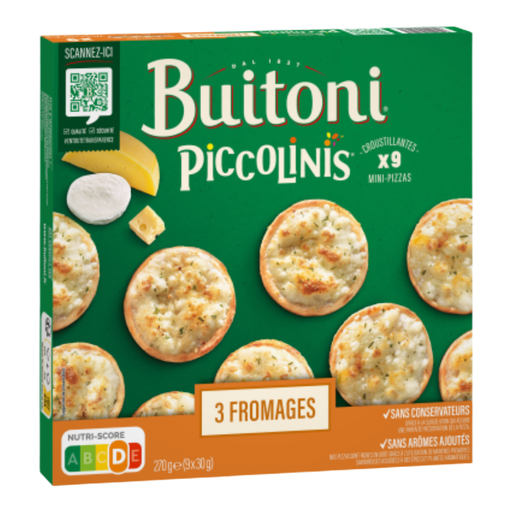 Image unavailable
The bite-sized pieces let you serve a different number to each person.
The pack contains 9 mini pizzas with a total weight of 270 g. Check the allergens and nutritional values for the amount you choose to serve.
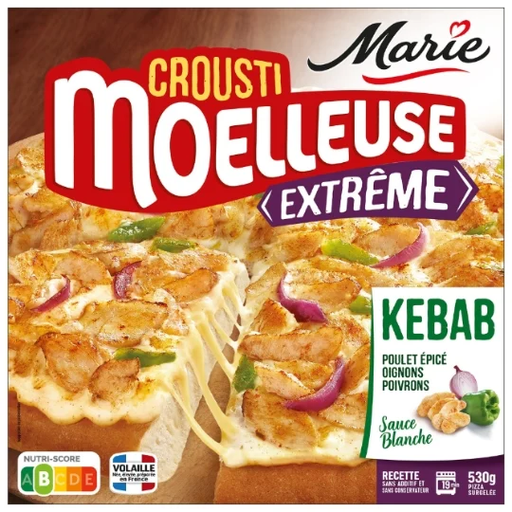 Image unavailable
You can share this whole pizza between two people after deciding how much you’d like to serve each.
Total weight: 530 g. Describing it as a meal for two does not set a suitable portion for each person; check the allergens and cooking instructions on the packaging.
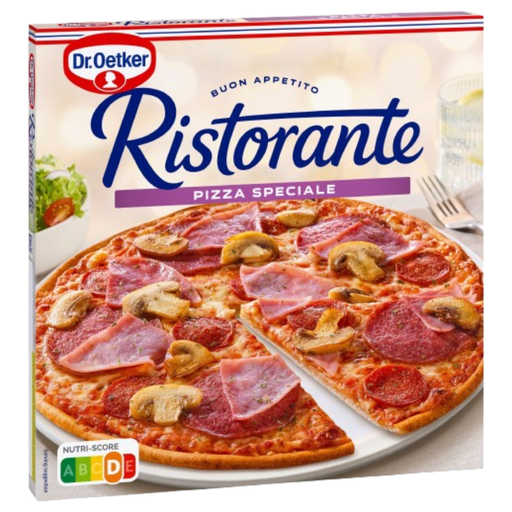 Image unavailable
The whole pizza’s weight helps you plan portions before the meal, even if they aren’t equal.
Total weight: 345 g. Check the salt, allergens and nutritional values for the portions you’ll actually serve.
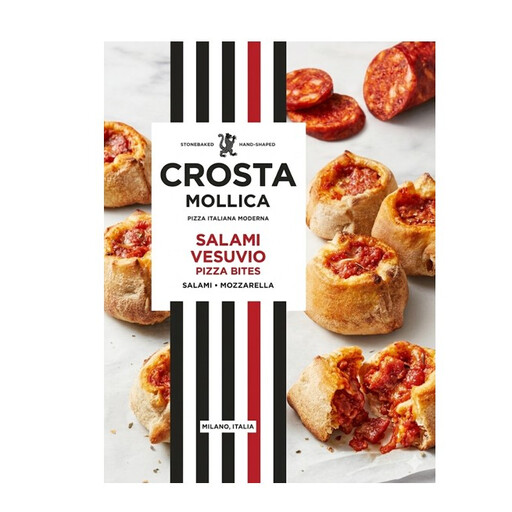 Image unavailable
The mini format makes it easy to share the individual pieces between two plates.
Total weight: 270 g. Check the number of pieces, allergens and salt on the pack before deciding on portions.
 Image unavailable
You can share these mini pizzas according to the amount planned for each person.
Total weight: 270 g. Check the number of pieces, allergens and cooking method on the packaging.
No. The label makes it easier to share the pack, but does not define a suitable portion for each person. The 400 g Auchan Pizza royale is labelled as making two portions; still, check how much each person wants and the nutritional values for the recipe.
Both are useful for different reasons: values per 100 g help you compare recipes, while those for the planned portion show what the amount eaten will contain. If the pack gives a typical portion, check that it matches what you’ll serve.
Compare the salt content of the exact recipe with the amount you’ll serve and follow the advice given to the person concerned. Anses notes that excessive salt consumption can contribute to certain illnesses; don’t assume a pizza is suitable for a prescribed restriction based on its toppings or taste.
Check the ingredients list for the recipe you’re buying, where allergens must be highlighted in accordance with DGCCRF requirements. Also check the packaging for any ‘may contain’ information, rather than assuming that two pizzas from the same brand have the same ingredients.
Don’t assume a pizza is suitable based on its crust description alone. If the person has difficulty chewing or swallowing, ask the professional supporting them for appropriate advice. For any pizza you serve, follow the storage and cooking instructions on the pack.