People comparing fat content
You check the grams per 100 g, then work out how much that means for your portion. A lower figure than another recipe doesn’t automatically mean the pizza is “light”.


If you’re looking for a frozen pizza with less fat, start by comparing the figures per 100 g, then consider how much you plan to eat. Carrefour and Dr. Oetker product pages list 7.2 g per 100 g for the Italpizza Numero Uno Margherita and 12 g per 100 g for two Ristorante recipes reviewed here. This difference doesn’t prove that either pizza carries a “light” claim. Before ordering, also check the allergens and storage instructions, and make sure you’ll be available to receive the frozen delivery.
You check the grams per 100 g, then work out how much that means for your portion. A lower figure than another recipe doesn’t automatically mean the pizza is “light”.
You want to check the ingredients, allergens, nutritional information and net weight before placing your order.
You need to check the label for the recipe you’ve chosen and be able to put the pizza in the freezer promptly after delivery or collection.
When choosing a frozen pizza online, start with what matters most to you: comparing fat content, planning for delivery of frozen food, or checking the recipe and portion size.
| What to consider | What to check | Who it’s for |
|---|---|---|
| Fat content | Compare the fat content per 100 g, then check the net weight and your portion size. Don’t assume a pizza carries a “light” claim based on the nutrition table alone. | If I want to limit fat, I need to compare recipes on the same basis and remember how much I’ll actually eat. Around 50% of consumers would make this their priority. |
| Receiving frozen food | Check the delivery or collection slot and the storage instructions. Plan to put the product in the freezer promptly. | When I order frozen food, I need to be able to receive it and put it away without delay. This would be the priority for around 30% of consumers. |
| Recipe and portion size | Read the ingredients and allergen information, then compare the net weight with the portion you have in mind. Check the packaging again when it arrives. | If the pizza’s ingredients or the amount I’ll serve determine my choice, the recipe name alone isn’t enough. Around 20% of consumers would put this information first. |
A lower fat content than another pizza lets you compare two labels, but it isn’t enough to substantiate a nutrition claim. EU rules govern the use of nutrition claims.
Compare the figures per 100 g and check the exact wording of any claim shown on the product page and packaging.
The figure per 100 g won’t necessarily reflect how much you eat. Dr. Oetker lists 12 g of fat per 100 g and 35 g for its 295 g Ristorante Margherita pizza.
After comparing recipes per 100 g, check the net weight and the portion you plan to serve.
The name Margherita or mozzarella pizza doesn’t tell you everything you need to know about allergens.
Read the information on the product page, then check the packaging when it arrives, particularly if the recipe has changed.
The DGCCRF advises that a rise in temperature speeds up microbial growth. A defrosted pizza must not be refrozen.
Make sure you’ll be available to receive the delivery, check the product’s condition and put it in the freezer promptly, following the instructions on the packaging.
These examples relate to specific recipes or ranges. Compare the product pages you’re interested in rather than assuming the same applies to an entire brand.
The Ristorante range product pages let you compare the Margherita and Mozzarella recipes using their nutritional information and ingredients.
The 410 g Numero Uno Margherita can be included when comparing the fat content of Margherita recipes.
Buitoni Piccolinis feature in Auchan’s range of frozen pizzas and may appeal if you’re looking for mini pizzas.
The retailer offers frozen pizzas from various brands, with product pages that let you explore some recipes before ordering for delivery or click and collect.
Auchan’s frozen pizza range includes several brands, recipes and sizes, available for click and collect or delivery.
These pizzas and mini pizzas come in different recipes and sizes. To choose based on fat content, compare the nutritional information on each product page with the portion you have in mind, then check the label when your order arrives.
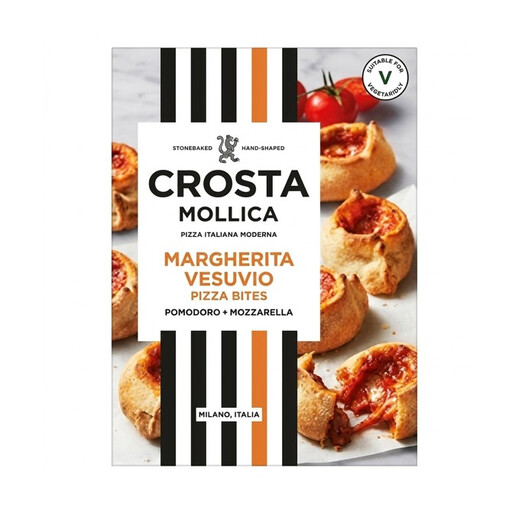 Image unavailable
This mini Margherita could suit you if you want to consider portion size before ordering. The pack is listed as 270 g; compare the figures per 100 g with your portion and check the allergens on the packaging when it arrives.
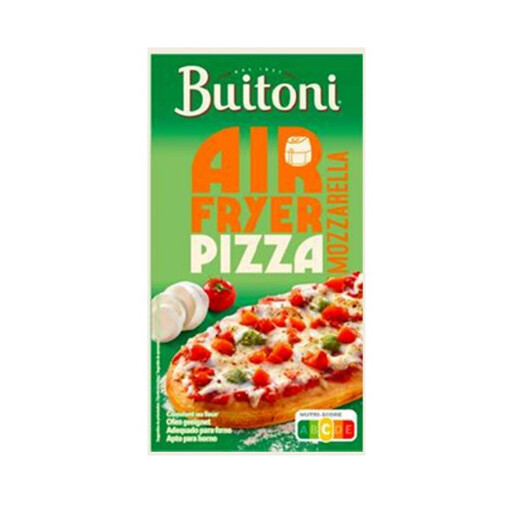 Image unavailable
If you’re looking for a 195 g pesto and mozzarella pizza, consider whether this size suits the portion you plan to eat. Check the allergens and cooking instructions on the packaging; the name “Air Fryer” alone doesn’t tell you which settings to use.
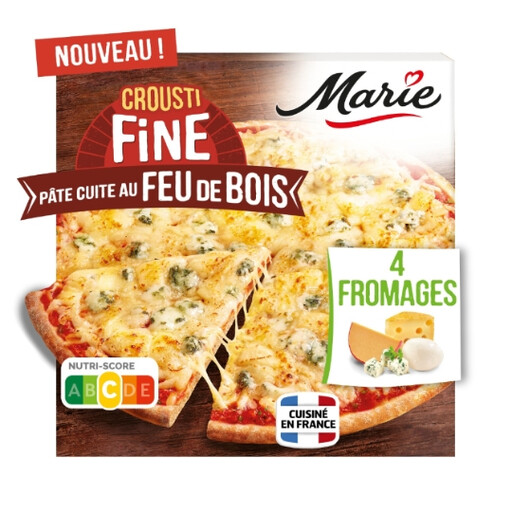 Image unavailable
This thin-crust four-cheese recipe gives you a 390 g option to consider. To compare its fat content with a smaller pizza, start with the figures per 100 g, then take the amount you’ll serve into account. Check the allergens and cooking instructions on the packaging too.
No. A lower figure than another recipe isn’t enough to substantiate a “light” claim. EU rules govern nutrition claims, so check the wording used for the product rather than drawing conclusions from a single figure.
Start with the figure per 100 g to compare recipes on the same basis, then consider how much you’ll eat. For its 295 g Ristorante Margherita, Dr. Oetker lists 12 g of fat per 100 g and 35 g for the whole pizza.
Check the product’s condition and storage instructions, then put it in the freezer promptly. The DGCCRF advises that it’s important to maintain the cold chain; don’t refreeze a defrosted pizza.
Read the allergen information and ingredients list for the recipe you’ve chosen, then check the packaging again when it arrives. Information depends on the specific product and may change if the recipe is updated.