People keeping an eye on fat
You’re looking for a frozen pizza for your budget-conscious shop, without choosing based solely on the recipe name. Figures per 100 g let you compare the fat and saturated fat content of specific products.


When shopping on a budget, compare the fat, saturated fat and salt per 100 g in pizzas with similar recipes, then choose a pack size that suits the number of people you’re serving. E.Leclerc and Carrefour list 4.3 g and 9.3 g of fat per 100 g respectively for two different Margherita pizzas. The recipe name alone doesn’t tell you what’s in the pizza, and this comparison doesn’t mean either one can be described as “reduced-fat”.
You’re looking for a frozen pizza for your budget-conscious shop, without choosing based solely on the recipe name. Figures per 100 g let you compare the fat and saturated fat content of specific products.
You want to look at salt as well as fat. Manger Bouger recommends paying attention to the salt in prepared meals and presents Nutri-Score as a way to compare products within the same aisle.
An individual pizza might suit your meal or your cooking equipment. Still, check the cooking instructions and nutritional information for the product you choose: pack size doesn’t determine either of these.
Start with the nutritional information per 100 g, then check how much you’ll need for your meal and the cooking instructions. A pizza described as Margherita, individual-sized or thin-crust doesn’t automatically have a particular fat content.
| Criteria | What to check | Who it’s for |
|---|---|---|
| Fat | Compare the fat and saturated fat per 100 g in pizzas with similar recipes. | I want to compare pizzas without relying on the recipe name alone. Around 33% of consumers would make this their priority. |
| Right amount | Check the net weight and how many portions it provides for the meal you have planned. | If we’re sharing a meal, I’m looking for an amount that suits us rather than several individual packs. Around 27% of consumers would put this need first. |
| Salt and labelling | Check the salt per 100 g, ingredients and allergens; look at the Nutri-Score if one is shown. | I don’t want focusing on fat to make me overlook salt or ingredients. Around 27% of consumers would prioritise checking the label. |
| Pack size and cooking | Check the weight and cooking instructions for your appliance. | For an individual meal, I mainly need a pack size and cooking method that suit me. Around 13% of consumers would put convenience first. |
A difference between two figures per 100 g isn’t enough to justify a nutrition claim. The DGCCRF points out that such claims are regulated.
Only use the term “reduced-fat” when it applies to that exact product; otherwise, compare the declared figures for the pizzas in question.
An individual pizza and a multipack aren’t designed to serve the same number of meals. The weight per pack alone won’t tell you whether there’s enough for everyone.
Check the net weight and number of portions before choosing a pack size.
A lower fat figure doesn’t tell you how much salt the pizza contains. Manger Bouger recommends paying attention to the salt in prepared meals.
Compare fat, saturated fat and salt per 100 g in pizzas with similar recipes.
Transport is one of the precautions to take with frozen food. The DGCCRF recommends putting frozen products in an insulated bag when you buy them.
Pick up pizzas towards the end of your shop, put them in the freezer promptly and follow the storage instructions on the packaging.
These examples can help you compare specific products, without assuming that every pizza from a brand has the same nutritional profile.
The stone-baked Margherita three-pack is one option to consider if you’re comparing the fat content of frozen pizzas.
Carrefour pizzas should be checked product by product, rather than treated as a range with a uniform nutritional profile.
Auchan listings make it possible to check the pack size and ingredients of each pizza separately.
Some Buitoni pizzas are designed for people looking for an individual pizza with cooking instructions suited to their appliance.
The Ristorante and Suprema ranges include different cheese recipes, which should be compared using their own labels.
Lidl France has a section dedicated to frozen pizzas and snacks.
These three frozen pizzas offer different pack sizes and recipes to suit different meals. Compare their labels before choosing based on fat content; weight and cooking method alone aren’t enough to tell them apart.
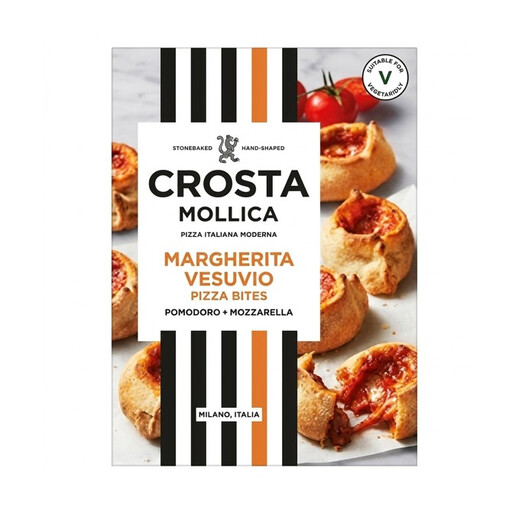 Image unavailable
The mini size may suit you if you’d like to serve the pizza in smaller portions. The pack weighs 270 g; check the cooking instructions and nutritional information for this product before choosing.
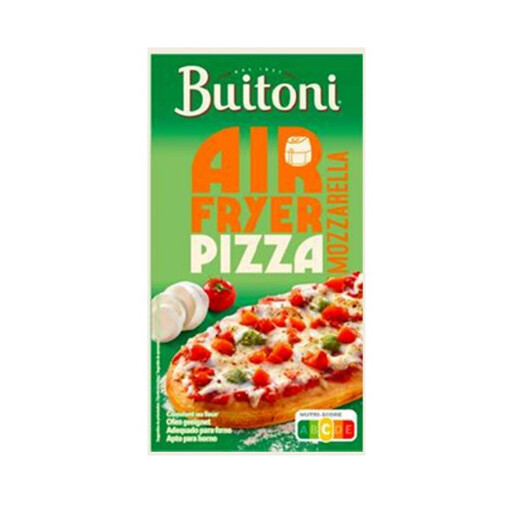 Image unavailable
This 195 g pizza is designed for cooking in an air fryer and may suit an individual meal. Check the cooking settings on the packaging and compare the nutritional figures for this recipe, rather than assuming they’re the same as for another Buitoni pizza.
 Image unavailable
This 385 g pizza is another option to consider if you want to compare different pack sizes. Check that the portion suits your meal and read the nutritional label for this product; its figures can’t be inferred from those of the cheese Ristorante pizzas.
No. Check the label on each product. E.Leclerc and Carrefour list 4.3 g and 9.3 g of fat per 100 g respectively for their ECO+ and Carrefour Bio Margherita pizzas, which are two separate products.
Look at the fat, saturated fat and salt per 100 g, ideally for pizzas with similar recipes. The DGCCRF explains that the nutrition declaration for pre-packed food is given per 100 g or 100 ml. Also check the pizza’s weight to help choose the right portion.
No. It’s an additional guide for comparing products in the same aisle, as Manger Bouger explains. Also check the nutritional figures, ingredients and portion size of the pizza you’re interested in.
Pick it up towards the end of your shop and use an insulated bag, as the DGCCRF recommends for frozen products. Put it away promptly and follow the storage instructions on the packaging.
Check the ingredients list and allergens for the product and batch you’re buying. Ingredients vary by recipe, so a pizza’s brand name alone won’t tell you which allergens it contains.