People keeping an eye on fat content
You compare the figures per 100 g first, without assuming that a pizza with a lower figure can be labelled “reduced fat”.


To choose a frozen pizza with fat content in mind, compare the figures per 100 g across pizzas intended for a similar purpose, then check the pizza’s weight, salt content and ingredients. Carrefour France product pages list between 5.4 and 6.8 g of fat per 100 g for three products. However, these comparative figures alone aren’t enough to describe them as “reduced fat” pizzas.
You compare the figures per 100 g first, without assuming that a pizza with a lower figure can be labelled “reduced fat”.
You’re looking for a size that suits the number of guests and the other dishes on the menu, while also taking the ingredients and nutritional information into account.
You check the exact recipe and its allergens. The product pages for the pizzas reviewed mention wheat and milk, among other ingredients or possible traces that vary by product.
When planning your meal, compare the nutritional values per 100 g first, then consider them in relation to the size you plan to serve. Check the ingredients and storage instructions on each pack.
| What to compare | What to check | Who is it for? |
|---|---|---|
| Fat | Compare the grams per 100 g in similar pizzas, and distinguish this figure from a “reduced fat” claim. | I want to make my choice based on fat content first, without relying on a claim on the packaging. Around 50% of consumers are said to prioritise this. |
| Meal size | Check the net weight and cooking instructions in relation to the number of guests and the other dishes being served. | If the pizza is being shared at Easter lunch, I need to know how much to prepare. This is said to be the main priority for around 20% of consumers. |
| Ingredients and allergens | Read the ingredient list and any “may contain” statements for the exact recipe. | Before serving my guests, I need to make sure the recipe suits their dietary restrictions. Around 20% of consumers are said to put this check first. |
| Storage and cooking | Follow the storage temperature and preparation instructions on the packaging. | I plan my shopping in advance and need to be able to store and cook the pizzas as instructed. For around 10% of consumers, this is said to be the main concern. |
Comparing a handful of pizzas doesn’t, in itself, show that a nutrition claim applies. The DGCCRF reminds consumers that the use of such claims is regulated.
When choosing, use the fat figure per 100 g as a point of comparison. Don’t assume this alone means the product is officially “reduced in fat”.
A lower fat figure doesn’t tell you how much salt the same recipe contains.
Also compare the “salt” line in the nutritional information, especially if you’re choosing between different toppings.
Figures per 100 g make comparisons easier, but the pizza’s weight and how you share it determine how much each person gets.
Check the net weight before deciding how many pizzas to prepare alongside the other dishes at lunch.
A recipe’s name doesn’t tell you whether its packaging lists an allergen or possible traces.
Check the ingredients, allergens, storage instructions and cooking instructions for each product you buy.
The Carrefour France product pages reviewed list 5.4 g of fat per 100 g for the 4 Stagioni Extra, 6.6 g for the Royale Sensation and 6.8 g for the Royale Extra.
The Ristorante and Suprema ranges can be considered separately, depending on the topping you’re looking for.
Buitoni offers a range of recipes and sizes, including a pizza designed to be cooked in an air fryer.
These frozen pizzas come in different recipes and sizes for Easter lunch. Compare their fat content per 100 g, then choose the size and ingredients that suit your meal. None of these figures, taken on their own, amounts to a “reduced fat” claim.
 Image unavailable
These mini pizzas are worth considering if you’d like to share the pizza between guests.
The product page lists 6.2 g of fat per 100 g. It mentions gluten and milk, and possible traces of soya and mustard. Check the packaging if you have any dietary restrictions.
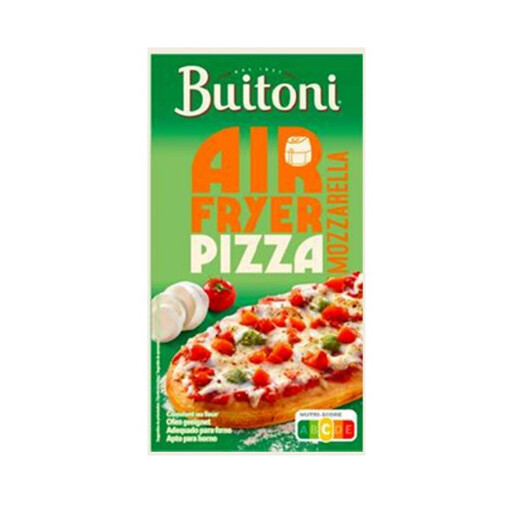 Image unavailable
At 195 g, this pizza may suit you if you’re planning an individual portion cooked in an air fryer.
The product page lists 8.2 g of fat per 100 g. It mentions wheat and milk, and possible traces of eggs, fish, lupin, mustard and soya.
 Image unavailable
This 385 g vegetable and cheese pizza is another recipe to compare for a meal you’re sharing.
The product page lists 7.9 g of fat per 100 g and says to cook from frozen. It mentions wheat and milk, and possible traces of soya and mustard.
No. A lower fat figure in a one-off comparison isn’t enough to establish a “reduced fat” claim. As the DGCCRF points out, nutrition claims are regulated. When choosing, compare the figures per 100 g without describing the product as “reduced fat” on that basis alone.
No. Nutri-Score can help you compare products in the same category, as Manger Bouger explains, but it doesn’t replace checking fat and salt per 100 g. Also check the ingredient list for the recipe you plan to serve.
Read the packaging for each recipe. The product pages reviewed mention wheat and milk in particular, while other ingredients or possible traces vary from one pizza to another. Don’t assume an allergen is absent just from the name of the topping.
Don’t refreeze a pizza if its packaging says not to after thawing. The product pages reviewed give a storage temperature of −18 °C and say not to refreeze after thawing. Follow the cooking instructions for the product you’ve bought too.