Thin-crust fans
You prefer an individual thin-crust pizza and want to compare the toppings recipe by recipe. The Auchan listings for the Dr. Oetker Suprema pizzas consulted state that the 424 g and 455 g products each serve one.


For an individual serving, look for thin-crust recipes; for a meal to share, compare larger sizes and softer crusts. Mini pizzas are better suited to serving as bite-sized pieces. In every case, check the stated servings, ingredients, allergens and cooking instructions for the product you choose: weight and a ‘premium’ label alone aren’t enough.
You prefer an individual thin-crust pizza and want to compare the toppings recipe by recipe. The Auchan listings for the Dr. Oetker Suprema pizzas consulted state that the 424 g and 455 g products each serve one.
You’re looking to serve several guests and want to compare the weight, stated servings and crust type, without assuming that a larger pizza serves a fixed number of people.
You need to check the ingredients, whether the recipe contains meat, allergens and any ‘may contain’ warnings before choosing a pizza for the group.
Decide how you’ll serve the pizza first, then compare the crust and toppings. Whatever size you choose, check the ingredients and cooking instructions on each box.
| What to consider | What to check | Who is it for? |
|---|---|---|
| Texture and crust | Check the stated crust type and read the cooking instructions for the recipe. | If a thin crust or a particular texture matters most to me, I compare recipes on that basis rather than looking at the toppings alone. Around 31% of consumers prioritise this. |
| Quantity and sharing | Compare the net weight, stated servings and, for mini pizzas, the number of pieces. | When serving several guests, I want to make sure there’s enough pizza without estimating portions from the box weight alone. This is the top priority for around 31% of consumers. |
| Ingredients and allergens | Read the ingredients list, highlighted allergens and any ‘may contain’ warnings. | When the ingredients matter to my guests, I need to be able to check the exact recipe before the meal. Around 23% of consumers make this their priority. |
| Cooking and storage | Check the oven type, temperature and cooking time given; keep the pizzas frozen until you’re ready to prepare them. | If the meal needs to be easy to organise on the night, I want instructions that suit my oven and a way to keep the pizzas frozen until then. Preparation is a priority for around 15% of consumers. |
These descriptions alone don’t tell you whether the crust, toppings or quantity will suit your evening.
Compare the ingredients, weight, stated servings and cooking method of the products you’re considering.
An individual pizza, a large pizza and a bag of mini pizzas are served in different ways. Weight alone doesn’t guarantee there’ll be the right amount for each guest.
Check the stated number of servings where available, and take the other dishes planned for the meal into account.
Preheating, temperature and cooking time vary depending on the recipe and oven type.
Follow the instructions on the box you’ve chosen and check that the pizza is cooked before serving.
The Ministry of Agriculture says that refreezing a defrosted product encourages bacteria to multiply.
Keep transport time to a minimum, put the pizzas in the freezer as soon as possible, and don’t refreeze a defrosted product.
The Ristorante and Suprema ranges offer several thin-crust recipes to compare.
The Numero Uno, La Bomba and The Deep One ranges are among the recipes and larger sizes featured in the Carrefour selection consulted.
These ranges include Royale recipes in different sizes and with different crusts.
The Auchan selection consulted includes thin-crust pizzas, mini pizzas and other recipes to compare.
Piccolinis are worth considering if you’d like to serve several small pizzas as an aperitif.
These products let you compare a crust described as soft and crispy, cheese pizzas and other recipes weighing between 390 g and 530 g. Choose the quantity and toppings to suit how you’ll serve them, then check the ingredients and instructions on each pack.
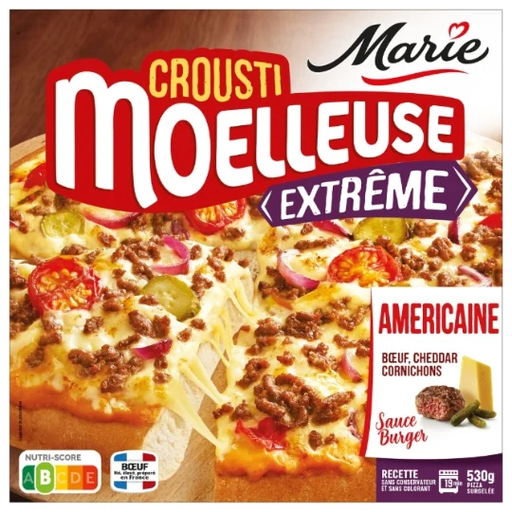 Image unavailable
Worth considering if you’re looking for a 530 g pizza described as soft and crispy. Check the servings, ingredients and cooking instructions on the packaging before planning how to serve it.
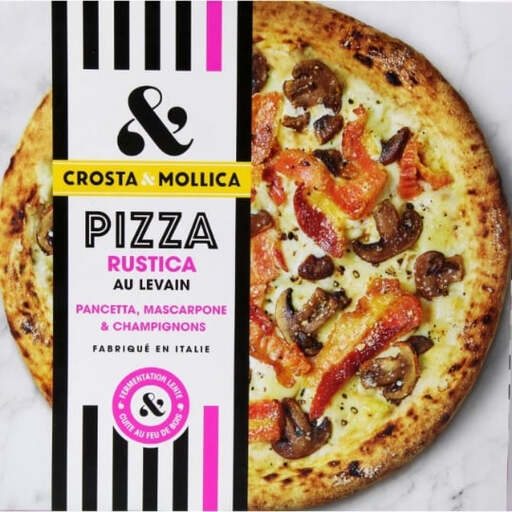 Image unavailable
This 444 g pizza is worth comparing with the other sizes in the selection if you’re preparing several recipes. Check the packaging to estimate servings and review the ingredients before serving.
 Image unavailable
If your guests would like a cheese pizza, this 480 g Pizza Six Fromagio is one to compare. Check the servings and cooking instructions on the box before planning your meal.
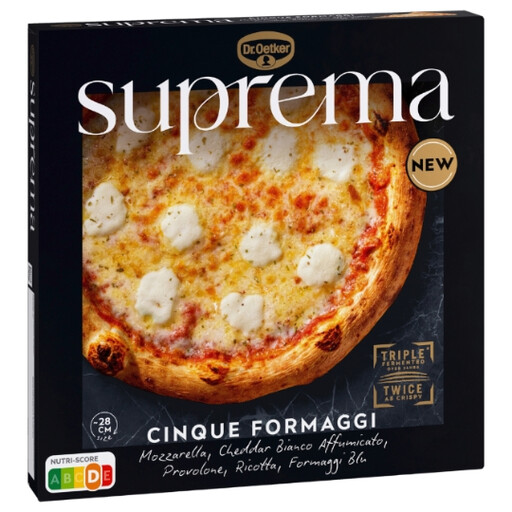 Image unavailable
For an individual thin-crust pizza with five cheeses, the Auchan listing for this 424 g Suprema states that each box serves one. Follow the cooking instructions on the packaging you buy.
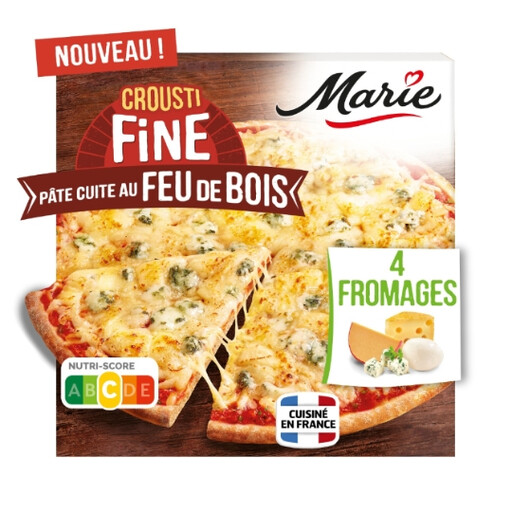 Image unavailable
Worth comparing if you prefer a thin crust and a four-cheese recipe. The stated size is 390 g; check the servings and cooking instructions on the packaging.
Start by comparing the crust type, weight, stated servings and ingredients list: the ‘premium’ label alone doesn’t tell you about these details. Then check the allergens and cooking instructions for the product you’re considering.
Read the label on every pizza you buy, including any ‘may contain’ warnings. In France, the Directorate-General for Competition Policy, Consumer Affairs and Fraud Control says that allergenic ingredients in prepacked food must be highlighted in the ingredients list.
Don’t refreeze a defrosted pizza. The Ministry of Agriculture explains that refreezing a defrosted product encourages bacteria to multiply; follow the product’s storage instructions too.
Pick up frozen food towards the end of your shop, keep transport time to a minimum and use an insulated bag if needed, then put the pizzas in the freezer as soon as possible. The Ministry of Agriculture gives −18 °C as the recommended temperature for frozen storage.