Parents keeping an eye on fat
You want to compare frozen pizzas on a like-for-like basis, per 100 g, then take account of how much will actually be served at dinner.


To choose a frozen pizza for the children’s dinner with a lower fat content in mind, compare the values per 100 g, then work out what they mean for the portion you’ll serve and check the salt content. If a child needs to avoid an allergen, the ingredients list and any ‘may contain’ warnings take priority over this comparison. Neither an individual size nor the recipe name proves that a pizza is lower in fat.
You want to compare frozen pizzas on a like-for-like basis, per 100 g, then take account of how much will actually be served at dinner.
You need to check the ingredients for each product: wheat- and cheese-topped pizzas may not meet the same requirements as a pizza labelled wheat-free, which could still carry a warning about traces of another allergen.
You’re looking for a format that’s easy to portion or cook, without assuming that a small pizza will necessarily contain less fat or salt when eaten whole.
First rule out recipes that aren’t suitable for the child’s allergies or dietary requirements. Then compare the nutritional values per 100 g, the amount you plan to serve and the preparation instructions.
| Criteria | What to check | Relevant consumers |
|---|---|---|
| Fat | Compare fat and saturated fat per 100 g on a like-for-like basis. | If I want to compare recipes by fat content first, I need a comparable value for each one; around 36% of consumers prioritise this criterion. |
| Portion and salt | Check the serving weight and salt per 100 g; calculate the total for the portion you plan to serve. | When planning dinner, I want to know what the portion actually served contains, not just what the packaging says. Portion size and salt are the main concern for around 29% of consumers. |
| Allergens | Check the ingredients, highlighted allergens and any ‘may contain’ warnings on the product you’re buying. | If an ingredient needs to be avoided, I need to check the exact pizza I’m going to serve; this is the top priority for around 21% of consumers. |
| Preparation | Check the format, storage instructions and cooking method. | When time is tight, I look for a format I can portion and cook using the equipment I have; around 14% of consumers prioritise convenience above all else. |
These figures don’t refer to the same amount. According to Auchan’s product details for its 200 g four-cheese pizza, it contains 9.8 g of fat per 100 g and 20 g for the whole pizza.
Compare recipes per 100 g first, then use the weight of the planned serving to work out what will actually be served.
These terms describe a recipe, a production method or a dietary exclusion; they don’t guarantee a particular fat content. Carrefour lists 9.3 g per 100 g for its Margherita Bio, compared with 12 g per 100 g on Carrefour’s product page for Dr. Oetker Ristorante Margherita.
For this criterion, check the nutritional information for each product rather than judging it by its name.
A wheat-free recipe may still carry a warning about another allergen: Carrefour’s product page for Schär Margherita says it may contain traces of soya.
If there’s an allergy or dietary exclusion to consider, check the ingredients list and any ‘may contain’ warnings on the pack you buy, even if you’re already familiar with the range.
Dinner also needs to be prepared according to the instructions for the pizza you choose; you can’t work out storage and cooking instructions from the recipe name alone.
Check the packaging for storage and preparation instructions, and what to do after thawing.
These products offer useful points of comparison for formats and labels; the characteristics of one pizza don’t apply to the whole brand.
Auchan’s range includes Buitoni Piccolinis, including a three-cheese version, as an option for mini pizzas you can portion out.
The Ristorante range includes a 250 g Margherita listed by Carrefour.
The 310 g Carrefour Bio Margherita is a specific product you can use to compare labels.
The 440 g Turini Royale pizza, listed by E.Leclerc, is topped with ham and Emmental cheese.
Auchan’s range includes an individual 200 g four-cheese pizza.
Lidl France has a category for frozen pizzas and snacks.
These pizzas and mini pizzas offer a choice of recipes and formats to explore for a children’s dinner. Before choosing one, check the packaging for fat per 100 g, the portion to serve, allergens and storage instructions.
 Image unavailable
The mini format lets you choose how many pieces to serve for the children’s dinner.
Check the weight of the pieces you serve, the nutritional values and allergens on the packaging.
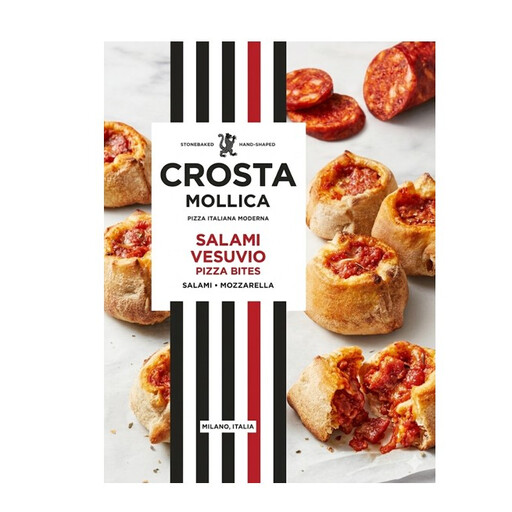 Image unavailable
These mini salami pizzas can be served as several pieces, depending on how much you’ve planned for the meal.
Check the ingredients, salt and fat on the packaging before comparing them with another recipe.
 Image unavailable
This vegetable recipe is worth considering if you’d like to vary the toppings at dinner.
The recipe name doesn’t tell you how much to serve: compare the values per 100 g and check the ingredients.
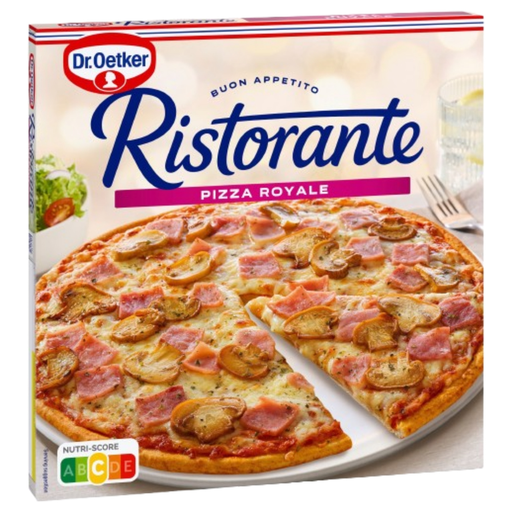 Image unavailable
This ham and mushroom recipe could work if those ingredients suit the meal you have in mind.
Before choosing it for a child, check the ingredients and relate the nutritional values to the amount you’ll serve.
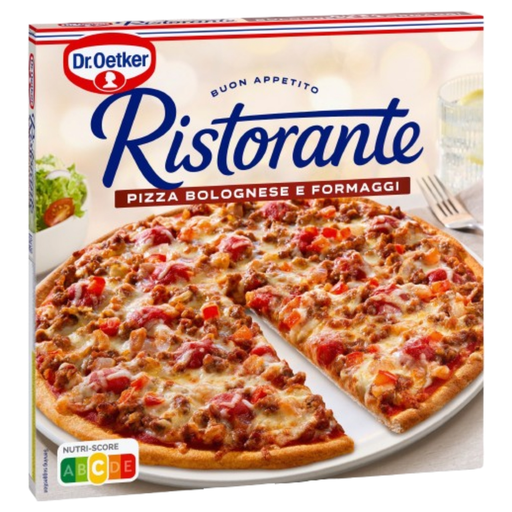 Image unavailable
This Bolognese recipe is worth considering if you’re looking for these toppings for dinner.
Check the packaging to compare fat and salt per 100 g, then decide how much to serve and check for allergens.
First compare the ‘fat’ figure per 100 g on both packs, then take account of the weight you’ll serve. A value per 100 g doesn’t tell you on its own how much fat is in a whole pizza or a child’s portion; check salt and allergens too.
No: it depends on the product. The product pages for Royale Turini and Dr. Oetker Ristorante Margherita list wheat, while Carrefour describes Schär Margherita as wheat-free and warns that it may contain traces of soya. If you need to avoid an ingredient or manage an allergy, check all the information on the pack you buy.
No: when preparing a meal at home, check the child’s needs and the label on the pizza you’re going to cook. School catering guidance applies to the school’s own service and doesn’t determine the ingredients in a product you buy for home.
Follow the instructions on the pizza you buy; the frozen products described in the product information we checked say not to refreeze after thawing. Check their storage and cooking instructions before preparing them too.