Anyone managing a calorie limit per plate
If you’re serving a whole pizza or a set portion, start with the energy value for that quantity. If the label only gives kcal per 100 g, use the weight actually served to calculate the total.


For a workplace canteen, choose a frozen pizza by checking the calories in the portion you’ll actually serve: an individual size doesn’t automatically mean it contains no more than 500 kcal. Picard lists 458 kcal for its 200 g Pizza Royale, compared with 518 kcal for its 200 g Pizza aux 4 fromages. If you’re serving part of a pizza or several mini pizzas, decide on the quantity per plate first. Also check the allergen information and cooking instructions for the product you choose.
If you’re serving a whole pizza or a set portion, start with the energy value for that quantity. If the label only gives kcal per 100 g, use the weight actually served to calculate the total.
For mini pizzas or sliced pizzas, set a number of pieces or a weight per plate that your team can serve consistently at every meal.
Have the information for the recipe being served ready before service begins. A pizza’s name alone doesn’t tell you which allergens it contains or whether it may contain traces.
To keep each plate to 500 kcal or less, decide on the portion before comparing recipes. Then check that its format works for your service and that allergen information is available for the product you’ve chosen.
| Criterion | What to check when buying | Who this matters to |
|---|---|---|
| Calories per plate | Compare the kcal for the stated portion with the quantity you’ll serve. Otherwise, calculate: kcal per 100 g × grams served ÷ 100. | If I’m serving a whole pizza, I want to know its total calories before adding it to the menu. For around 50% of those concerned, this would be the main priority. |
| Portion and service | Set the weight or number of pieces per plate, then check the cooking method stated for the product. | When serving mini pizzas or a large pizza cut into slices, I need every plate to contain a consistent quantity. This would be the top priority for around 30% of those concerned. |
| Allergens and recipe | Check the ingredients list, allergens and any precautionary ‘may contain’ statements for the recipe you’ll actually serve. | If several recipes are on offer, I need to be able to match the allergen information to each one before service begins. Around 20% of those concerned would make this their main priority. |
Picard lists 518 kcal for a whole 200 g portion of its Pizza aux 4 fromages. A value given per 100 g needs to be calculated against the weight actually served.
Before choosing a product, work out the calories per plate or use the stated value per portion if it matches exactly what you plan to serve.
According to their respective product information, Picard Pizza aux 4 fromages and Auchan Pizza 4 fromages each weigh 200 g, but contain 518 and 523 kcal per whole pizza.
Check each recipe individually. If the whole pizza contains more than 500 kcal, only a smaller, defined portion that is actually served can be assessed against this limit.
Information for a different recipe or an older pack may not match the dish being served. In France, Légifrance states that consumers and catering establishments must be informed about substances that can cause allergies or intolerances.
Keep the information for each product you select, and check it again if the recipe changes or a different product is delivered.
Two pizzas that fit your planned portion may still differ in other ways that matter when choosing a menu. Manger Bouger recommends limiting foods high in salt, including ready meals.
Once you’ve checked the calorie total, compare the salt listed in the nutritional information for the recipes you’re considering. If there’s a Nutri-Score on the packaging, take it into account, but don’t rely on it alone.
The range includes individual 200 g pizzas.
The range includes own-brand pizzas, including individual sizes.
Auchan’s range includes 270 g bags of Piccolinis, including a nine-piece option.
French ranges include Ristorante pizzas and Piccolissima mini pizzas.
Carrefour’s range includes a 310 g Carrefour Bio Pizza Margherita.
These pizzas and mini pizzas could be suitable for serving in set portions. Being included here doesn’t mean a whole pizza or pack contains less than 500 kcal: check the nutritional information for each recipe and weigh the amount you serve.
 Image unavailable
Worth considering if the canteen can slice and weigh a portion rather than serving the whole pizza.
The stated weight is 385 g. Calculate the kcal based on the weight actually served and the product’s nutritional information.
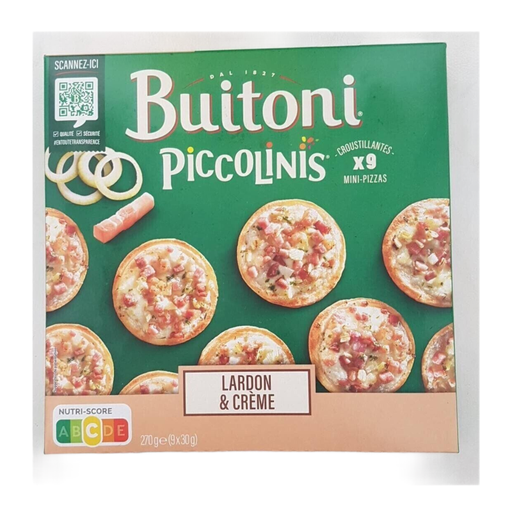 Image unavailable
The nine-piece format works well for a service where the quantity per plate is set in advance.
Check the kcal for the number of pieces or weight you’ll serve, along with the cooking instructions for this product.
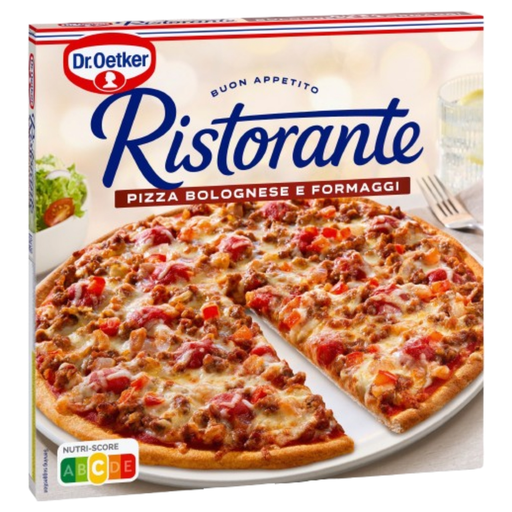 Image unavailable
Consider this for weighed slices, with the same quantity planned for every plate.
The stated weight is 375 g. Check the calorie total for the slice you’ll serve rather than relying on the per-100 g value alone.
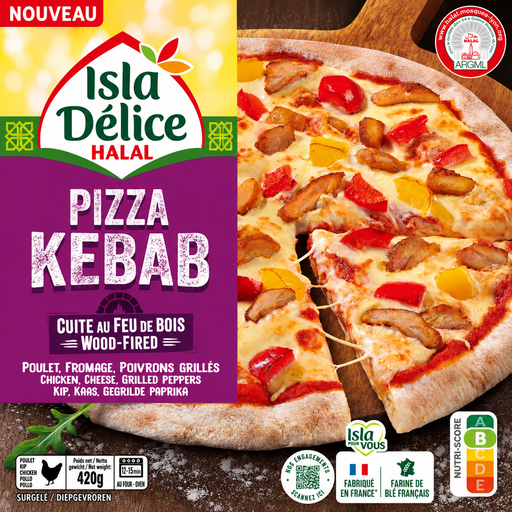 Image unavailable
This pizza could be suitable for serving in slices, as long as you decide on their weight before buying.
The stated weight is 440 g. Calculate the kcal in each slice and check that the cooking instructions are suitable for your equipment.
 Image unavailable
The mini format lets you set a number of pieces per plate and then check their weight.
The pack is listed as 270 g. Use the nutritional information for this recipe to calculate the kcal in the quantity served, and check its cooking instructions.
Multiply the kcal per 100 g by the number of grams served, then divide by 100. For a whole 200 g pizza, a value of 250 kcal per 100 g works out at 500 kcal per plate. Picard lists 458 kcal directly for its 200 g Pizza Royale.
No. Picard lists 518 kcal for its 200 g Pizza aux 4 fromages, while Auchan lists 523 kcal for its 200 g Pizza 4 fromages. Check the exact recipe and the weight you plan to serve.
Match the allergen information to each pizza you actually serve and make it available to diners. In France, Légifrance states that consumers and catering establishments must be informed about substances that can cause allergies or intolerances. If the recipe changes, check the information for the product you receive.
Follow the storage and cooking instructions for the pizza you’ve chosen. Before adding it to the menu, check that the stated cooking method suits the canteen’s equipment and that your team can serve the planned portion consistently.