People working from home who compare the whole meal
If you eat a whole pizza for lunch, its weight matters just as much as the kcal per 100 g when working out the calorie content of your meal.


To choose a frozen pizza for a working-from-home lunch while keeping an eye on calories, compare the kcal per 100 g and then calculate the amount for the portion you plan to eat. A single-serve pizza isn’t automatically lower in calories. Nutri-Score can help you compare pizzas in the same category, but also check the nutritional information, ingredients and cooking instructions for the recipe you choose.
If you eat a whole pizza for lunch, its weight matters just as much as the kcal per 100 g when working out the calorie content of your meal.
If you’re looking for a lower-calorie option, you can also compare salt, saturated fat and ingredients rather than relying on the word “light” alone.
If you’re short on time or have a specific cooking appliance, check the pizza’s instructions before adding it to your lunch plans.
Start with how much you’ll eat, then compare the nutritional values and practical requirements of each recipe. For a whole pizza, multiply the kcal per 100 g by its weight in grams, then divide by 100.
| Criterion | What to check | Who is it for? |
|---|---|---|
| Calories in the meal | The kcal per 100 g and the weight of the amount you’ll actually eat. | If I eat the whole pizza, I want to know the calorie content of the meal, not just that of 100 g; around 36% of consumers prioritise this calculation. |
| Other nutritional values | Salt and saturated fat per 100 g; the Nutri-Score, if it appears on comparable pizzas. | For a lunch I might choose regularly, I don’t want to make my decision based on calories alone; this is the top concern for around 29% of consumers. |
| Cooking during your break | The appliance specified on the packaging, the cooking time and any recommended standing time. | Between meetings, I need a pizza I can prepare with the equipment I have and in the time available; around 21% of consumers prioritise this. |
| Portion size and storage | The number of pieces, their weight if the box contains several, and the storage instructions. | If I’m eating alone, I’d rather be able to plan my portion and store the rest without breaking the cold chain; this is the priority for around 14% of consumers. |
Two pizzas with similar values per 100 g can contain different amounts of calories if their weights or the portions you eat differ.
Before comparing recipes, calculate the value for the weight of your portion. For example, Carrefour France lists its Pizza Margherita Carrefour Bio at 249 kcal per 100 g and 310 g, which works out at around 772 kcal for the whole pizza.
According to Manger Bouger, the Nutri-Score is based on an assessment per 100 g and takes several nutritional factors into account. It doesn’t tell you the calories in the amount you’ll eat.
Compare it across pizzas in the same category, then check the kcal, salt and saturated fat for the specific recipe.
A pizza that suits a short break needs to be cookable with the appliance you have, following its own instructions.
Before buying, check which appliances can be used, the cooking time and any precautions listed on the packaging.
Storage is part of choosing a suitable pack size, especially if you don’t plan to eat the whole contents.
Follow the storage temperature shown on the packaging. The DGCCRF advises never refreezing food that has been defrosted.
These brands and retailers offer useful points of comparison for pack sizes and recipes; the values for one product don’t apply to an entire range.
The retailer offers frozen pizzas whose product pages can help you compare weight, ingredients and nutritional values.
The Ristorante and Suprema ranges offer different recipes and formats that should be considered separately.
Piccolinis come as several small pieces, making them a handy format for shoppers who want to portion out what they eat.
Its frozen pizza range lets you browse Auchan own-brand recipes alongside national brands.
E.Leclerc DRIVE lists frozen pizzas among the products available to browse for online grocery shopping.
These pizzas and mini pizzas come in different formats for a working-from-home lunch. The stated weight helps you make comparisons; check each recipe’s label for its nutritional values, portion size and cooking instructions.
 Image unavailable
If you plan to eat the whole pizza, take its 385 g size into account when calculating the calories in your meal.
Check the packaging for nutritional values and cooking instructions for your oven.
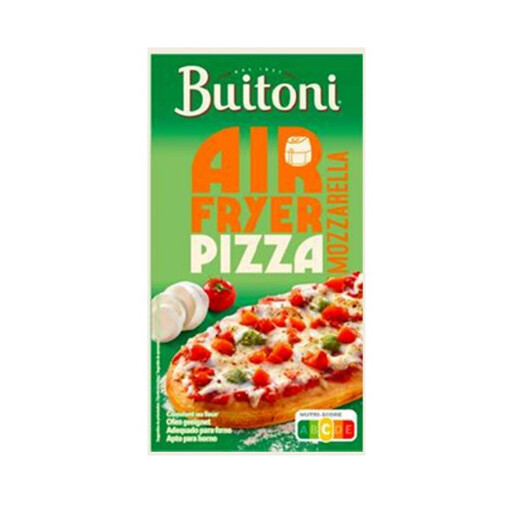 Image unavailable
This 195 g format could suit you if you want to compare the calories in a whole pizza rather than just those per 100 g.
If you plan to use an air fryer, check the packaging for the settings and cooking time for this recipe.
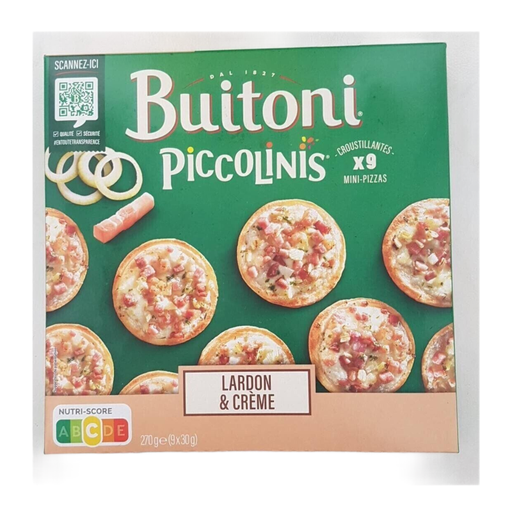 Image unavailable
With 9 pieces, you can choose how many mini pizzas to serve for lunch; calculate the calories based on the amount you actually eat.
Check the packaging for this recipe’s nutritional values and cooking instructions.
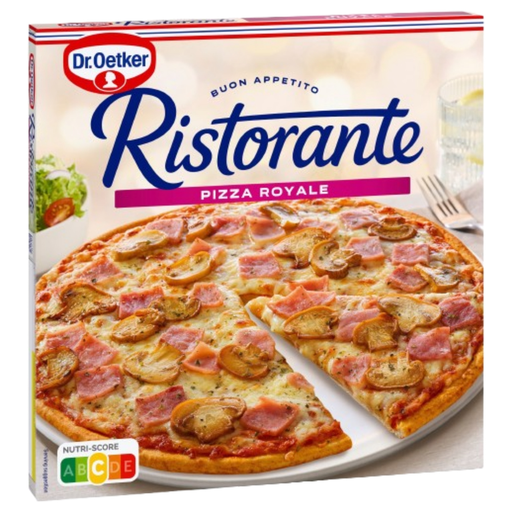 Image unavailable
For this 350 g format, remember that the calories per 100 g are different from those in the portion you serve.
Also check the oven cooking instructions and how long you’ll need before your lunch break.
 Image unavailable
The mini format can make it easier to portion out what you eat, but the total weight of 270 g doesn’t tell you the weight of each piece.
Check the packaging for the number of pieces, their nutritional values and the cooking instructions.
No. According to Manger Bouger, the Nutri-Score takes several nutritional components per 100 g into account; it doesn’t show the calories in the whole pizza. To find out the calorie content of your meal, check the kcal per 100 g and the weight of the amount you eat.
Multiply the kcal per 100 g by the net weight in grams, then divide by 100. Based on the values listed by Carrefour France, a 310 g Pizza Margherita Carrefour Bio at 249 kcal per 100 g contains around 772 kcal if you eat the whole pizza.
No. The format lets you choose how many pieces to eat, but the calories depend on the recipe and the amount you have. Compare the nutritional information and, for a box containing several mini pizzas, check how many pieces make up your portion.
No. The DGCCRF advises never refreezing food that has been defrosted. Also follow the temperature and storage instructions on the packaging.
Before buying, check the ingredients list and allergen information for the exact recipe. Ingredients vary from one pizza to another: the Carrefour France product page for the Pizza maxi 4 formaggi, for example, lists wheat and several cheeses.