People keeping an eye on meal calories
Whether you eat a whole pizza or just a few slices, compare its kcal per 100 g with the weight you actually serve. The pack size affects the total you consume.


When choosing a frozen pizza for the October half-term holidays, compare the kcal per 100 g, then consider how much you actually plan to eat: a smaller pizza isn’t necessarily lower in calories. If you’d also like to look at the nutritional profile, check the nutrition information and, where shown, the Nutri-Score. Finally, check the ingredients, allergens and cooking instructions for the product you choose.
Whether you eat a whole pizza or just a few slices, compare its kcal per 100 g with the weight you actually serve. The pack size affects the total you consume.
If calories aren’t your only consideration, compare the salt and saturated fat listed on the label too. Where it appears on the product, the Nutri-Score provides an overall guide that’s separate from the calories in your portion.
For a meal to share over the holidays, check the number of pieces or slices, as well as the cooking instructions. Mini pizzas can make serving easier, but their size alone doesn’t determine how many calories you’ll eat.
When shopping for the October half-term holidays, start with what matters most to you, then always compare the calories per 100 g with the amount you plan to serve.
| Criteria | What to check | Who is it for? |
|---|---|---|
| Calories in your portion | Compare the kcal per 100 g, then check the pizza’s weight and how much you’ll eat. | If I plan to eat the whole pizza, its value per 100 g alone won’t tell me how many calories are in my meal; around 39% of consumers would make keeping track of portion calories their priority. |
| Nutritional profile | Check the salt and saturated fat per 100 g; use the Nutri-Score as an additional guide if it’s shown. | I want to look beyond calories before choosing between two recipes; around 31% of consumers would prioritise this nutritional profile. |
| Serving and cooking | Check the number of pieces or slices and the cooking instructions for that product. | To serve several people quickly, I need a format that’s easy to share and suitable for my appliance; around 15% of consumers would have this priority. |
| Ingredients and storage | Check the ingredients, allergens and storage instructions on the exact product packaging. | Before comparing calories, I need to make sure the recipe and storage requirements suit my purchase; around 15% of consumers would put these checks first. |
The stated portions aren’t necessarily the same weight. On Auchan’s product pages, the thin-crust mozzarella pizza contains 254 kcal per 100 g and 426 kcal per 167.5 g portion, while the 200 g four-cheese pizza contains 523 kcal for the whole pizza.
Compare the values per 100 g first, then work out how they relate to the amount you plan to serve.
According to the Ministry of Health, the Nutri-Score indicates a product’s overall nutritional quality. On its own, it doesn’t tell you how many calories are in the amount you’ll eat.
Look separately at the energy value, the weight you serve and any other nutritional information that matters to you.
Carrefour’s product page for Buitoni Piccolinis lists 264 kcal per 90 g, or three mini pizzas weighing 30 g each. So the number of pieces you serve matters just as much as their small size.
Choose how many pieces to serve by checking the pack weight and nutritional values.
Cooking and storage instructions can vary from one product to another. The Auchan product pages mentioned here specify storage at −18 °C and state that a defrosted product must not be refrozen.
Follow the instructions on the packaging you buy for transporting, storing and cooking the pizza.
The details below relate to specific products: a nutritional value or Nutri-Score doesn’t apply to an entire brand.
The Ristorante range includes a 355 g thin-crust Mozzarella pizza, featured on an Auchan product page.
Carrefour’s product pages include a Pizza Air Fryer Salami and Piccolinis mini pizzas.
The retailer offers own-brand frozen pizzas as well as products from other brands, including Dr. Oetker and Buitoni.
The retailer offers own-brand pizzas as well as products from Buitoni and Dr. Oetker.
These pizzas come in a range of recipes and formats to explore over the October half-term holidays. For each one, compare the nutritional information on the pack with the amount you plan to eat. Their inclusion here doesn’t mean they’re labelled as ‘low calorie’.
 Image unavailable
This 385 g pizza is worth considering if you plan to share one between several people.
Check the nutritional values for this recipe and the weight of each slice before comparing the calories you’ll consume.
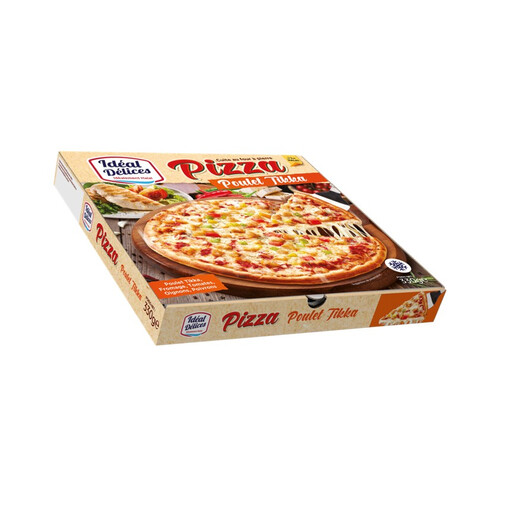 Image unavailable
You can compare this 330 g pizza with other formats if portion weight is an important factor for you.
If the Halal label matters to you, check the details on the pack. You should also read the ingredients and cooking instructions.
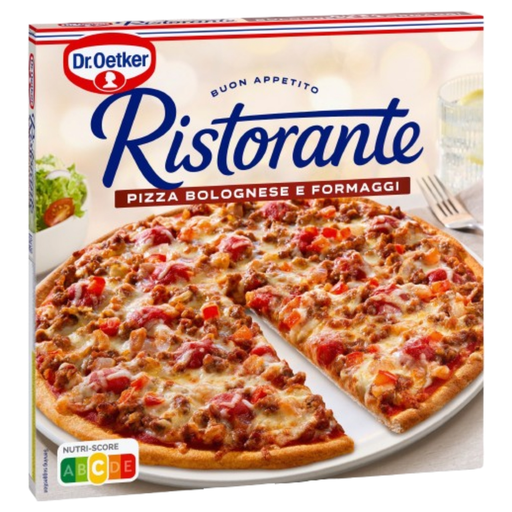 Image unavailable
If you’re interested in the Bolognaise recipe, use its 375 g pack size to plan how much to serve.
Check the kcal per 100 g and other nutritional information for this product before comparing it with another recipe.
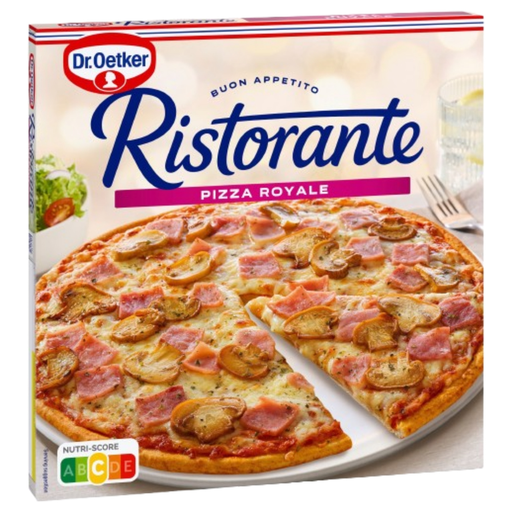 Image unavailable
This 350 g recipe is suitable for comparing whole pizzas or slices of a similar weight.
Check the label for this variant for calorie and allergen information, as well as cooking instructions.
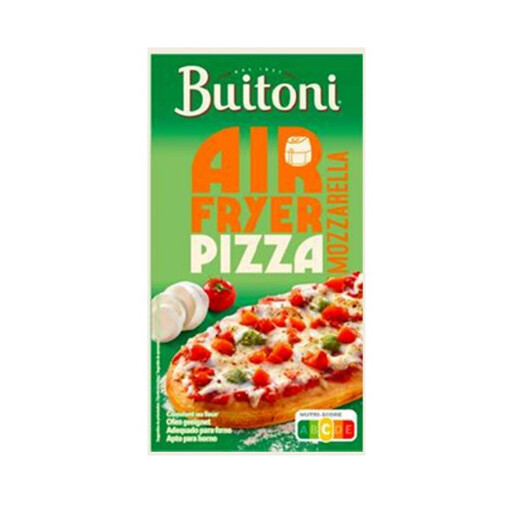 Image unavailable
The 195 g format may suit you if you’re looking for a smaller pizza, but don’t assume that means it’s lower in calories.
The name indicates an Air Fryer version: check the cooking settings on the packaging and compare the nutritional values per 100 g before choosing.
Compare their kcal per 100 g, then work out how many calories are in the amount you’ll eat. The DGCCRF uses the per-100 g declaration as a basis for comparing prepacked foods; you’ll also need the weight you serve to estimate the calories in your meal.
No. The Nutri-Score is a guide to overall nutritional quality, not an indication of how many calories are in your portion. Auchan’s product page for the 355 g Dr. Oetker Ristorante Mozzarella lists a Nutri-Score B and 238 kcal per 100 g; remember to consider how much you serve too.
No. A stated reduction doesn’t tell you how many calories are in the portion you’ll eat. Under EU Regulation (EC) No 1924/2006, a ‘reduced energy’ claim requires an energy reduction of at least 30%; you should also compare the kcal per 100 g and the weight you serve.
Follow the instructions for the product you’ve bought, as cooking settings vary. Auchan’s product page for the Ristorante Mozzarella says to cook it for 10 to 12 minutes at 220 °C in a conventional oven or at 200 °C in a fan oven. Also follow the storage and do-not-refreeze instructions on the packaging.
Read the ingredients list and allergen information on the packaging for the exact recipe. The Auchan product pages for the mozzarella pizzas mentioned here list wheat and milk, among other ingredients; the Dr. Oetker Ristorante Mozzarella page also notes that it may contain traces of soya and mustard. These details don’t automatically apply to other variants.