Anyone planning their portion
You want to compare the energy in your meal or evening snack. Check the values per 100 g, then consider how much you’ll actually eat, rather than relying on the recipe name alone.


To choose a frozen pizza with a portion size that suits your evening, compare the kcal per 100 g, then work out the energy in the amount you plan to serve. Neither a ‘light’ label nor the Nutri-Score tells the whole story on its own. Mini pizzas make it easy to count pieces, while a large pizza means planning portions. Also check the allergens, salt content, and cooking and storage instructions.
You want to compare the energy in your meal or evening snack. Check the values per 100 g, then consider how much you’ll actually eat, rather than relying on the recipe name alone.
You’re looking for a format that’s easy to share. Mini pizzas and large pizzas suit different ways of serving, so plan the amount per person either way.
If allergens or salt content matter to your choice, check the ingredients list and nutrition information for the exact product, whatever its format.
Start with how much each person will eat, then choose a format that suits the way you plan to serve it. Next, compare the labels of the products you’re considering and check that you can cook them with your equipment.
| What to consider | What to check | Who is it for? |
|---|---|---|
| Energy in your portion | The kcal per 100 g and the amount you plan to eat. To work out the kcal in that amount, multiply the value per 100 g by the number of grams served, then divide by 100. | I want to know what my portion contains, rather than just compare two pizzas of different sizes; around 42% of consumers put the energy in their portion first. |
| Format and sharing | The total weight and, for mini pizzas, the number of pieces stated on the packaging. | If several people are helping themselves, I want to plan the portions or pieces for everyone; sharing comes before other factors for around 25% of consumers. |
| Ingredients and salt | The ingredients list, any allergens highlighted and the amount of salt per 100 g. | If a guest needs to avoid an ingredient, the recipe’s ingredients become my first priority; around 17% of consumers prioritise this. |
| Cooking and storage | The cooking method recommended for the product, and storage instructions for the journey home and at home. | I need to be able to cook the pizza with my equipment and keep it frozen until the meal; this is the priority for around 16% of consumers. |
According to Manger Bouger, the Nutri-Score is calculated per 100 g using several nutritional factors. It doesn’t tell you the energy in the portion you’ll serve, and neither does the recipe name.
Check the kcal per 100 g and work out the amount for the weight you’ll eat. Treat the Nutri-Score as a separate piece of information.
A single piece may be easy to serve, but how much you eat depends on the number of pieces you have over the course of the evening.
Check how many pieces are in the pack and decide how many you’ll serve per person before cooking.
Two pizzas with a similar energy content can differ in their ingredients, highlighted allergens and salt content. This information relates to the specific recipe, not just its category.
If these details affect your purchase, check the ingredients list, allergen information and ‘salt’ line in the nutrition table on the packaging you’ve chosen.
Keeping frozen food cold matters. Anses reminds us that low temperatures slow the growth of micro-organisms. An Auchan pizza product page specifies storage at −18 °C and says not to refreeze the product after thawing.
Plan to keep it cold on the way home, put the pizza in the freezer promptly and check its instructions before relying on an oven, air fryer or other appliance.
These ranges offer a starting point when choosing a format or recipe. Always compare the information on the packaging of the pizza you’re planning to serve.
The range includes Piccolinis mini pizzas and a 195 g Air Fryer pizza listed by Carrefour.
The Ristorante and Suprema ranges include different recipes and formats in Auchan’s frozen food aisle.
The Carrefour Sensation, Carrefour Extra and Carrefour Bio ranges include a variety of frozen pizza formats.
Auchan’s frozen food aisle brings together own-brand pizzas, mini pizzas and other brands.
The E.Leclerc range includes several Marque Repère and Turini pizzas, with mozzarella and vegetable recipes as well as sharing formats.
These pizzas suit different ways of planning your evening: portioning a whole pizza, choosing one for an air fryer or serving mini pizzas. To decide which one suits the amount you want to serve, compare the nutritional information and instructions on the packaging.
 Image unavailable
This vegetable pizza weighs 385 g, making it easy to plan how many portions to serve.
To compare the energy in your portion, use the nutritional values on the packaging.
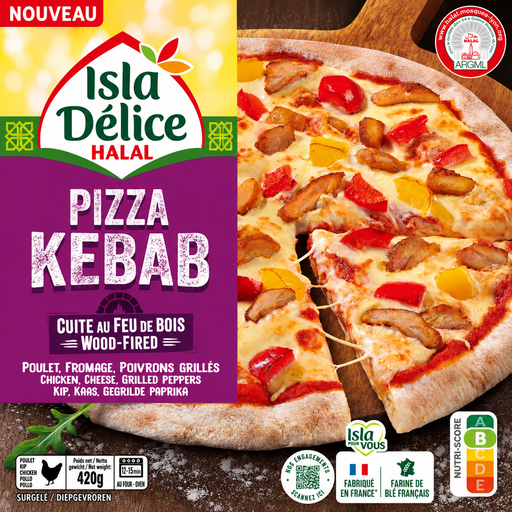 Image unavailable
If you’re planning to share a 440 g pizza, decide on portions before working out the energy served to each person.
Check the packaging for ingredients, allergens and suitable cooking instructions.
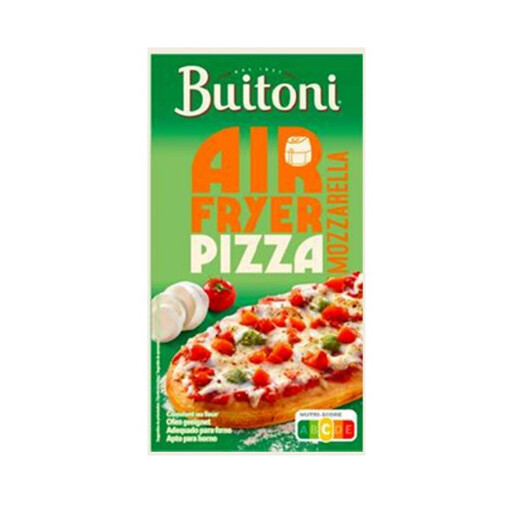 Image unavailable
This 195 g format could be a good choice if you’re cooking a pizza in an air fryer.
Check the cooking instructions and nutritional values for this product before deciding how much to serve.
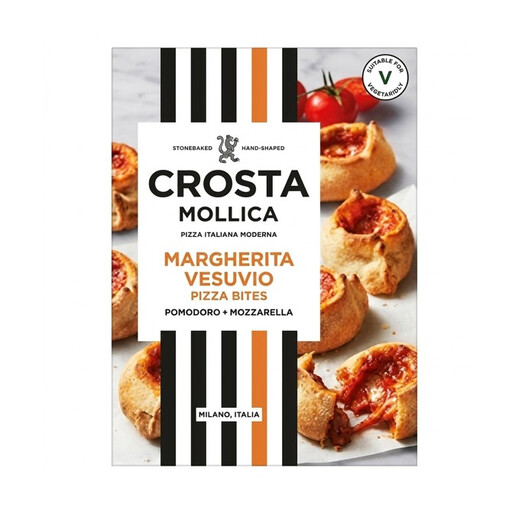 Image unavailable
Mini pizzas make it easy to serve individual pieces at a sharing night; the pack weighs 270 g.
Check how many pieces are in the pack, then decide how much to serve. A mini format doesn’t necessarily mean a lower energy content.
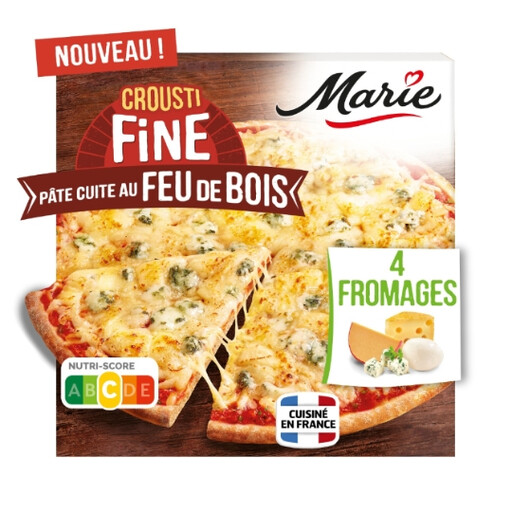 Image unavailable
If you’re serving this 390 g pizza in several portions, decide how much each person will have.
You can’t infer the calories from a thin crust: compare the values per 100 g and check the cooking instructions on the packaging.
No. The Nutri-Score doesn’t rank pizzas by calorie content. Manger Bouger explains that it’s calculated per 100 g using several nutritional factors. To compare the energy in your meal, also check the kcal per 100 g and the weight of the portion you serve.
Compare their kcal per 100 g, then work out the energy in the amount you plan to eat of each one: multiply the kcal per 100 g by the number of grams served, then divide by 100. A lower total weight doesn’t necessarily mean fewer kcal per 100 g.
Read the ingredients and allergen information on the packaging of the exact pizza you’ll be serving. A recipe name, even one that mentions vegetables, isn’t enough to confirm it’s suitable for someone with a dietary restriction. Also check for any ‘may contain’ warnings.
Don’t refreeze it if the packaging says not to after thawing; this is the instruction shown on an Auchan pizza product page. When shopping for your evening, keep frozen food cold on the way home and store it promptly according to the instructions on the packaging.