Organisers keeping an eye on portion sizes
You want to compare the kcal in the amount served to each guest, rather than relying solely on the figures per 100 g.


To offer a lower-calorie portion at a village fete, compare frozen pizzas by their kcal per 100 g, then calculate the amount for the portion you’ll actually serve. A vegetable recipe or a smaller size isn’t enough to make the choice for you: also check the ingredients, allergens, storage requirements and cooking instructions.
You want to compare the kcal in the amount served to each guest, rather than relying solely on the figures per 100 g.
You’re looking for a vegetable pizza, while also checking its ingredients and allergens: the recipes mentioned contain ingredients including wheat and milk.
You need to plan how to store the frozen pizzas, organise the cooking and avoid refreezing a product that has thawed.
When planning the buffet, start with the portion you intend to serve. As the DGCCRF explains, nutritional values per 100 g make it easier to compare products; you can then use the portion weight to work out the kcal.
| Criteria | What to check before buying | Who is it for? |
|---|---|---|
| Calories per portion | Compare the kcal per 100 g, then calculate the amount for the weight you’ll actually serve. | If I want to offer a lower-calorie snack, the actual portion size matters just as much as the figure on the label; around 31% of consumers make this a priority. |
| Recipe and allergens | Check the ingredients, declared allergens and any ‘may contain’ warnings for each recipe. | If I’m catering for guests who don’t eat meat or need to avoid an allergen, I need to be able to tell the recipes apart without assuming they’re suitable; this is the top priority for around 25% of consumers. |
| Size and serving | Check the net weight, how the pizza is intended to be portioned and which cooking method suits the equipment available. | When several people are waiting at the buffet, I prioritise portions that are easy to serve and identify; this is a priority for around 25% of consumers. |
| Storage and cooking | Follow the storage conditions and cooking instructions for your chosen pizza; don’t refreeze a product that has thawed. | If the pizzas need to be transported and cooked in several batches, I need to be able to keep them frozen until they’re ready to cook; around 19% of consumers prioritise this kind of planning. |
Pizza size affects the total per pizza: Auchan lists 523 kcal for its 200 g 4 Cheese pizza, while E.Leclerc lists 196 kcal per 100 g for the 450 g Turini vegetable pizza.
Decide on the weight of the portion you’ll serve, then use the per-100 g figure to calculate its kcal.
The Dr. Oetker, Turini and Carrefour Bio vegetable pizzas mentioned contain wheat and milk-based ingredients. A meat-free recipe doesn’t resolve the question of allergens.
Keep the ingredients and allergen information for each product to hand, so guests can check it before serving themselves.
The Ministry of Agriculture says that refreezing a thawed product encourages bacteria to multiply. Leaving pizzas out for too long also makes it harder to organise cooking in batches.
Arrange suitable transport and frozen storage, then take the pizzas out as you cook them, following the instructions on their packaging.
Carrefour has reported a temporary change to the oil in some batches of its Pizza Royale. The ingredients on the pack you buy are what matter.
Check the packaging again for ingredients, allergens, nutritional values, weight and preparation instructions.
The 385 g Ristorante vegetable pizza lets you consider a meat-free recipe with nutritional and allergen information provided.
The 195 g Air Fryer salami pizza comes in a small size.
The listings for Carrefour Extra Pizza Royale and Carrefour Bio grilled vegetable pizza let you compare two different recipes.
The 450 g Turini grilled vegetable pizza is a size you can cut into portions for a group.
The 200 g 4 Cheese pizza is a single-portion size.
Lidl lists a category of frozen pizzas and snacks. For a specific pizza, check its packaging.
This selection includes a vegetable pizza, a small Air Fryer pizza and a mozzarella pizza. For the buffet, compare their sizes and the information on each pack before deciding on your portions.
 Image unavailable
Worth considering if you’d like to serve a meat-free recipe in set portions.
The listing for this product gives 193 kcal per 100 g. It contains gluten and milk and may contain soya and mustard; check the packaging before serving.
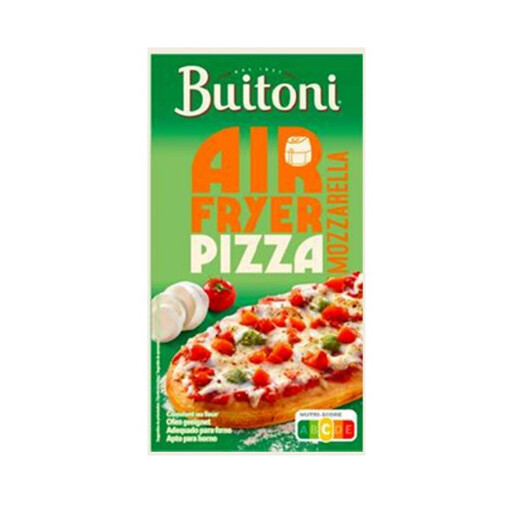 Image unavailable
This size may suit you if you’re planning to cook with an Air Fryer and want to decide on portions before serving.
The pack is listed as 195 g; follow its cooking instructions and check the ingredients and allergens on the packaging.
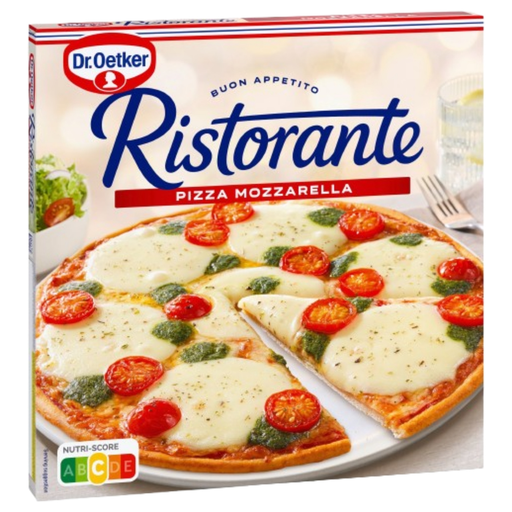 Image unavailable
This mozzarella recipe is worth considering if you’d like to offer another topping at the buffet.
Before calculating the kcal per pizza or portion, check the net weight on the pack: the details for this product mention both 355 g and 335 g.
First compare their kcal per 100 g, then calculate the amount for the portion you’ll serve. The DGCCRF explains that showing nutritional values per 100 g makes products easier to compare. For a portion, multiply this figure by its weight in grams and divide by 100.
No: the topping alone doesn’t tell you the kcal per 100 g or per portion. Check the nutritional values for the exact recipe and the weight you’ll serve; a vegetable pizza may also contain cheese and allergens.
Keep the ingredients and allergen information for each product close to hand while serving. The recipes mentioned include ingredients such as wheat and milk. Also check each pack for any ‘may contain’ warnings, rather than guessing what’s in the pizza from its name.
Don’t refreeze a thawed pizza: the Ministry of Agriculture says that refreezing a thawed product encourages bacteria to multiply. Plan transport, storage and cooking in batches so the pizzas stay frozen until they’re ready to cook.
No. Nutri-Score is a summary guide, but to calculate the kcal in a portion you need the value per 100 g and the weight you’ll serve. Also check the ingredients and allergens for each pizza.