People keeping track of their energy intake
If you’re comparing frozen pizzas as part of managing your weight, kcal per 100 g give you a common basis for comparison. You’ll then need to take into account how much you plan to eat.


When choosing a frozen pizza with energy intake in mind, compare the kcal per 100 g, then work out how they relate to the amount you plan to eat. The word ‘light’ is no substitute for checking the nutrition information, ingredients and Nutri-Score, if shown; the latter doesn’t tell you how much you’ll eat.
If you’re comparing frozen pizzas as part of managing your weight, kcal per 100 g give you a common basis for comparison. You’ll then need to take into account how much you plan to eat.
If you sometimes eat a whole pizza or share a large one, the net weight and the size of your portion affect the amount you need to consider.
If calories aren’t your only consideration, compare saturated fat, salt, ingredients and allergens too. The Nutri-Score can provide an additional point of reference when shown.
Manger Bouger presents nutrition information per 100 g as a useful starting point when reading a label. For a frozen pizza, start there, then check how much you actually plan to eat before looking at the other details of the recipe.
| Criteria | What to check | Who is it for? |
|---|---|---|
| Energy intake | Compare the kcal per 100 g, then relate them to the amount you’ll eat. | I want to compare recipes without mistaking a figure per 100 g for the energy intake of my meal; around 36% of consumers would prioritise energy intake. |
| Portion size | Check the net weight and decide whether you’ll eat a slice, half a pizza or the whole pizza. | Whether I’m eating alone or sharing a pizza, I want to know how much will end up on my plate; portion size would be the top criterion for around 29% of consumers. |
| Nutrition information | Compare saturated fat and salt per 100 g; check the Nutri-Score too, if shown. | I don’t want to choose between two recipes based on calories alone; around 21% of consumers would first look at the wider nutrition information. |
| Ingredients and allergens | Read the ingredients list and allergen information before relying on a claim on the front of the pack. | If I need to avoid an ingredient, its presence matters more than comparing calories; this would be the main concern for around 14% of consumers. |
A claim about one particular feature doesn’t, by itself, tell you everything about the recipe or how much you’ll eat.
Compare kcal, saturated fat and salt per 100 g, then check the portion you plan to have.
You can compare two pizzas per 100 g even if they have different weights. So a lower figure per 100 g isn’t enough on its own to work out the energy intake of the amount you’ll eat.
Check the net weight and decide how much you plan to eat before comparing the corresponding energy values.
According to Manger Bouger, the Nutri-Score takes several nutritional factors into account, including calories, saturated fat, sugars and salt. It doesn’t tell you the size of your portion.
Use it as an additional point of reference, then check the values per 100 g and the weight of the amount you plan to eat.
Comparing energy values won’t tell you whether a recipe contains an ingredient you need to avoid.
Check the ingredients list and allergen information on the pack before choosing.
These pizzas and mini pizzas offer a range of formats and recipes to explore. To compare them based on the portion you plan to eat, check the nutrition information and net weight for each product.
 Image unavailable
Worth considering if you want to compare eating a whole pizza with the amount you plan to have.
Pack size shown: 385 g. To estimate the energy intake of your portion, check the kcal per 100 g on the packaging.
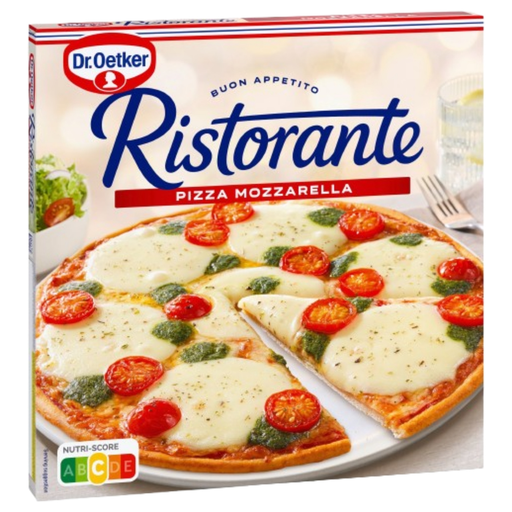 Image unavailable
Compare it with other recipes if the amount you eat matters just as much as the values per 100 g.
The title states 355 g. Check the net weight on the packaging before working out the energy intake for the whole pizza or a portion.
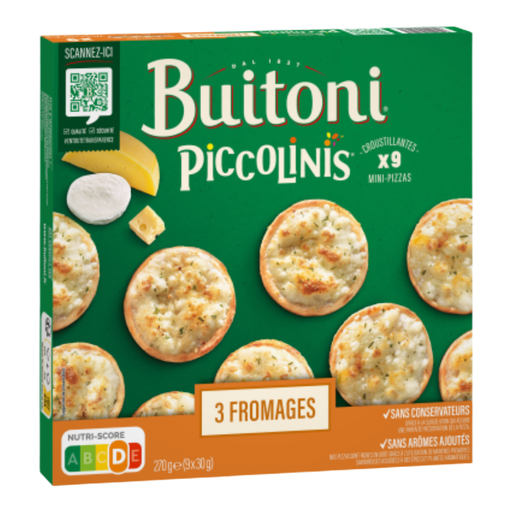 Image unavailable
The individual pieces can make it easier to decide how many mini pizzas to serve.
The pack contains 9 mini pizzas and weighs 270 g. The number of pieces alone isn’t enough to compare energy intake, so check the kcal per 100 g too.
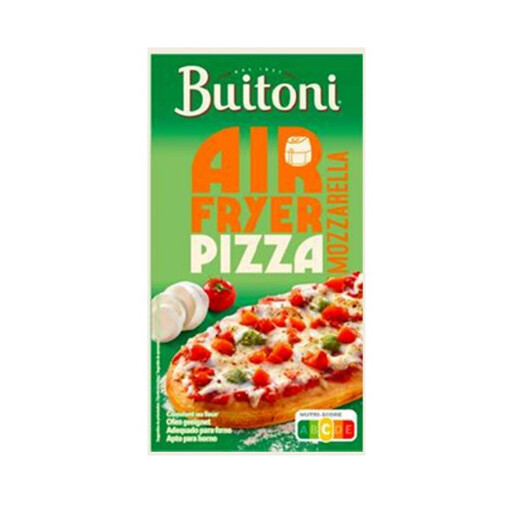 Image unavailable
This pack size gives you a chance to compare the pack weight with the amount you plan to eat.
Pack size shown: 195 g. Check the kcal per 100 g and the portion you plan to have; a smaller pack isn’t, on its own, a nutritional measure.
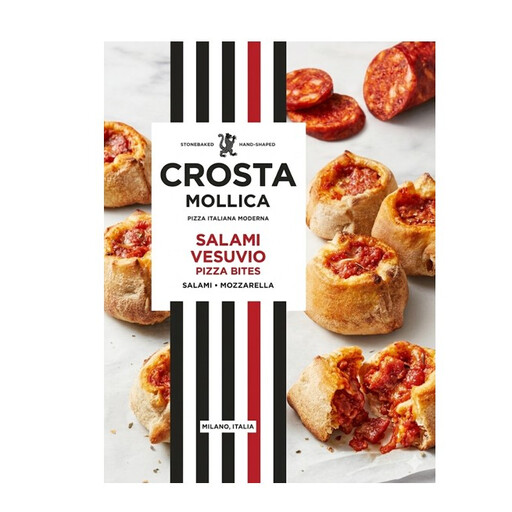 Image unavailable
If you’re choosing your portion by counting mini pizzas, check the weight of the ones you’ll be serving too.
Total weight shown: 270 g. Check the nutrition information and, in particular, confirm the salt value on the packaging before comparing this recipe with another.
Compare their kcal per 100 g, then work out the energy intake for the amount you plan to eat. If the recipes are similar on that basis, look at saturated fat, salt and the Nutri-Score, if shown.
No, that label alone doesn’t tell you everything about the pizza. Check the nutrition information, net weight and ingredients rather than trying to work out the energy intake of your portion from a claim on the front of the pack.
They provide different information. The kcal per 100 g, considered alongside the amount you eat, help you estimate the energy intake of your portion. According to Manger Bouger, the Nutri-Score takes several nutritional factors into account. It can add to your comparison, but doesn’t replace checking your portion size.