To choose a frozen pizza to serve in small portions, first compare the kcal per 100 g, then consider how much you plan to serve each guest. Mini pizzas make it easy to count the pieces, but they are not necessarily lower in calories for the same weight. A whole pizza can work just as well if you decide how large to cut the slices. Finally, check the ingredients, allergens, salt content and cooking instructions for the recipe you choose.
Who is this guide for?
Hosts who want to keep an eye on portions
If you want to limit the calories from pizza served as part of your drinks spread, compare the kcal per 100 g, then work out the calories in the portions you plan to serve. The size of the box alone is not enough to distinguish between two recipes.
Groups who want to share portions fairly
Mini pizzas make it easy to count pieces when serving a group. A whole pizza cut into slices can do the same job, as long as you decide how many slices to cut and how large they should be before serving.
Guests who are mindful of ingredients
If any of your guests need to avoid certain ingredients or allergens, check the label for the exact variant. For this choice, the ingredient list and declared allergens matter more than the recipe name or its Nutri-Score.
What should you compare?
First compare recipes on the same 100 g basis, then work out the figure for the portion you plan to serve. The format can help you organise serving, but it is no substitute for reading the label.
| Criteria |
What to check |
Who is it for? |
| Calories served |
Compare the kcal per 100 g, then factor in the weight of the portion you plan to serve. Also check the fat and salt per 100 g. |
If I want to limit the amount of pizza I serve, I need to know both the figure per 100 g and the weight of each portion. Around 42% of consumers would put calories per portion at the top of their list. |
| Sharing portions |
Check the number of pieces and the pack weight, or decide how many slices to cut from a whole pizza. |
When I’m serving a group, I prefer to be able to divide up the pieces or slices before everyone helps themselves. Portion control would be the top priority for around 33% of consumers. |
| Ingredients and salt |
Read the ingredient list, check the declared allergens and look at the salt content for the exact recipe. |
Before serving a recipe to my guests, I want to check that it suits their dietary requirements and take the salt content into account. Around 25% of consumers would put these checks first. |
Mistakes to avoid
-
Assuming ‘mini’ or ‘thin crust’ means fewer calories
These terms describe a format or type of crust, not the recipe’s kcal per 100 g. The total you serve also depends on the number of pieces or the weight of the slices.
Compare the nutritional values of the products you’re considering and decide on portion sizes before serving.
-
Choosing based on Nutri-Score alone
A Nutri-Score label does not tell you how many kcal are in the portion you’ll serve, and it is no substitute for the ingredient list.
Read the nutritional information per 100 g, then check the ingredients and allergens for the exact recipe.
-
Overlooking allergens in small portions
Cutting up a pizza or serving just one mini pizza does not change the ingredients in the recipe. For example, Carrefour lists wheat, cheese and tuna in Dr. Oetker’s Ristorante Tuna pizza, and says it may contain traces of soya and mustard.
Check each variant and keep its packaging handy during your drinks party.
Brands to consider by recipe
Buitoni
The Piccolinis range includes mini pizzas to share. Auchan features variants with 9 pieces weighing 270 g.
- The pieces make it easy to plan how many each guest will have.
- The mini format does not tell you the kcal per 100 g: check the label for the recipe you choose.
Dr. Oetker
The Ristorante range includes whole thin-crust pizzas that you can cut into slices for a drinks party.
- With a whole pizza, you can decide how large to make the slices.
- A thin crust does not determine the calories in a recipe. Check the ingredients too: Carrefour lists wheat, cheese and tuna, among other ingredients, for its Ristorante Tuna pizza.
Carrefour
Carrefour-brand pizzas come in a range of recipes and formats.
- Carrefour lists 199 kcal per 100 g for its 400 g Carrefour Extra Pizza Royale. You can use this figure to calculate the portion you plan to serve from this product.
- This figure does not apply to other Carrefour recipes, so compare their labels separately.
E.Leclerc / Marque Repère (Turini)
The E.Leclerc catalogue features Turini mini pizzas and whole pizzas in a range of recipes.
- These formats give you two ways to plan how to share: count the pieces or cut the pizza into slices.
- Check each recipe individually. E.Leclerc lists 235 kcal per 100 g for its Turini mountain-style pizza; this figure does not apply to other Turini products.
Frozen pizzas available on Joybuy
This selection includes mini pizzas you can count out before serving and whole pizzas you can cut into slices. To compare the calories you’ll actually serve, check the nutritional information for the variant and decide on portion sizes.
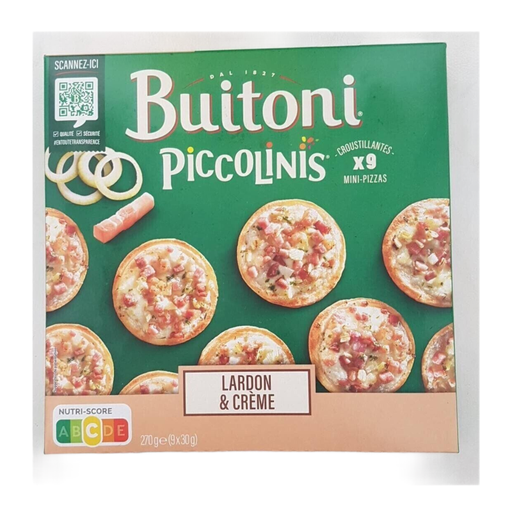 Image unavailable
Buitoni Piccolinis cream and bacon, 9 pieces, 270 g
This format is a good fit if you want to decide how many mini pizzas each guest will have before serving.
The box contains 9 pieces and weighs 270 g. The number of pieces alone does not tell you how many calories you’ll serve, so check the nutritional information and declared allergens for this variant.
View on Joybuy
 Image unavailable
Dr. Oetker Ristorante vegetable pizza, 385 g
This whole pizza is a good choice if you’d rather cut your own slices for a drinks party.
It has a net weight of 385 g. Decide how much each slice will weigh, then check the kcal per 100 g and allergens for this recipe before choosing it.
View on Joybuy
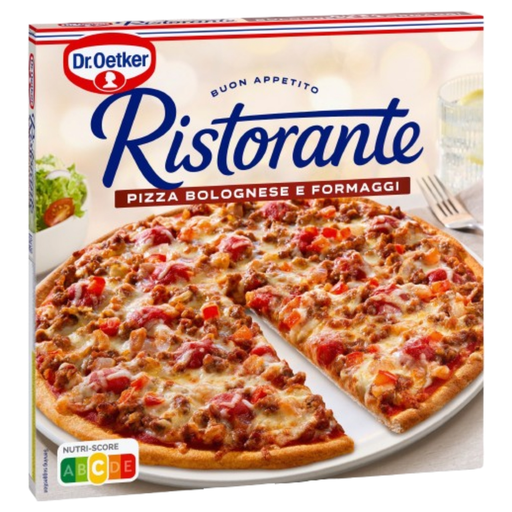 Image unavailable
Dr. Oetker Ristorante Bolognese pizza, 375 g
This whole pizza can be cut into slices of the size you decide on before serving.
It weighs 375 g. To compare this recipe with others, check the packaging for details including kcal, saturated fat, salt and allergens.
View on Joybuy
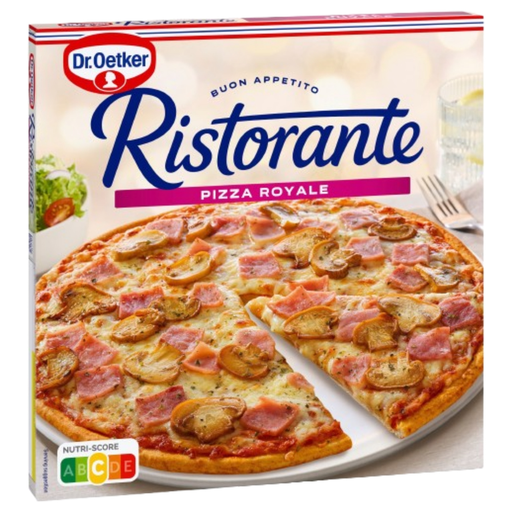 Image unavailable
Dr. Oetker Ristorante Royale ham and mushroom pizza, 350 g
This whole pizza is worth considering if you’re planning to prepare slices for a drinks party.
It has a net weight of 350 g. The calories in each slice will depend on its size, so check the ingredients and allergens for this variant too.
View on Joybuy
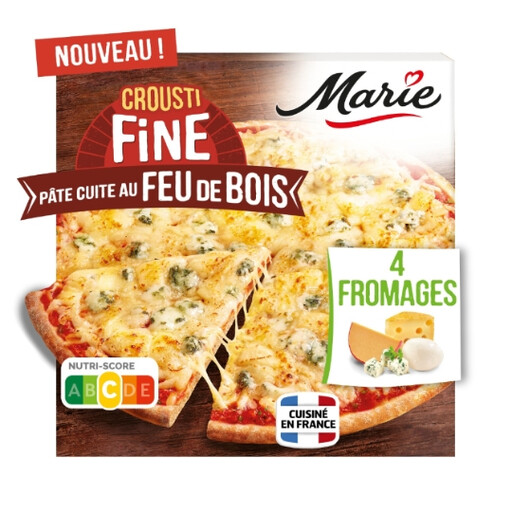 Image unavailable
Marie four cheese thin-crust wood-fired pizza, 390 g
This whole pizza can be shared once you’ve decided how many slices to cut and how large to make them.
It weighs 390 g. Neither a thin crust nor the recipe name is a substitute for comparing kcal per 100 g. Check the ingredient list and allergens too.
View on Joybuy
Frequently asked questions
How do you calculate the calories in a slice of frozen pizza?
Multiply the kcal per 100 g by the weight of the slice in grams, then divide by 100. For example, Carrefour lists 199 kcal per 100 g and a weight of 400 g for its Carrefour Extra Pizza Royale. The whole pizza contains around 796 kcal, or around 100 kcal per slice if cut into eight equal pieces, before taking the other food served into account.
Are mini pizzas lower in calories than a whole pizza?
Not necessarily. Their format mainly makes it easier to count the pieces. Compare the kcal per 100 g for the specific recipes, then check the total weight of the pieces or slices you plan to serve.
Where can you check the allergens in a frozen pizza?
Check the ingredient list and highlighted allergens on the packaging for the exact variant. The DGCCRF sets out the labelling information required for prepacked food; also check for any product-specific warnings about possible traces.
Is Nutri-Score enough to choose pizzas for a drinks party?
No. It is no substitute for checking the kcal per 100 g, calculating the portion you’ll actually serve, or checking the ingredients and salt content. Use the nutritional information for each recipe to compare products on the same basis.
Can you use the same cooking time for all these pizzas?
No. Follow the instructions on the packaging for each product. Carrefour recommends 9 to 10 minutes in a conventional oven for its Carrefour Extra Pizza Royale; this cooking time does not apply to the other pizzas.


