People keeping an eye on dinner calories
You’re looking for a meal that’s quick to prepare and want to know the calories in the amount you’ll actually eat, whether that’s one slice or the whole pizza.


To choose a frozen pizza with calories in mind, first compare the figures per 100 g, then work out the calories in the amount you’ll eat: a pizza with fewer calories per 100 g could still contain more overall if it’s larger. For a quick dinner, also check the cooking instructions, salt, fat and allergens for the specific product you’re considering. Neither the topping nor the Nutri-Score replaces calculating your portion.
You’re looking for a meal that’s quick to prepare and want to know the calories in the amount you’ll actually eat, whether that’s one slice or the whole pizza.
You also want to look at salt, fat, ingredients and allergens, rather than making your decision based on calories alone.
You’re choosing from the products available in your shop or through its click-and-collect service. Range and offers can vary from one shop to another, so the exact product matters more than a general preference for a retailer.
Start with the calories per 100 g and the amount you plan to eat. Then look at the other nutritional information and cooking instructions: the per-100 g figure alone doesn’t tell you what your dinner will contain.
| Criteria | What to check | Who is this useful for? |
|---|---|---|
| Calories in your portion | Compare the kcal per 100 g, then multiply by the number of grams you’ll eat and divide by 100. | If I often eat the whole pizza, its weight affects the total for my dinner. Around 42% of consumers would put the calories in their portion at the top of their list of criteria. |
| Other nutritional information | Check the salt, fat and ingredients. If a Nutri-Score is shown, use it to compare products from the same section. | I don’t want to choose based on calories alone when recipes have different ingredients. Around 25% of consumers would prioritise this broader assessment. |
| Cooking and format | Check the cooking method and time on the packaging, as well as the weight and number of portions. | After a busy day, I need a format that suits the meal and fits the time I have available. This would be the top criterion for almost 17% of consumers. |
| In-store availability | Look for the exact product in your shop or through its click-and-collect service, and check its label. | I need to be able to find the pizza where I do my shopping, rather than relying on having seen it somewhere else. Around 16% of consumers would prioritise this option. |
At Carrefour, a 300 g SIMPL Margherita contains 200 kcal per 100 g, which adds up to around 600 kcal if you eat the whole pizza. The TURINI Pinsa Royale sold by E.Leclerc lists 193 kcal per 100 g, but at 360 g, the whole product contains around 695 kcal.
For each product, calculate the calories in the amount you plan to eat: kcal per 100 g × grams eaten ÷ 100.
A thin crust or a tomato and mozzarella topping doesn’t, on its own, tell you the energy content of a pizza. Recipes and weights vary from one product to another.
Choose a recipe to suit your preferences, then check its nutritional values and net weight before comparing it with another pizza.
The Nutri-Score can help you compare processed products in the same section, as Manger Bouger explains. It doesn’t tell you how many calories are in the portion you’ll serve.
Alongside it, consider the amount you’ll eat, the energy value per 100 g and any other nutritional information that matters to your choice.
A pizza is only suitable for a quick dinner if its cooking method works with your equipment and the time you have available. Storage instructions also depend on the product.
Read the instructions on the packaging and check that the product you want is available in your shop or through its click-and-collect service.
The Ristorante range includes recipes such as Mozzarella and Margherita, which are best compared product by product.
The products listed by Auchan include Four à Pierre and So Tasty pizzas, as well as Piccolinis mini pizzas.
The SIMPL and Carrefour Bio ranges include Margherita pizzas with different nutritional values and formats.
The TURINI Pinsa Royale listed by E.Leclerc is an example of how a product’s total weight affects how you interpret its calorie count.
The retailer stocks pizzas from national brands and its own brand in a range of formats.
Lidl France includes pizzas among its frozen products and features offers in its catalogues.
These whole pizzas and mini pizzas give you a choice of formats for a weekday dinner. If you’re considering one as a frozen pizza and planning how to prepare it, check how it should be stored and follow its cooking instructions.
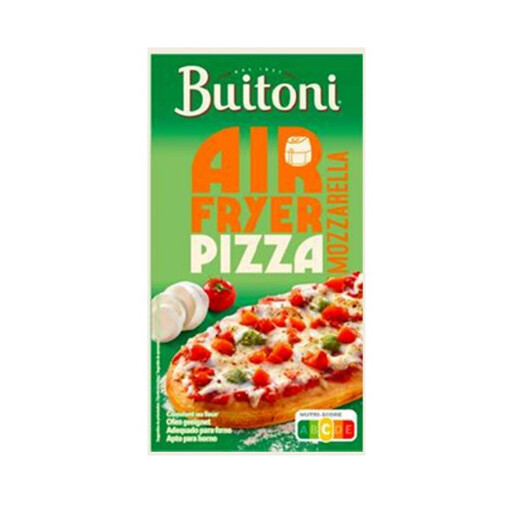 Image unavailable
This format could work if you’re planning to eat a whole pizza and want to calculate the calories from its weight. ‘Air Fryer’ indicates the intended cooking method. Check the packaging for the cooking time and temperature, as well as allergen information.
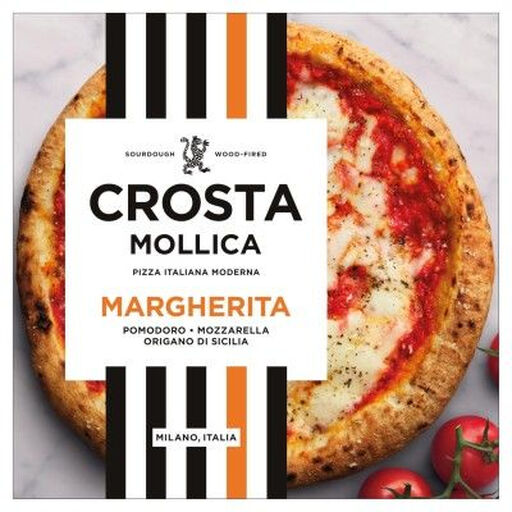 Image unavailable
If you’re planning to share a Margherita pizza, work out how much each person will eat before calculating the calories per portion. Before choosing it for a frozen pizza dinner, check how it should be stored, the number of portions and the cooking instructions.
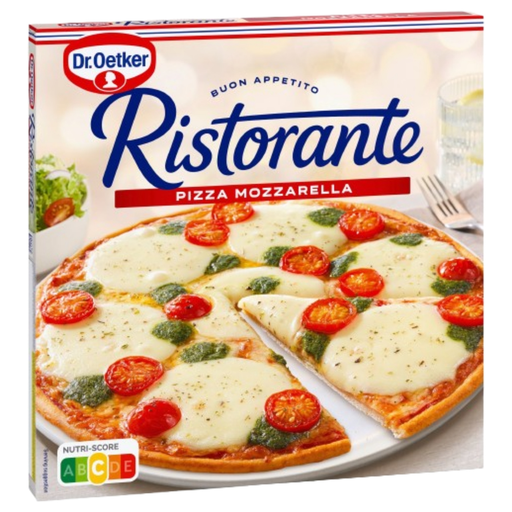 Image unavailable
Compare this mozzarella pizza with other products using the values per 100 g. The weight in the title differs from the one given with the nutritional information, so check the net weight on the packaging before calculating the calories in the whole pizza. Then check the cooking instructions.
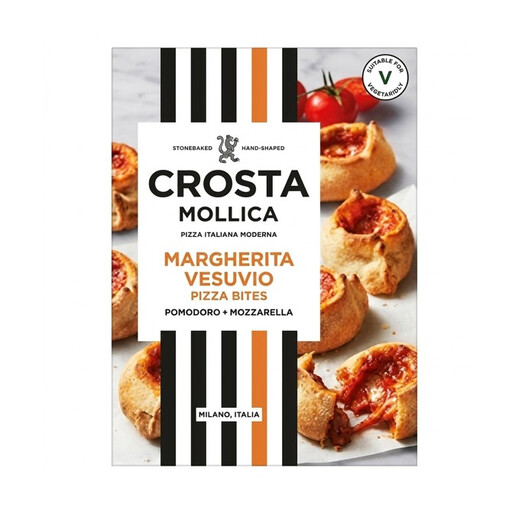 Image unavailable
With the mini format, you can choose how many to serve, but the pack weight alone doesn’t tell you how much each one weighs. Check the number of pizzas on the packaging, along with the amount you’ll actually serve and the cooking instructions.
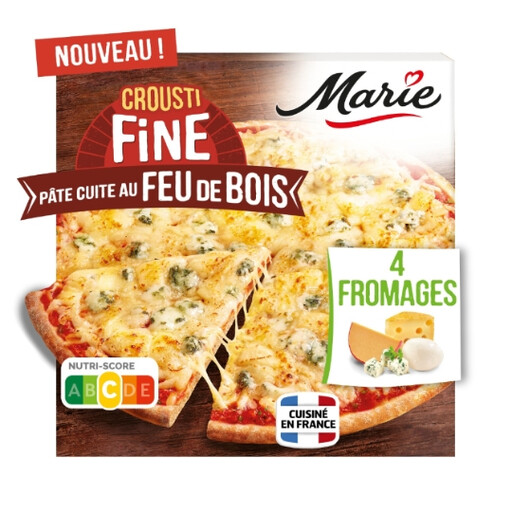 Image unavailable
For this four-cheese pizza, calculate the calories based on how much you plan to eat, rather than taking ‘thin crust’ as a guide to its nutritional value. Before considering it as a frozen pizza, also check how it should be stored and follow the cooking instructions.
First compare their kcal per 100 g, then calculate the calories in the amount you’ll eat. For example, the SIMPL Margherita sold by Carrefour contains 200 kcal per 100 g, so a whole 300 g pizza contains around 600 kcal.
No: it doesn’t calculate the calories in your portion. Manger Bouger recommends using it to compare processed products from the same section. Also check the energy value per 100 g and the amount you’ll eat.
No: the type of crust or topping alone doesn’t tell you the total calorie count. Compare the nutritional values and weights of the exact products, then factor in the portion you’ll serve.
Check the packaging for storage instructions, the type of oven, the temperature and the cooking time for the product you’ve chosen. That way, you can see whether it suits the time and equipment you have available.
Read the ingredients list and allergen information on the packaging for the exact product. Several of the pizzas mentioned here contain wheat and milk, but ingredients and any possible traces should be checked product by product.