
Livraison le jour même ou le lendemain

Qualité garantie

Débloquez vos offres de bienvenue: Livraison GRATUITE | Jusqu'à -80 % | 30 jours d'essai gratuits à JoyPlus
Téléchargez l'application
Buying frozen minced beef steak seems straightforward… until you start comparing labels. Between terms like "extra tender", family packs and beef preparations, the difference from one product to the next can be significant.
In the UK, three mistakes crop up time and again:
Here are the criteria to run through before you stock your freezer.
The fat content affects texture, how well it holds together during cooking and how tender it feels in the mouth. However, it alone isn't enough to judge the overall quality of the product.
Remember to check the nutritional table so you can tell the difference between the fat content highlighted in the product name and the actual value stated per 100 g. Cooking may cause some of the fat to be lost, but it doesn't change the product's original composition.
A pure minced beef steak must be clearly distinguished from a preparation that contains other ingredients. Some Charal products, for example, contain 80% beef, with water and soya protein. They may suit people looking for a softer texture, but they are not comparable to a product made from 100% minced beef.
Don't forget about allergens either. The presence of soya must be stated on the label and deserves particular attention if you have an allergy or intolerance.
If you're looking for French minced beef, check the origin statement on the product page or on the packaging. Some products contain 100% beef of French origin, while others are made from beef sourced from the European Union.
To buy a halal minced beef steak, look for an explicit mention of halal certification or compliance. This characteristic cannot be inferred from the brand or the product's appearance alone.
Also remember to compare the number of pieces and the total weight:
Store products at −18 °C or below and never refreeze thawed meat. The meat must be cooked through before eating, in line with the instructions on the packaging.
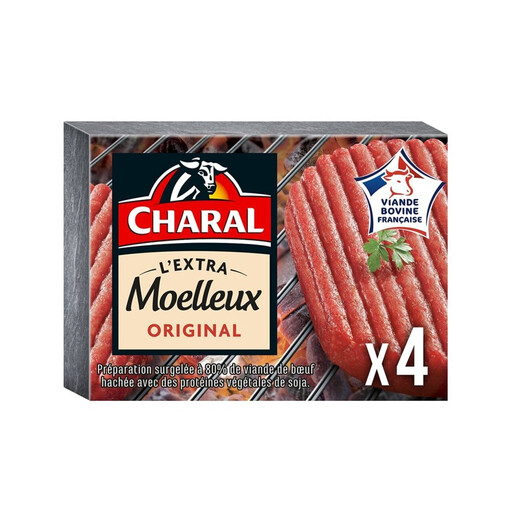
Why this choice suits this profile: With four 100 g portions, this pack is ideal for everyday meals without taking up too much freezer space.
The ingredients show 80% beef and the presence of soya. This allows the buyer to assess the recipe rather than relying solely on the "extra tender" claim.
Four 100 g portions, 15 g fat per 100 g and storage at −18 °C.
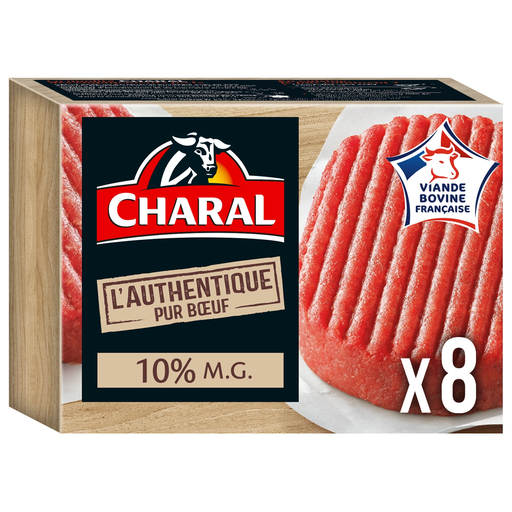
Why this choice suits this profile: With their thick 125 g format, these steaks are made for generous burgers and meals where portion size matters as much as the ingredients.
The product page states 100% beef, French origin and a fat content of 10%, with no added plant proteins.
Pack of 8 × 125 g, 10 g fat per 100 g and 20 g protein per 100 g.
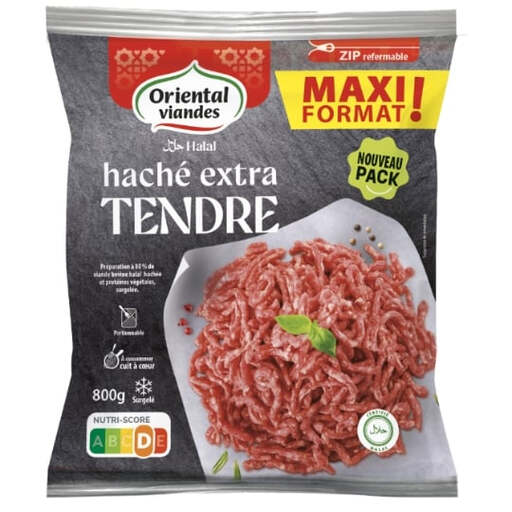
Why this choice suits this profile: Its family-sized format and halal certification make it suitable for regular meals, meatballs, sauces and burgers prepared in bulk.
The product page specifies 80% halal beef of EU origin and 20% fat. This data allows you to assess the product beyond its simple name.
A total weight of 800 g, storage at −18 °C and a recipe stated to be free from artificial colourings.
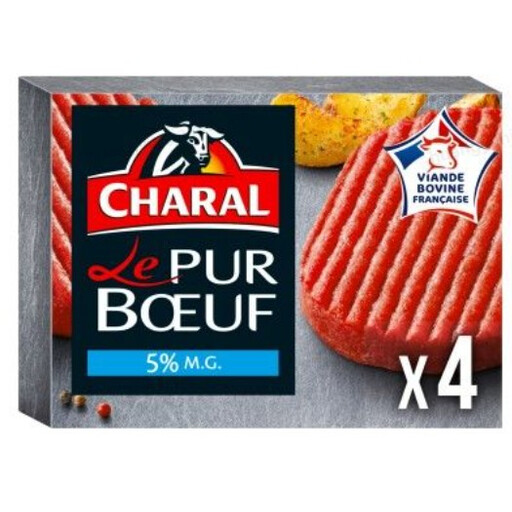
Why this choice suits this profile: The four 100 g portions fit easily into balanced meals, with a side dish or in a homemade sauce.
The name states 100% beef and the product page mentions French origin. It is therefore easy to distinguish from a composite preparation.
400 g total, four portions, 100% beef and cooking instructions directly on the product page.
We've selected a comprehensive, real-time updated list of products that meet these exacting criteria, while complying with European safety regulations.
Some products can be cooked straight from frozen in a frying pan. In this case, preheat the pan properly, follow the time stated on the packaging and cook the meat all the way through. Do not thaw a product at room temperature and never refreeze a product that has already been thawed.
Store it at −18 °C until the best-before date shown on the packaging. Avoid temperature fluctuations and put portions back in the freezer promptly after shopping. The date printed on the pack is the one to follow.
For a burger, 10% is a versatile base. 15% or 20% will be more suitable if you're after a richer texture, while 5% will work better with lighter cooking. Before ordering, also compare the weight of each steak, the ingredients and the origin of the meat.