What should you check before buying?
First, decide whether you want to build your own meal, choose a ready-to-cook portion or buy a sharing format. Then compare the nutritional information for products intended for the same purpose, and relate it to the amount you plan to serve.
| What to consider |
What to check |
Who is it for? |
| Calories in your meal |
Compare the kcal per 100 g, then use the weight of the portion you’ll serve. Count any added ingredients separately. |
If I’m building my own plate, I want to know the calories in what I’m eating, not just in 100 g of the product. Around 33% of consumers put this need first. |
| Meal preparation |
Check the tray’s weight and cooking instructions; look at the Nutri-Score if it’s displayed. |
When I don’t have much time to cook, I look for a ready-to-cook portion without assuming it matches the amount I want to serve. Around 27% of consumers put this need first. |
| Sharing with guests |
Check the total weight, the number of portions stated and how much you plan to put on each plate. |
If I’m entertaining several people, I want to portion out the contents of the bag before serving, rather than treating the whole pack as one portion. Around 20% of consumers prioritise sharing. |
| In-store choice |
Check which products are available at your chosen shop and read the label on the product you actually buy. |
If I shop at a particular store, I want to be able to find a product that suits my menu there. Local availability is the main concern for around 20% of consumers. |
A product to build your meal around
This Joybuy product is a frozen vegetable dish that you can divide between guests or add other ingredients to. To work out the calories in the meal you serve, take the portions and any additions into account.
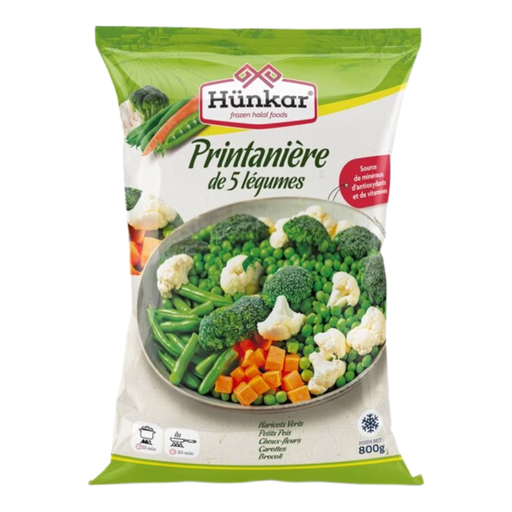 Image unavailable
HÜNKAR Spring Vegetable Dish 800 g
For an evening when everyone is having a portion with extra ingredients, this vegetable dish can be divided between several plates.
Stated format: 800 g. Decide on the portions to suit your menu and follow the cooking instructions on the packaging.
View on Joybuy
Frequently asked questions
How do I compare the calories in two frozen meals?
If they’re intended for the same purpose, compare their kcal per 100 g, then work out the calories in the amount you’ll serve. As Manger Bouger explains, nutritional information is shown per 100 g or 100 ml. Also check the fat and salt content of the specific product.
Does the Nutri-Score show the calories in my portion?
No, the Nutri-Score doesn’t show the calories in the amount you eat. Santé publique France describes it as a voluntary label that indicates nutritional quality. Also check the weight you’ll serve and the nutritional information.
What should I count when adding to frozen vegetables at home?
Count the amount of vegetables you serve, along with any oil, sauce, cheese or other side dishes you add. The values on the vegetable packaging apply to that product, not the whole meal you prepare.
How should I transport frozen meals after shopping?
Pick them up at the end of your shop, as advised by the Anses, then keep them from warming up on the way home and put them away promptly, following the packaging instructions. The DGCCRF warns that a rise in temperature speeds up microbial growth.
Should I check the ingredients of a dish described as plant-based?
Yes. If you need to avoid an ingredient or allergen, check the label on the exact product rather than relying on the dish’s name. Also check the ingredients you plan to add.


