People with a short microwave break
If you heat your lunch at work, choose an individual portion with instructions that match the power of the appliance available. Some 300 g Picard trays specify 5 minutes at 900 W.


To choose a frozen meal under 500 kcal for lunch at work, check the energy content of the whole portion first, then make sure the heating instructions suit the power of the microwave available. Also compare the ingredients, allergens and nutrition information: staying under this calorie limit alone doesn’t tell you whether the recipe meets your other needs.
If you heat your lunch at work, choose an individual portion with instructions that match the power of the appliance available. Some 300 g Picard trays specify 5 minutes at 900 W.
The figure per 100 g doesn’t always match the amount in the whole tray. Check the weight of the portion you plan to eat before comparing meals.
Compare the ingredients and allergens in each recipe, even when two meals have a similar weight or energy content. The DGCCRF reminds consumers that this information appears on the labels of pre-packed foods.
For a work lunch under 500 kcal, start with the portion you’ll actually eat. Then check the preparation instructions, ingredients and format to make sure they suit your break.
| Criteria | What to check | Who is this for? |
|---|---|---|
| Energy per portion | The weight you’ll actually eat and the kcal per portion. If only the figure per 100 g is shown, multiply it by the weight in grams, then divide by 100. | If I’m eating the whole tray, I want to know whether it stays under 500 kcal, not just see a figure per 100 g. Around 31% of consumers would make this limit their top priority. |
| Preparation at work | The cooking method, power required, heating time and instructions on removing or piercing the film and letting the meal stand. | When my break is short, I need a meal I can prepare using the microwave available. Speed would be the main priority for around 25% of consumers. |
| Ingredients and allergens | The ingredients list, highlighted allergens, any ‘may contain’ statements and the nutrition information for the exact product. | A recipe under 500 kcal isn’t necessarily right for me if it contains an ingredient I need to avoid. Around 25% of consumers would put ingredients or allergens at the heart of their choice. |
| Format and availability | A quantity suited to one person and whether the product is available at your chosen shop or collection service. | I’d rather find a convenient portion at the retailer where I shop than have to split a family-sized meal. This would be the top priority for around 19% of consumers. |
A tray often contains several 100 g portions. Its total energy content depends on how much you actually eat. With a family-sized meal, you’ll need to work out the portion you serve yourself.
Calculate the kcal in your portion before comparing recipes against the 500 kcal limit.
A vegetarian recipe may still contain allergens. If a Nutri-Score appears on the packaging, it doesn’t replace the ingredients list or nutrition information.
Check the highlighted allergens and any ‘may contain’ statements on the exact product.
Preparation methods, power settings and instructions for the film vary from one product to another. A heating time given for a particular appliance won’t necessarily work for the one at your workplace.
Check the packaging instructions and the equipment available before buying.
Retailers’ ranges can vary depending on when and where you shop.
Check that your chosen product is available, then review its nutrition information at your shop or collection service.
These retailers offer formats worth considering for an individual lunch. Check the portion size, energy content and cooking instructions for each recipe.
The retailer offers individual frozen ready meals, with several product pages detailing portion sizes and preparation instructions.
Its frozen ready meal range includes individual portions, meals to share and plant-based recipes.
The retailer offers own-brand frozen ready meals, including 300 g formats.
Its listed range includes individual and family-sized frozen meals, as well as quick-cook options.
The retailer offers frozen ready meals, sometimes as part of ranges available for a limited time.
The retailer offers individual microwaveable meals, alongside other formats.
If you can heat up your lunch, this 100 g onigiri is worth considering separately from ready-meal trays. Check how much you plan to eat and the preparation instructions before choosing it for lunch.
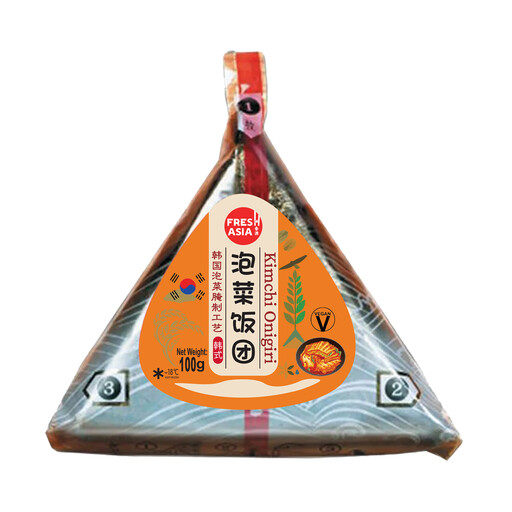 Image unavailable
This 100 g format could suit a short break if the quantity works for the lunch you have planned. Check the energy content of the amount you’ll eat, the power needed to heat it and the allergen information on the packaging, especially if you need to avoid wheat.
Calculate the energy content of the amount you’ll eat. If the label only gives a figure per 100 g, multiply it by the weight you’ll eat in grams, then divide by 100. For example, 146 kcal per 100 g works out at 438 kcal for a 300 g tray.
No. Follow the preparation instructions on the tray you’ve chosen. Some 300 g Picard products specify 5 minutes in a microwave at 900 W, but check the instructions for removing or piercing the film and leaving the meal to stand for each product.
No. Check the energy content of the whole portion first. Nutri-Score is a voluntary label; the DGCCRF reminds consumers that the nutrition declaration and ingredients list on pre-packed foods show the product’s values and composition.
Read the ingredients list and highlighted allergens on the packaging for the exact recipe, as well as any ‘may contain’ statements. According to the DGCCRF, allergens present in pre-packed foods must be identified in the ingredients list. The type of recipe or its calorie content is no substitute for checking this information.