People who eat dinner alone
A ready meal with a stated net weight makes it possible to calculate the energy content of the whole dish before you choose it. Picard and Auchan, for example, offer individual portions.


To choose a frozen meal for a weeknight dinner under 500 kcal, calculate the energy content of the amount you’ll eat, rather than looking only at the figures per 100 g. The nutritional information explained by Manger Bouger gives the value per 100 g. Once you’ve decided on your portion, also compare the salt and ingredients, and check the Nutri-Score if one is shown. This score alone doesn’t confirm the total calorie content of your meal.
A ready meal with a stated net weight makes it possible to calculate the energy content of the whole dish before you choose it. Picard and Auchan, for example, offer individual portions.
Once you’ve found a portion below your chosen limit, you may want to check its salt, ingredients and allergens. If shown, the Nutri-Score can help you compare similar meals, as explained by Manger Bouger.
You’re planning to divide a meal between several people. Family-sized options from Auchan, E.Leclerc and Carrefour mean you’ll need to decide how much each person will actually be served before calculating the calories per portion.
First, decide how much you’ll eat. The pack size may make serving easier, but it isn’t enough on its own to work out the total calories.
| Criterion | What to check | Who is it for? |
|---|---|---|
| Total for your portion | Check the kcal per 100 g and the weight you’ll eat. Multiply the kcal per 100 g by your portion’s weight in grams, then divide by 100. Account separately for any sides you add. | I want the amount on my plate—not just a figure on the label—to stay under 500 kcal. Around 42% of consumers would prioritise this calculation. |
| Quick to serve | Check the number of portions, as well as the preparation method and time given for the product you’re considering. | In the evening, I prefer an amount that’s easy to serve without having to divide up a large dish. Around 33% of consumers would make this their priority. |
| Ingredients | When comparing similar meals, check the salt, ingredients and allergens. Use the Nutri-Score if one is shown, but don’t use it instead of calculating the kcal. | Two portions may both meet my calorie limit without having the same ingredients, so I want to be able to compare them. Around 25% of consumers would put this criterion first. |
A ready meal weighing several hundred grams contains more than the 100 g reference amount used in the nutritional table. So the figure on its own won’t tell you whether it’s under 500 kcal.
Before choosing the meal, use the weight you plan to eat to calculate the total.
According to Manger Bouger, the Nutri-Score lets you compare products on a per-100-g basis. It doesn’t tell you the calories in your portion, and it doesn’t replace checking the ingredients if you have an allergy.
First calculate the energy content of your portion, then compare similar meals using their other nutritional information.
The weight of the pack and the amount you put on your plate aren’t the same thing. Unless you decide on a portion, the calorie calculation may not reflect what you’ll actually eat.
Divide or weigh the amount you plan to eat, then use the product information to calculate the kcal in your portion.
Carrefour’s frozen ready meals range includes individual portions and sharing dishes.
Marque Repère’s frozen meals include Côté Table products in a range of weights.
Auchan offers individual and family-sized frozen ready meals, as well as a Nutri-Score filter.
Lidl features frozen ready meals in its supermarket range.
Aldi’s product pages feature ready meals in both individual and family-sized formats.
Picard offers individual frozen meals, including 300–400 g trays in its range.
This 230 g pack of frozen gimbap could be an option if defrosting it before dinner works for you. Check the calories for the whole pack and how long it takes to defrost on the packaging before choosing it for a quick meal under 500 kcal.
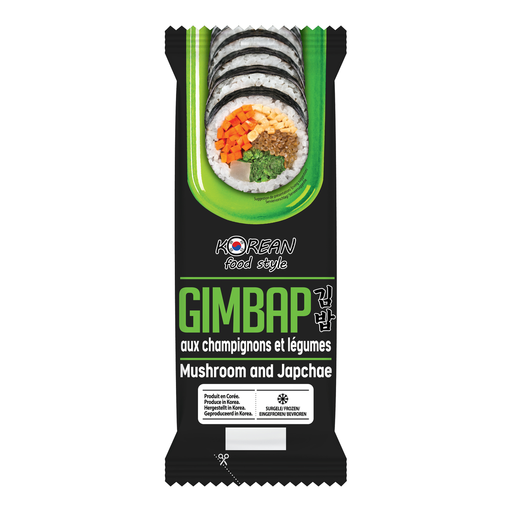 Image unavailable
Worth considering for dinner if you can calculate the kcal for the whole pack and the defrosting time suits your evening.
Stated weight: 230 g. Check the defrosting instructions and ingredients before eating, especially if you need to avoid an allergen.
Multiply the kcal per 100 g by the weight of the meal you’ll eat, then divide by 100. If you’re eating the whole tray, use its net weight; if you’re sharing the meal, use the weight of your portion. Manger Bouger explains that the energy value is included in the nutritional information for pre-packed foods.
No. The Nutri-Score is based on 100 g or 100 ml, while your meal may weigh more than that. According to Manger Bouger, it helps you compare products on a common basis. Calculate the kcal for the amount you eat separately.
Before eating, read the ingredients list and allergen information for the exact product. Check the packaging again even if you already know the meal, as its ingredients may have changed.
Meeting the calorie limit doesn’t tell you everything about a meal’s ingredients. To compare similar products, check their salt content in the nutritional information. Manger Bouger also recommends considering the Nutri-Score when it’s shown on products in the same aisle.