When choosing a frozen meal for a light lunch while working from home, don’t focus solely on the lowest kcal figure. Compare the energy content with the amount you’ll actually eat, then look at what makes up the meal. An individual tray makes serving easy, while a family-sized pack means deciding on your portion, and a vegetable-based option needs other items to make up your lunch.
Who are these options for?
For a light lunch that’s about more than kcal
If you want to keep the energy content of your lunch down without choosing a meal based on that figure alone, check the portion size and ingredients. Public Health France’s guidance for lunchtime recommends considering vegetables, starchy foods and a source of protein, among other things.
For a lunch break with minimal preparation
An individual tray can save you from having to portion out a large bag. Still, check how much it contains, its ingredients and preparation instructions: the format alone won’t tell you whether the recipe is right for you.
For dividing a large pack between several lunches
A family-sized meal or bag of vegetables can be divided into several portions. Decide how much you’ll serve at each meal before comparing its nutritional information with that of an individual tray.
What should you check before choosing?
To compare two frozen meals, start with the amount you’ll actually eat. Then look at the recipe and how long it will take to prepare your lunch.
| What matters |
What to check |
Who this is for |
| Energy in your portion |
Compare the kcal per 100 g with the weight you’ll serve. For a larger pack, also check the stated number of portions. |
If I want to limit the energy in my lunch, the figure per 100 g isn’t enough when I eat a different amount. Around 30% of consumers put managing the kcal in their portion first. |
| What makes up your lunch |
Read the ingredients and nutritional information, particularly the protein and salt content. Check how much of the meal is made up of vegetables. |
I’d rather know what’s in my lunch than choose the tray with the lowest kcal figure. Around 40% of consumers prioritise what makes up the meal. |
| Preparation and format |
Check the preparation instructions, how much is ready to serve and whether you’ll need to add anything else to your meal. |
When my lunch break is short, I want to know whether I can prepare one portion without having to portion out a whole bag. Around 30% of consumers put ease of preparation first. |
Mistakes to avoid
-
Choosing based only on a “low-calorie” claim
A calorie claim tells you neither what the ingredients are nor how the product fits into your lunch. Public Health France recommends including vegetables, starchy foods and a source of protein at lunchtime, or pulses as part of a different combination of foods.
Compare the energy content of your portion, then check the ingredients list and nutritional information for the product you’re considering.
-
Comparing kcal per 100 g without checking the amount you’ll serve
An individual tray and a family-sized bag may both show values per 100 g, even though you won’t necessarily eat the same amount of each.
Check the weight you plan to serve and use it to work out the energy content from the figure on the packaging.
-
Relying on a Nutri-Score from an old catalogue
The list of meals published by Picard in May 2024 is based on the algorithm in use at the time. Public Health France says a new algorithm has been gradually introduced in France since March 2025.
To compare products you’re thinking of buying, check the packaging or current product information rather than relying on an old document.
-
Leaving frozen food out after shopping
The French Agency for Food, Environmental and Occupational Health & Safety (Anses) reminds shoppers that keeping food at a low temperature helps limit the growth of micro-organisms.
Pick up frozen food at the end of your shopping trip, keep the journey home short and follow the storage instructions on the packaging.
Retailers to know
Carrefour
Carrefour’s frozen ready-meal range includes both individual and family-sized formats.
- These two formats let you choose between a pre-portioned meal and one you can divide up.
- To assess a particular recipe, check its net weight and nutritional information.
Auchan
Auchan’s range includes individual and family-sized frozen meals, as well as options designed for quick cooking.
- The format can help you choose according to how much time you have for lunch.
- Check the instructions and ingredients for each meal before choosing a product.
E.Leclerc
E.Leclerc’s frozen meal ranges include products from its Eco+ and Côté Table brands.
- Depending on the product, the retailer’s range includes packs weighing 300 g or 1 kg.
- A 1 kg pack needs to be divided according to how much you plan to eat. Its weight doesn’t tell you about its nutritional content.
Picard
Picard sells frozen ready meals in individual trays and larger formats designed for sharing.
- An individual tray tells you exactly how much the pack contains.
- Check the nutritional information and Nutri-Score for the current product rather than relying on an old catalogue.
Vegetable bases available on Joybuy
These two products are frozen vegetable bases to add to a lunch prepared at home. Choose how much you’ll serve and plan the rest of your meal to suit: these products aren’t presented as complete meals.
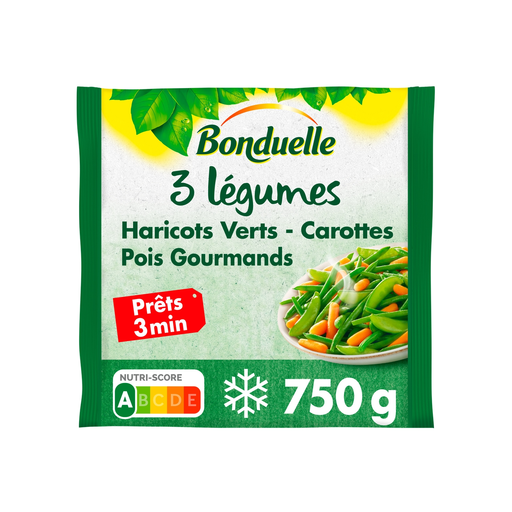 Image unavailable
BONDUELLE Green beans, carrots and mangetout mix 750 g
This mix can be served as a side when making your lunch with frozen vegetables. The bag contains 750 g: decide how much to prepare and check the packaging for instructions and allergen information.
View on Joybuy
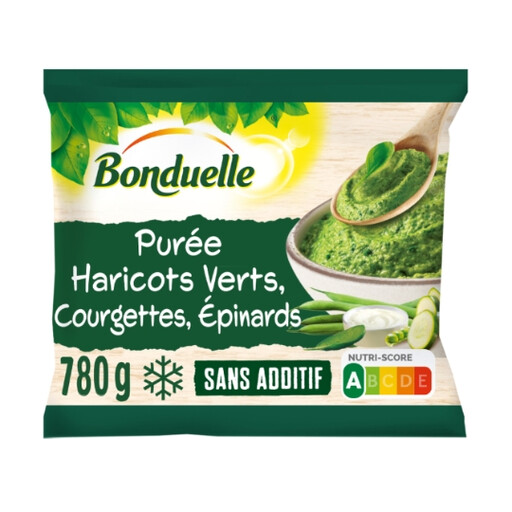 Image unavailable
BONDUELLE Green bean, courgette and spinach purée 780 g
If you’d like to add a vegetable purée to a lunch prepared at home, this 780 g pack lets you serve the amount you want. Check the packaging for allergen information and preparation instructions, then choose the other items for your meal.
View on Joybuy
Frequently asked questions
Is Nutri-Score enough to choose a frozen meal for lunch?
No. It doesn’t replace checking how much you’ll eat, the energy content of that portion and the ingredients. When comparing similar recipes, also check the nutritional information and allergens for each product.
Which nutritional values should you compare between two frozen meals?
Start with the energy value per 100 g and the amount you plan to serve. As the French Directorate General for Competition Policy, Consumer Affairs and Fraud Control (DGCCRF) points out, the nutrition declaration also includes values such as fat, sugars, protein and salt. Compare these values across recipes and portion sizes that are relevant to your lunch.
How can you check the allergens in a frozen meal?
Read the ingredients and allergen information on the packaging of the product you’re buying. The meal’s name or Nutri-Score can’t tell you whether it’s free from a particular allergen.
How should you transport frozen food after shopping?
Pick up frozen food at the end of your shopping trip and keep the journey home short before storing it according to the packaging instructions. Anses highlights the importance of keeping food at a low temperature to slow the growth of micro-organisms.


