People in a rush who eat lunch alone
A single portion can make planning lunch easier. Before choosing, check its weight and reheating instructions against the equipment you have available.


For lunch on the go, choose a frozen meal based on the portion size, reheating method and ingredients that suit your break. The word ‘premium’ is no substitute for checking the ingredients, allergens and nutritional information. A larger pack is only convenient if you can organise the remaining portions and follow the storage instructions.
A single portion can make planning lunch easier. Before choosing, check its weight and reheating instructions against the equipment you have available.
If ingredients influence your choice, check the ingredients list, allergens and nutritional information. Where shown, the Nutri-Score provides an extra indication, but it doesn’t replace these details.
A larger pack may suit a shared meal or several planned lunches. Check the number of portions and storage instructions before relying on leftovers.
When choosing a frozen meal for lunch, start with your dietary requirements, then check whether the portion and preparation fit into your break.
| What to check | Things to look for | Who it matters to |
|---|---|---|
| Ingredients and allergens | Read the ingredients list, check which allergens are highlighted and look for details about any ingredients that are emphasised. | I want to know what the recipe actually contains before choosing it, especially if a particular ingredient or allergen matters to me. Around 36% of consumers put this check first. |
| Nutritional information | Compare similar meals on the same basis, particularly per 100 g. Also check the values per portion if they’re shown on the packaging. | When comparing two recipes for lunch, their nutritional information helps me understand what sets them apart. Around 29% of consumers prioritise this comparison. |
| Portion and preparation | Check the net weight, number of portions and cooking method specified for your equipment. | When I have a short lunch break on my own, I need a suitably sized portion that I can reheat using the equipment available to me. Around 21% of consumers prioritise this convenience. |
| Sharing size | Check the number of portions and the instructions for any leftovers. | If I’m planning several meals or a lunch to share, I need to be able to use the remaining portions in line with the storage instructions. Around 14% of consumers put this above other considerations. |
Where shown, the Nutri-Score doesn’t tell you on its own whether a meal contains allergens or an ingredient you want to avoid.
Use it to compare similar recipes, then read the full ingredients list and allergen information.
A picture highlighting a particular ingredient doesn’t tell you everything about the recipe. The DGCCRF advises shoppers to pay attention to the ingredients and promotional claims made about ready meals.
Before comparing two meals, check the product name, ingredients and detailed information about any highlighted ingredients.
A rise in temperature can compromise food storage. The DGCCRF reminds consumers that it accelerates the growth of micro-organisms.
According to Anses, pick up frozen food at the end of your shop. Take an insulated bag and put the products away as soon as you get home, following the packaging instructions.
Picard offers individual frozen ready meals and sharing-size options, as well as a selection displaying a Nutri-Score of A or B.
Carrefour’s range of individual frozen ready meals includes products from Carrefour Classic', Carrefour Sensation and Carrefour Extra.
Auchan offers individual and family-size frozen ready meals under its own brand and national brands.
E.Leclerc DRIVE offers frozen ready meals among the products available for click and collect and delivery.
Lidl offers frozen ready meals in a range linked to the products featured on its website.
Aldi offers ready meals, including microwaveable options, in its savoury grocery section.
These Marie products include two 300 g options for an individual lunch and a 900 g pack to consider for a shared meal. Choose according to the portion size you need, and check the reheating and storage instructions for the meal you select.
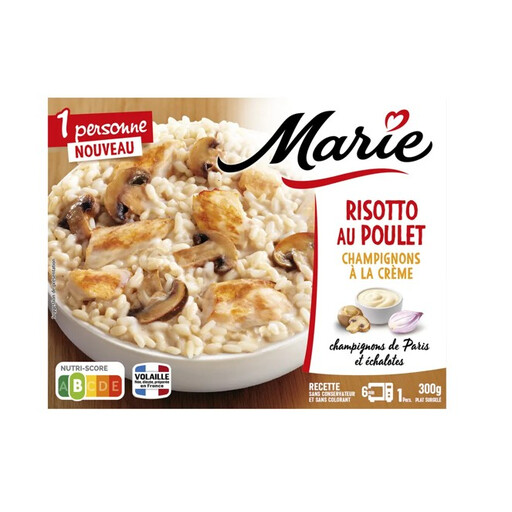 Image unavailable
At 300 g, this risotto could work well for an individual lunch. Check the reheating instructions against the microwave you’ll have available.
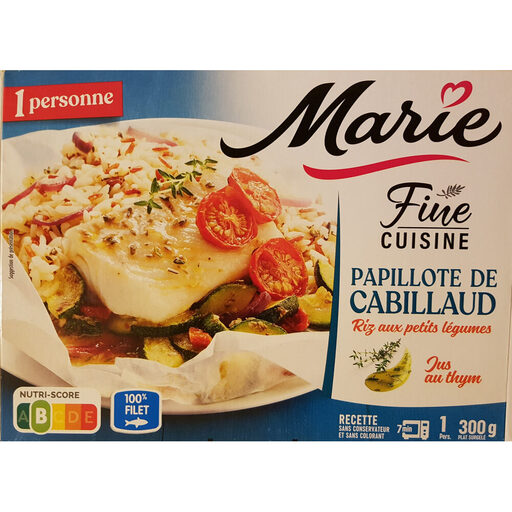 Image unavailable
This 300 g papillote is an individual portion. Check how long it takes to reheat and which method to use before planning it for a short break. Marie’s product information says not to refreeze after thawing.
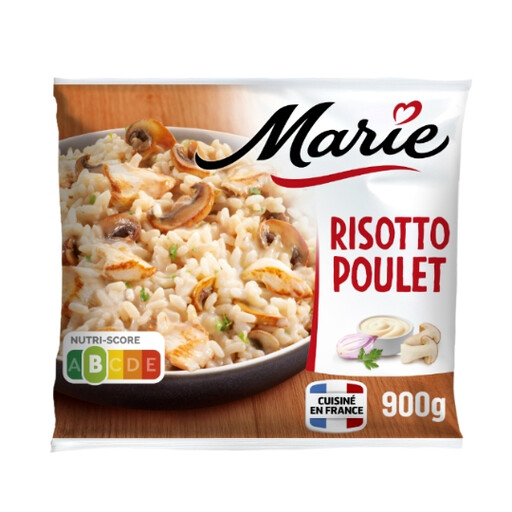 Image unavailable
At 900 g, this risotto is better suited to sharing than as an individual tray meal. Check the number of portions, reheating instructions and guidance for storing leftovers.
No. According to the DGCCRF, displaying a Nutri-Score is voluntary. If it appears on the product, use it as a guide for comparing meals, and check the ingredients, allergens and nutritional information too.
Start with the product name, net quantity, ingredients list, allergens and nutrition declaration. The DGCCRF lists these among the useful labelling details for identifying and comparing prepacked food. Also read the preparation and storage instructions for the meal you choose.
Pick up frozen food at the end of your shop, carry it in an insulated bag and put it away as soon as you get home. Anses recommends keeping any break in the cold chain to a minimum, and the DGCCRF reminds consumers that a rise in temperature accelerates the growth of micro-organisms.
Follow the instructions for the product you’ve bought rather than assuming they’re the same for every meal. For the 300 g Marie cod papillote featured here, the product information says not to refreeze after thawing.
No. Anses distinguishes between the use-by date (DLC), which must not be exceeded for the products it applies to, and the best-before date (DDM), shown as ‘best before’. Check the exact wording on your meal.